

|
Getting your Trinity Audio player ready...
|
Running errands used to be somewhat of a hassle for Geraldine Ezenwugo. She’d schedule a medical transport for her doctor’s appointments but frequently arrived late, then she’d have to head home before catching a bus to run other errands like shopping.
But now when she needs to go to the doctor and the grocery store, the 53-year-old southwest Fresno resident reserves an electric vehicle through Biz-Werx Mobility Hub, a local electric car and bike sharing program, and pays just $4 an hour or $35 a day to use it. Insurance is covered by the program, so all she needs is a valid driver’s license, a clean driving record, and to complete the training program to reserve a Chevy Bolt.
Biz-Werx was created through the Clean Shared Mobility Network, one of numerous projects included in the $66.5 million Transform Fresno grant. The state’s allocation for the network was $7.7 million.

But the program has been plagued by low usage of the electric cars and bikes, and vandalism at car charging stations.
Ezenwugo is one of only 200 members who have signed up to use the electric cars. As of January, the program had provided 4,429 trips in the 22 electric cars and 167 trips on the 200 electric bicycles, according to Biz-Werx.
At a total of 4,596 car and bike trips thus far, the state’s investment of $7,579,256.55 comes out to $1,649.10 per trip.
Chargers and Bike Racks Installed in Southwest Fresno, Downtown
Nearly 50 car charging stations were installed at five southwest public housing sites and the downtown headquarters of the Fresno Metro Black Chamber of Commerce. The chamber’s foundation was the lead contractor on the Clean Shared Mobility Network that’s now run through Biz-Werx.
Green Commuter Inc., a Los Angeles-based firm that was one of the subcontractors on the CSMN, invoiced the chamber foundation $862,981.35 to purchase and install the chargers.
Contractors also installed racks for the electric bikes at public housing sites and a downtown Fresno Economic Opportunities Commission office.
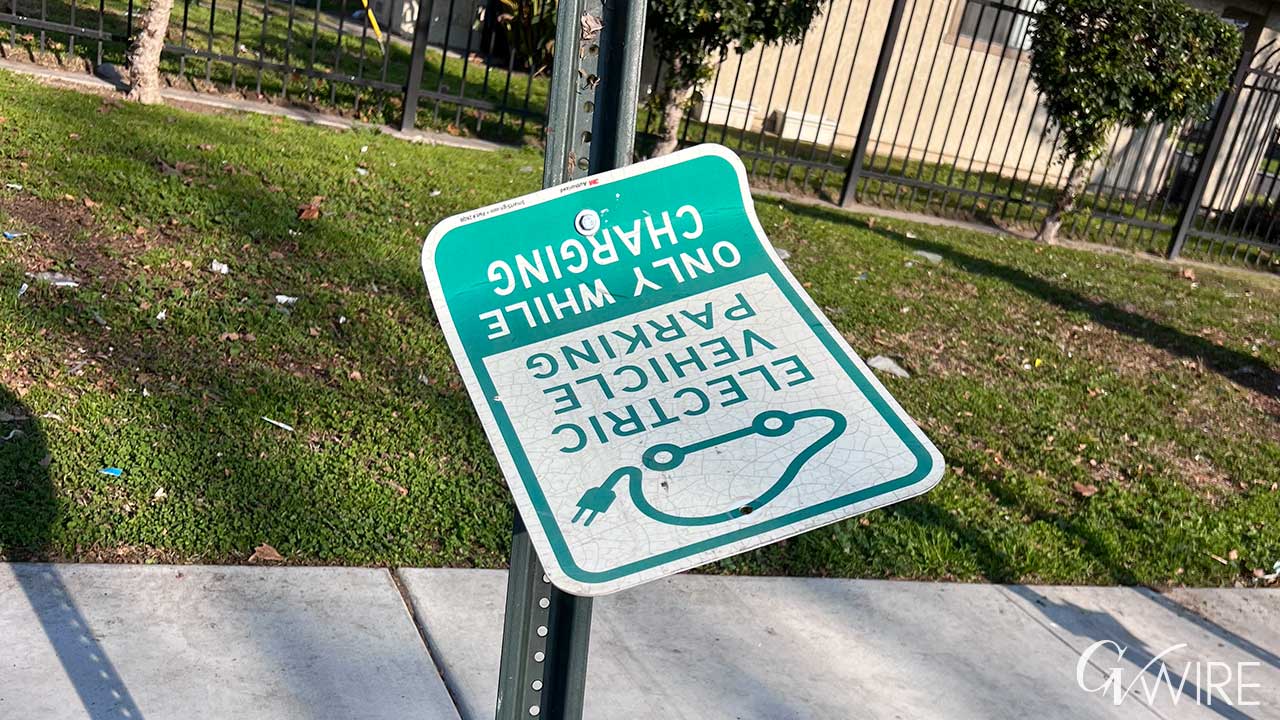
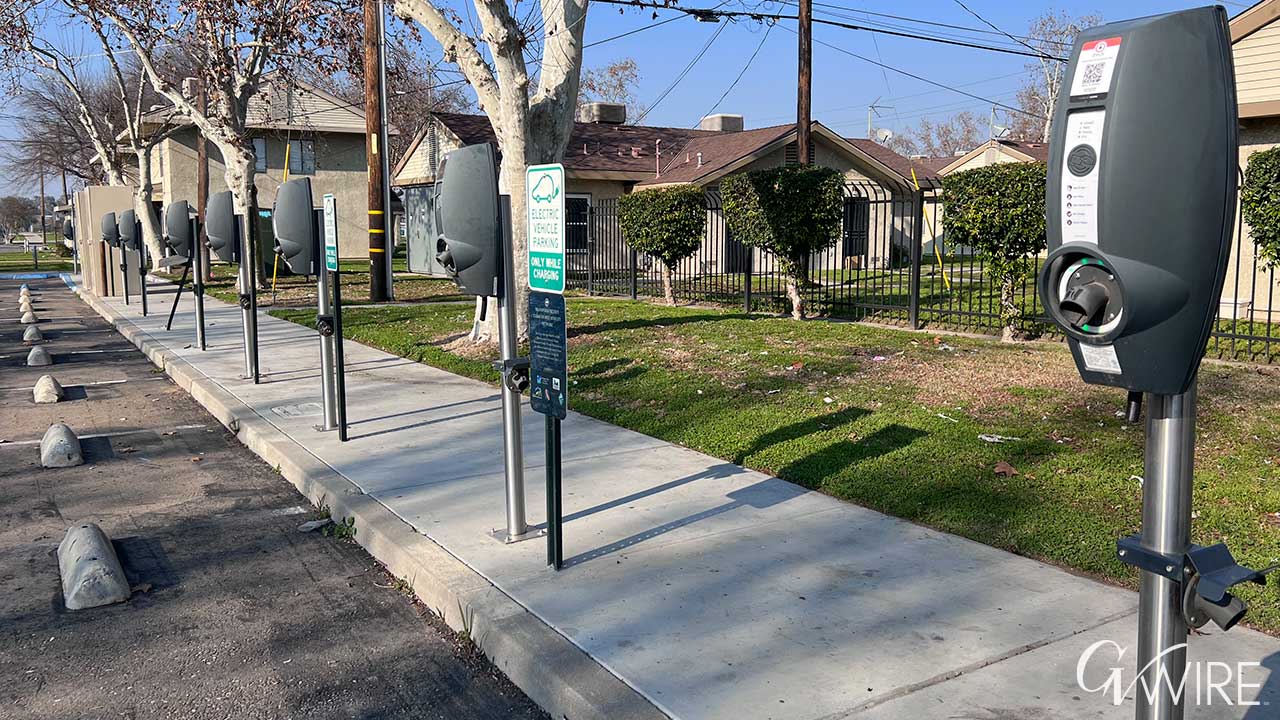
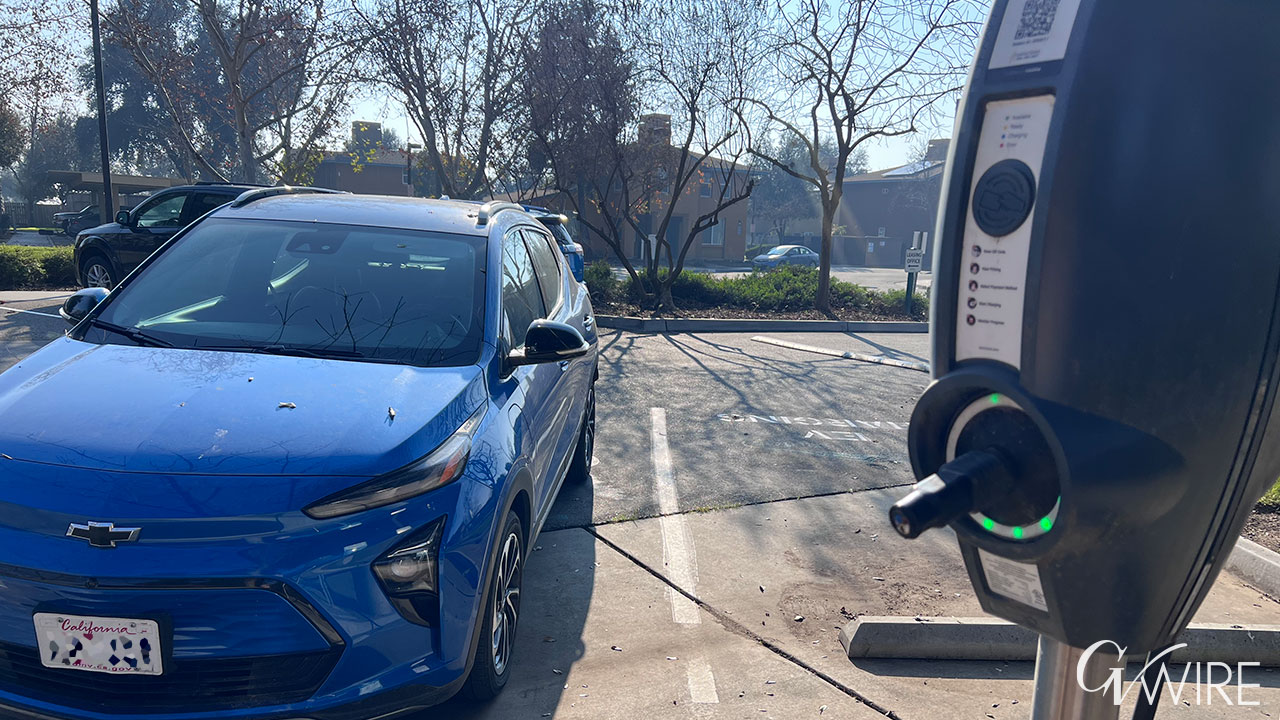
But many of the car chargers are inoperable due to vandalism — even ones housed inside large metal lockers — and the bike racks are empty.
Chargers Unusable Due to Vandalism
In mid-January GV Wire surveyed car charging sites at five public housing complexes in southwest Fresno and the downtown parking lot of the Fresno Metro Black Chamber of Commerce.
Of the 10 car charging stations at Sierra Plaza on Kern Street, vandals had torn off the connecting hoses for eight. Two other chargers were inside padlocked metal lockers, and their conditions could not be ascertained.
At Legacy Commons on South Plumas Street where Ezenwugo lives, metal lockers have been installed for the chargers. Three chargers in two stations had been vandalized while a fourth appeared to be in working order. A broken padlock was on the floor of one of the lockers of a vandalized charger.
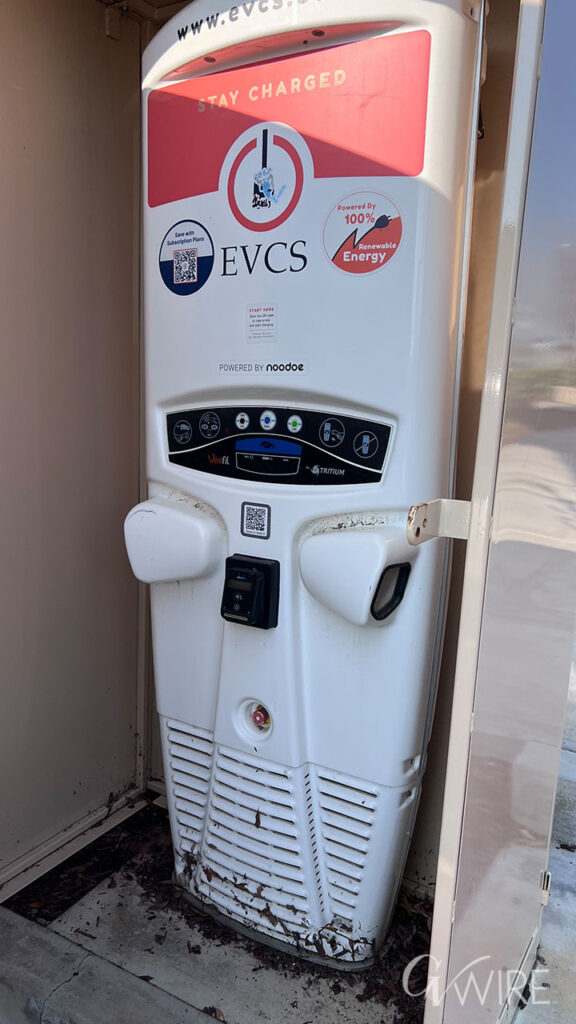
At Yosemite Village on California Avenue, two of the three charging stations had been vandalized. None were protected by metal lockers.
The only site where all the chargers were in working order was the chamber’s parking lot on Fulton Street, where five vehicles were parked at chargers and another three were parked nearby across the lot.
In GV Wire’s survey, two of the five complexes had a Biz-Werx car on site: Legacy Commons and Yosemite Village.
Most of the e-vehicles are parked downtown, in part because of vandalism at the sites as well as for the convenience of staff in keeping them cleaned and ready to use, Dr. Cassandra Little, president and CEO of the Fresno Metro Black Chamber of Commerce and Chamber Foundation, said in emails to GV Wire.
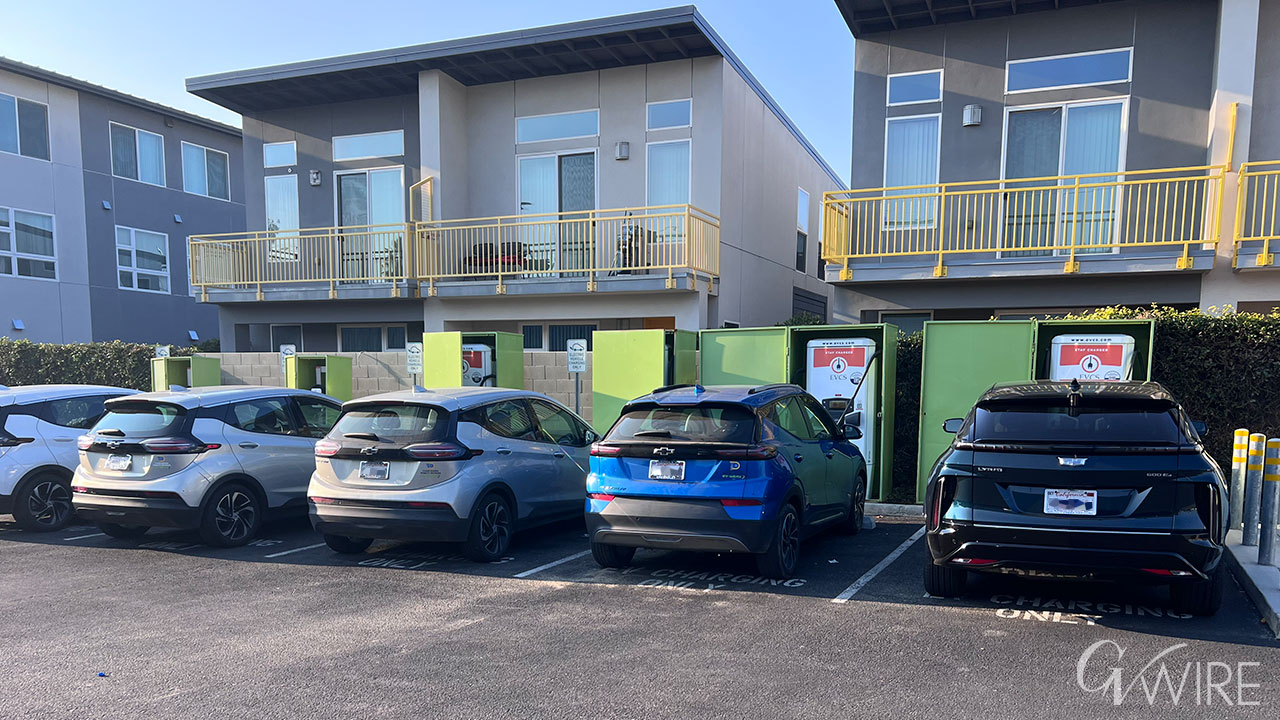
That means when someone reserves a car, a Biz-Werx staffer needs to drive it to their home and then get a ride back to the hub from another team member, she said.
“We host a lot of vehicles at our downtown location, as this is where we work, and it is quicker for our team members to churn vehicles for cleaning and to monitor charging,” Little said. “It will also be quicker for them to bring a replacement vehicle to a member if the need arises.
“We also dealt with vandalism at stations, so we had to use the downtown hub as the main location for our members to charge and switch vehicles. Our top priority is having vehicles clean, charged, and ready for our members as quickly as possible.”
The downtown hub also hosts the majority of cars for insurance reasons, Little said: “The underwriter just was more responsive when we stated that most of the vehicles are located at the hub and changed out as needed.”
Metal lockers for the chargers were not part of the original plan. But after vandals cut off the connecting cords, making the chargers inoperable, officials determined that steps needed to be taken to protect the chargers, Little said.
“No one predicted the ongoing theft of wires from the chargers. It is not just a Fresno issue, it’s a national problem that suppliers are working on. But for now we use lockers to deter the damage,” she said.
The lockers cost $1,500 to $2,500 apiece, depending on the size, and were paid for out of unrestricted funds, she said.
No E-Bikes in Racks
Another part of the Clean Shared Mobility Program was the leasing of electric bikes, but vandalism also has been a problem, Little said.
The plan as recently as 2024 was to install racks for 35 e-bikes at the Biz-Werx Mobility Hub, five at each of the five public housing sites, 6 bikes at the Fresno EOC Valley Apprenticeship Connection on Stanislaus Street, five at Central Fish in Chinatown, 10 at Fresno City College, five at the West Fresno campus, and five at the First Responders campus.
GV Wire surveyed the West Fresno campus, Central Fish, the five public housing sites, and the Fresno EOC location and saw racks at only two sites: Sequoia Courts Terrace on South Modoc Street and the Fresno EOC site. No bikes were in the racks.
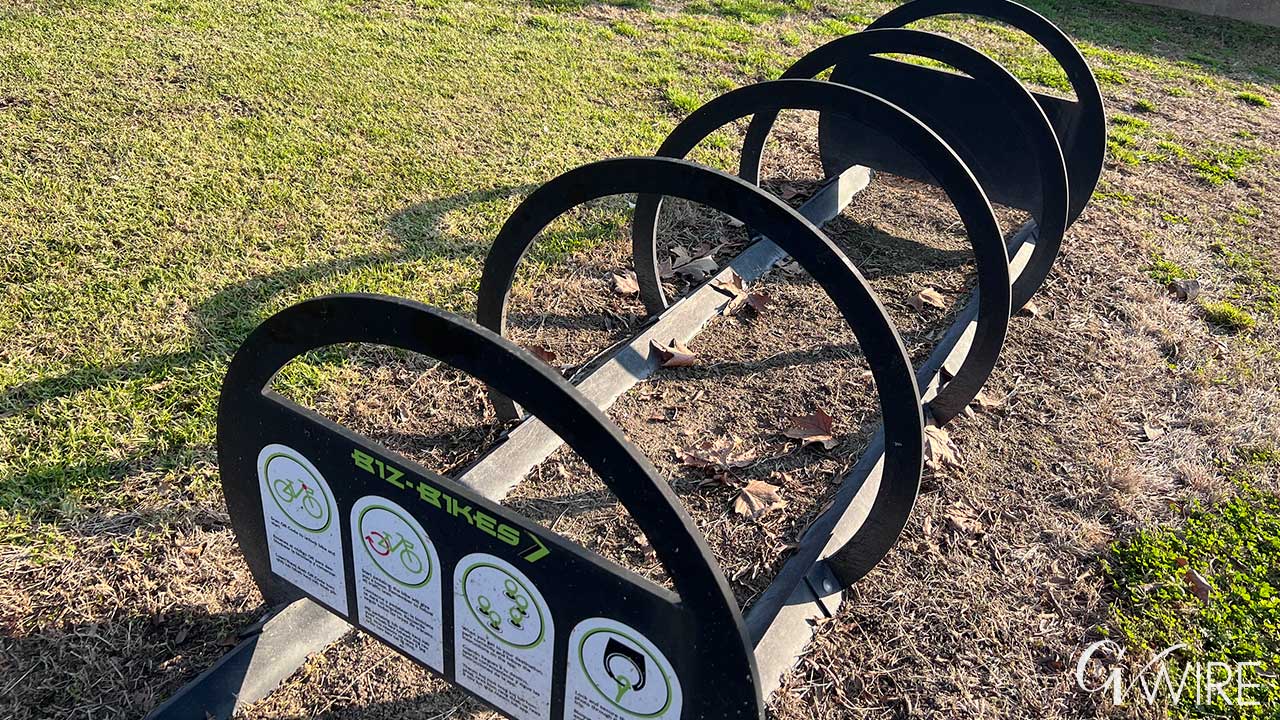
Officials decided that based on vandalism and low usage, the e-bikes should be kept under lock and key and rented out, similar to library books, Little said.
Community members pay a refundable deposit upon enrollment, which is returned when the bike is returned, and pay $25 a month for usage ($15 a month for students). A Biz-Bike technician delivers the e-bikes to customers and then picks them up later.
Biz-Werx is planning to launch a new campaign in conjunction with the Downtown Fresno Partnership to generate new interest in e-bike usage, Little said.
“It has always been my vision that the e-bike project become a part of the city’s plan and infrastructure. Similar to other Cities where you can hop on a bike to get around short distances and not have to hop in a car. I am talking to (Downtown Fresno Partnership) about maybe having their ambassadors ride the bikes to get some visibility. They are fun to ride. This spring, we will be hosting more community outreach throughout the community. We have to do it before it gets hot.”
State Program Targets Disadvantaged Communities
Funding for the electric car and bike sharing program and came through California’s Transformative Climate Communities program that’s designed to give a leg up to communities that are disadvantaged economically as well as in exposure to greenhouse gases and other pollutants. The state uses funds from the credits that companies pay California to offset their greenhouse gas emissions.
The Clean Shared Mobility Network was the third-largest project on the Transform Fresno list for TCC funding. No. 1 was the West Fresno Satellite Campus of Fresno City College, which got $16.5 million, followed by the Chinatown Housing Project with $10.8 million.
According to the contract between the city of Fresno and the chamber foundation, which was the lead entity for the program, there was also supposed to be $2.3 million in “leveraged” funds for the Clean Shared Mobility Network, for a total of nearly $10 million.
The network was intended to provide low-cost electric vehicle and bike rentals for Fresno residents, especially in southwest Fresno, Chinatown, and downtown, fostering economic opportunities for historically underserved communities and enhancing transportation equity.
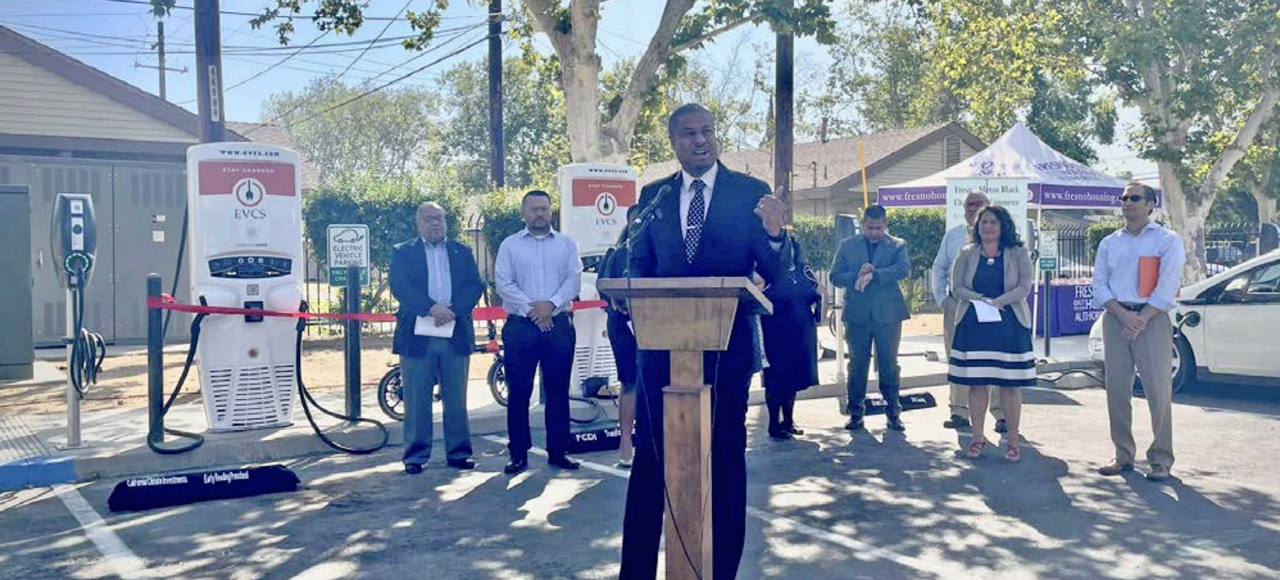
Ezenwugo, who was one of the first Fresno residents to sign up, said the program has made a huge difference in her life because she has much more freedom of movement these days as a Biz-Werx car-sharing member and doesn’t have to worry about the expense and upkeep of car ownership.
“These cars, we needed something like this years ago,” she said. “I was so happy to be the first one, and I love it. I ain’t gonna lie, I love it.”
As a membership-based service, users pay $4 an hour or $35 a day to use the vehicles and get 150 free miles per trip.
How are residents using the vehicles? The top five reasons, according to Biz-Werx, are for work, medical appointments, grocery shopping, taking children to school, and leisure/out-of-town trips.
The 22 cars include Chevrolet Bolts and a Tesla that was designated a marketing tool similar to a “rolling billboard” and was used by Keshia Thomas, executive director of the nonprofit Fresno Career Development Institute, which was hired as a subcontractor to organize community outreach and develop communications and marketing materials for the Clean Shared Mobility Network.
Keeping the Program Going
Little said her goal is for the car-sharing program to be self-sustaining, although that’s not the case now.
The electric vehicle program has just entered its first quarter since the TCC grant ended, and Little said that Biz-Werx officials are in the process of drawing up a plan to focus on making it self-sustaining.
“Currently, it’s the balancing of insurance costs that once we get through this period we will have true data and information,” she said. “The grant funded all operations costs including insurance. We have applied for additional support, but my goal is to not have to rely on any outside funding for the carshare in the future.”
There will be some outside funding in the near future, at least: On Feb. 5 President Trump signed the transportation bill that includes $850,000 for a partnership between the Fresno Metro Black Chamber of Commerce and city of Fresno for projects that include EV charging infrastructure, a fleet of affordable electric bikes and scooters, and community-based education on clean mobility.
Meanwhile, the electric bike has one more year of subsidies from the state’s Clean Mobility Options program to support operations, she said.