

|
Getting your Trinity Audio player ready...
|
While San Francisco was buzzing with Super Bowl pop-ups, despite being nearly an hour away from the actual game, Oakland was doing what Oakland does best: throwing its own kind of party.
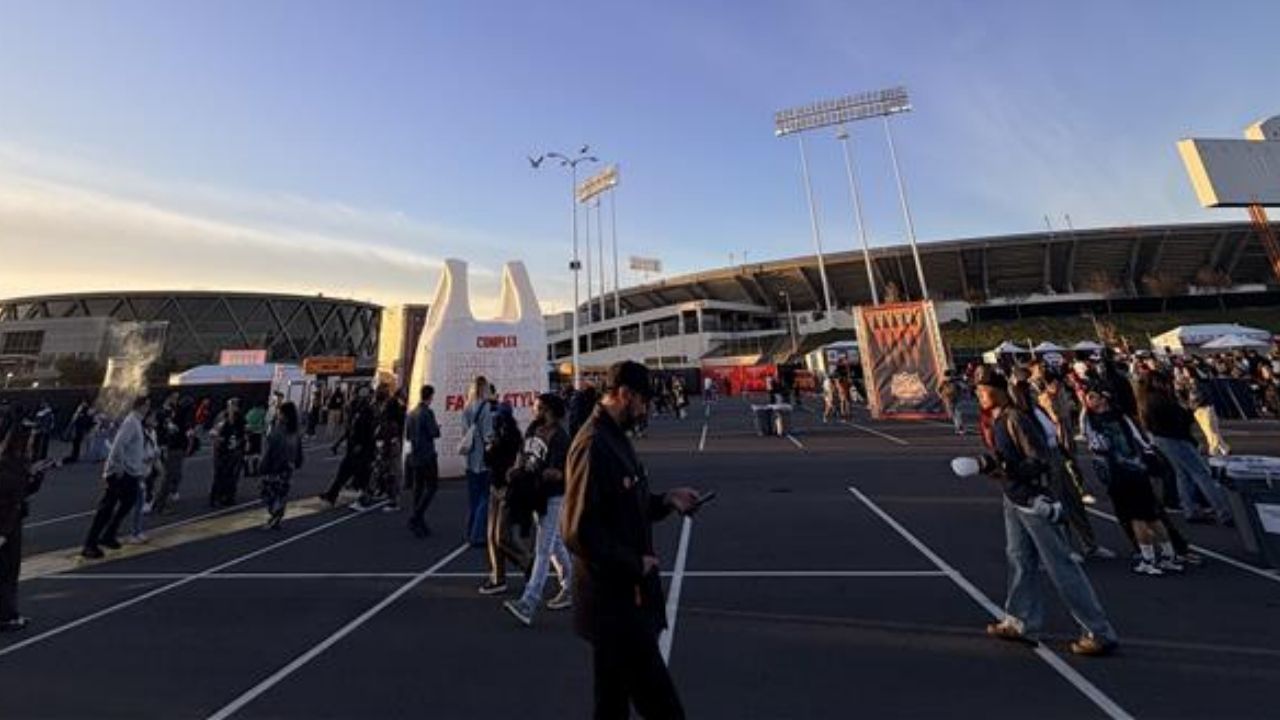
The Oakland Family Style Food Festival took place on Saturday and it gave me more than just a taste of the food, it gave me the biggest bite of the city’s culture.

Anthony W. Haddad
The Millennial View
Instead of leaning into the same corporate, copy-and-paste activations that seem to follow every major sporting event, Oakland hosted something that felt more grounded in the Bay’s actual culture — a festival blending food, fashion, and music just outside the Oakland Coliseum, the same grounds the Raiders once called home.
There was something poetic about that. A city that’s spent years being treated like the “other” side of the Bay hosting a celebration rooted in creativity, community, and flavor — not just hype.
Food and Beverages Fuse With Artists, Celebrities
The food alone was a reminder that Oakland doesn’t need to borrow anyone else’s identity. Vendors from across the Bay showed up, and crowds immediately gravitated toward spots like Hyphy Burger and Boriqua Kitchen — the latter having previously catered for Bad Bunny, which felt especially timely with the Super Bowl buzz and his performance in the cultural orbit.
One of the most memorable collaborations came from Farmhouse Kitchen, a Thai restaurant run by a Food Network Chopped champion Kasem Saengsawang, teaming up with DJ Noodles. The result was the “Send Noodz” burger which is a wagyu beef or crispy chicken burger topped with spicy Thai noodles — the kind of chaotic, beautiful fusion that only makes sense at a Bay Area festival.
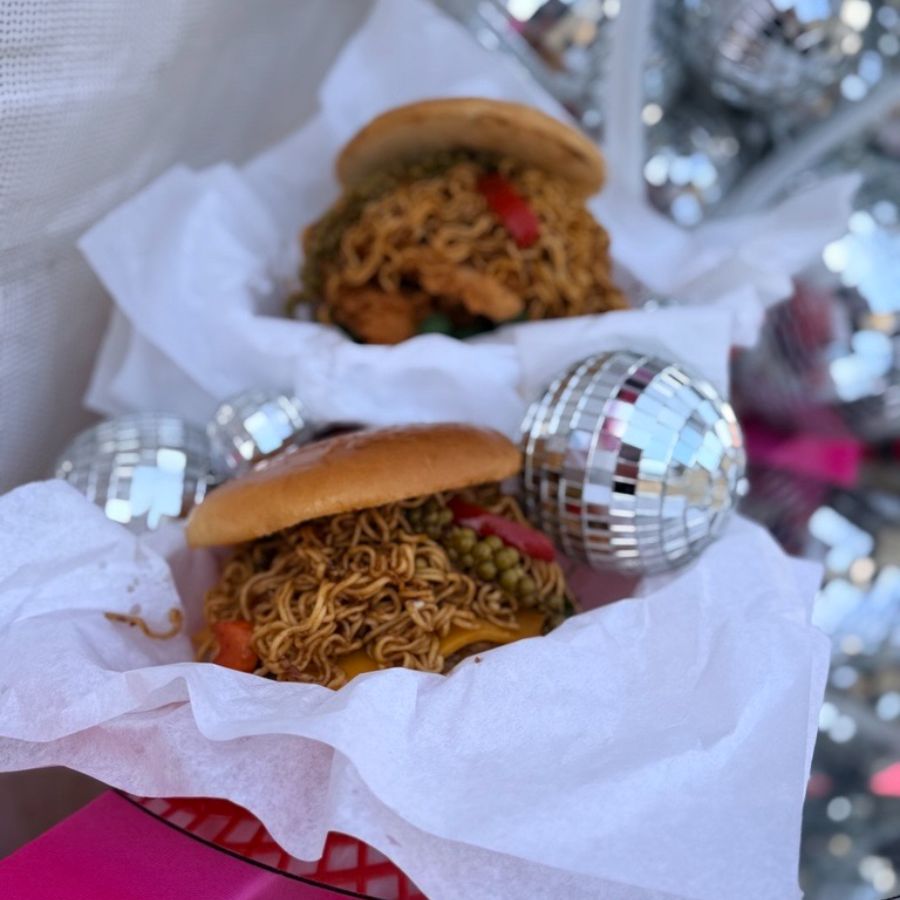
I was able to stand behind the vendor booth and watch the Farmhouse staff work. Not just cook — work. Watching them set up, serve nonstop, break down, and still move with purpose and pride was its own kind of performance. We don’t usually see that side of festivals: the people who spend the entire day on their feet making sure everyone else gets to enjoy theirs.
Yes, it’s a business. Yes, it’s a money-making venture. But there’s something humbling about watching staff rotate for quick breaks, jump back in, and keep pushing just so thousands of strangers can eat well for a few hours.
I do have to give a shoutout to Señor Sisig for keeping me fed — the non-meat options were limited at the event and I survived off their tofu burrito throughout all of Portola so I knew they had my back.
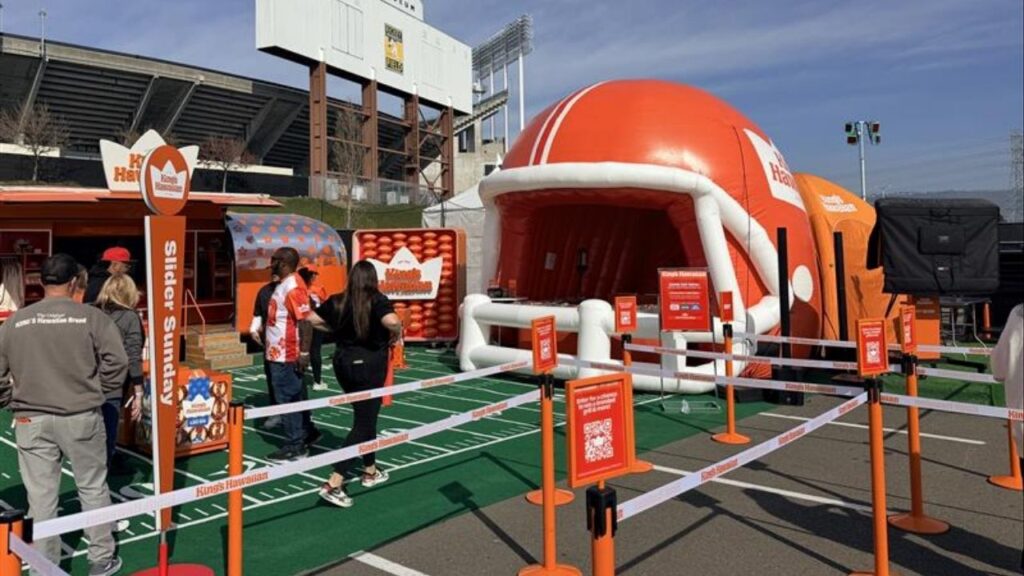
And then there were the pop-ups that pulled crowds in from across the grounds: Gin & Juice by Dre and Snoop, King’s Hawaiian, and Larry’s Table by Chef Ray Lee of Akiko’s alongside Chef Tommy Cleary of Hina Yakitori. These weren’t just brand activations — they felt like cultural checkpoints, little moments where music, food, and Bay Area identity overlapped.
Gin & Juice featured a specialty drink by Martha Stewart — a watermelon-based cocktail that somehow made perfect sense in the middle of all this controlled chaos.
Music With a Heart
Music, of course, was everywhere and not just on stage. Artists walked the grounds, talked to fans, took pictures, and actually seemed present.
LaRussell, a Bay Area native, fresh off signing with Jay-Z’s Roc Nation, was spotted moving through the crowd like he belonged there, because he did.
P-Lo, who had just performed an NPR Tiny Desk the day before as part of the Super Bowl ramp-up, was calling for LaRussell to come on stage with him.
The camaraderie wasn’t forced. It wasn’t PR-polished. It felt like a community moment — Bay Area artists showing love in a Bay Area space.
And that’s the thing about Oakland: It doesn’t try to out-San Francisco San Francisco. It doesn’t need to.
Oakland Stands on Its Own
According to Visit Oakland President and CEO Peter Gamez, the city has been intentionally building toward moments like this. In September 2025, Visit Oakland announced an official alliance partnership with the Bay Area Host Committee for the 2026 Super Bowl and World Cup events. Oakland will host two World Cup events and has secured exclusive rights, official designations, hospitality access, and collaborative marketing opportunities tied to those global stages.
But Oakland’s pitch isn’t just about proximity to big events — it’s about what the city already is.
Gamez points to Oakland’s location near three major airports, its access to BART, Amtrak, highways, and the ferry, and its position just minutes from San Francisco, San Jose, and Napa. He also points to value: more than 40 hotels, generally more affordable than neighboring cities, with guests able to save up to 20% on lodging and activities.
Then there’s the part you can’t put on a tourism brochure without sounding corny: fewer crowds, more fun.
Oakland is vibrant without being suffocating. It’s close enough to the region’s biggest attractions without drowning in them. You can move, breathe, eat, explore — without feeling like you’re trapped in someone else’s Instagram reel.
And the food? Oakland was voted the No. 1 Best Food City in the U.S. by Condé Nast Traveler readers for two consecutive years and regularly lands on “best of” lists from Travel + Leisure, Michelin, James Beard, Food & Wine, and Bon Appétit. If you crave it, Oakland probably does it — and does it well.
That shows up not just in restaurants, but in festivals like this one, where cultures collide in the best way possible: on a plate, on a stage, in a crowd.
What Is Next for Oakland?
Looking ahead, the city isn’t slowing down. Oakland Restaurant Week runs March 12–22. The Oakland Roots and Soul and the Oakland Ballers kick off their seasons in the spring. In the fall, Oakland Style returns Oct. 7–11, a five-day celebration of art, music, fashion, cuisine, and culture.
But standing outside the Coliseum, watching people eat, dance, and run into artists they actually listen to, it was hard not to feel like Oakland is already doing the thing other cities keep trying to manufacture: culture that feels real.
San Francisco may get the bigger spotlight. But Oakland? Oakland keeps proving it doesn’t need it.
—
Connect with Anthony W. Haddad on social media. Got a tip? Send an email.