


|
Getting your Trinity Audio player ready...
|
MINNEAPOLIS — Hours after an immigration agent fatally shot Renee Good inside her SUV on a Minneapolis street last month, a senior federal prosecutor in Minnesota sought a warrant to search the vehicle for evidence in what he expected would be a standard civil rights investigation into the agent’s use of force.
The prosecutor, Joseph H. Thompson, wrote in an email to colleagues that the Minnesota Bureau of Criminal Apprehension, a state agency that specializes in investigating police shootings, would team up with the FBI to determine whether the shooting had been justified and lawful or had violated Good’s civil rights.
But later that week, as FBI agents equipped with a signed warrant prepared to document blood spatter and bullet holes in Good’s SUV, they received orders to stop, according to several people with knowledge of the events who spoke on the condition of anonymity because they were not authorized to speak publicly.

The orders, they said, came from senior officials, including FBI Director Kash Patel, several of whom worried that pursuing a civil rights investigation — by using a warrant obtained on that basis — would contradict President Donald Trump’s claim that Good “violently, willfully, and viciously ran over the ICE Officer” who fired at her as she drove her vehicle.
Over the next few days, top Department of Justice officials presented alternative approaches. First, they suggested prosecutors ask a judge to sign a new search warrant for the vehicle, predicated on a criminal investigation into whether the U.S. Immigration and Customs Enforcement agent who shot Good, Jonathan Ross, had been assaulted by her. Later, they urged the prosecutors to instead investigate Good’s partner, who had been with Good on the morning of the shooting, confronting immigration agents in their Minneapolis neighborhood.
Several of the career federal prosecutors in Minnesota, including Thompson, balked at the new approach, which they viewed as legally dubious and incendiary in a state where anger over a federal immigration crackdown was already boiling over. Thompson and five others left the office in protest, setting off a broader wave of resignations that has left Minnesota’s U.S. attorney’s office severely understaffed and in crisis. Officials have not said whether they ultimately obtained a new warrant to search the vehicle.
From an office of about 25 criminal litigators, gone are the top prosecutors who had overseen a sprawling, yearslong investigation into fraud in Minnesota’s social services programs, which the White House months ago cited as a reason for the immigration crackdown in the state.
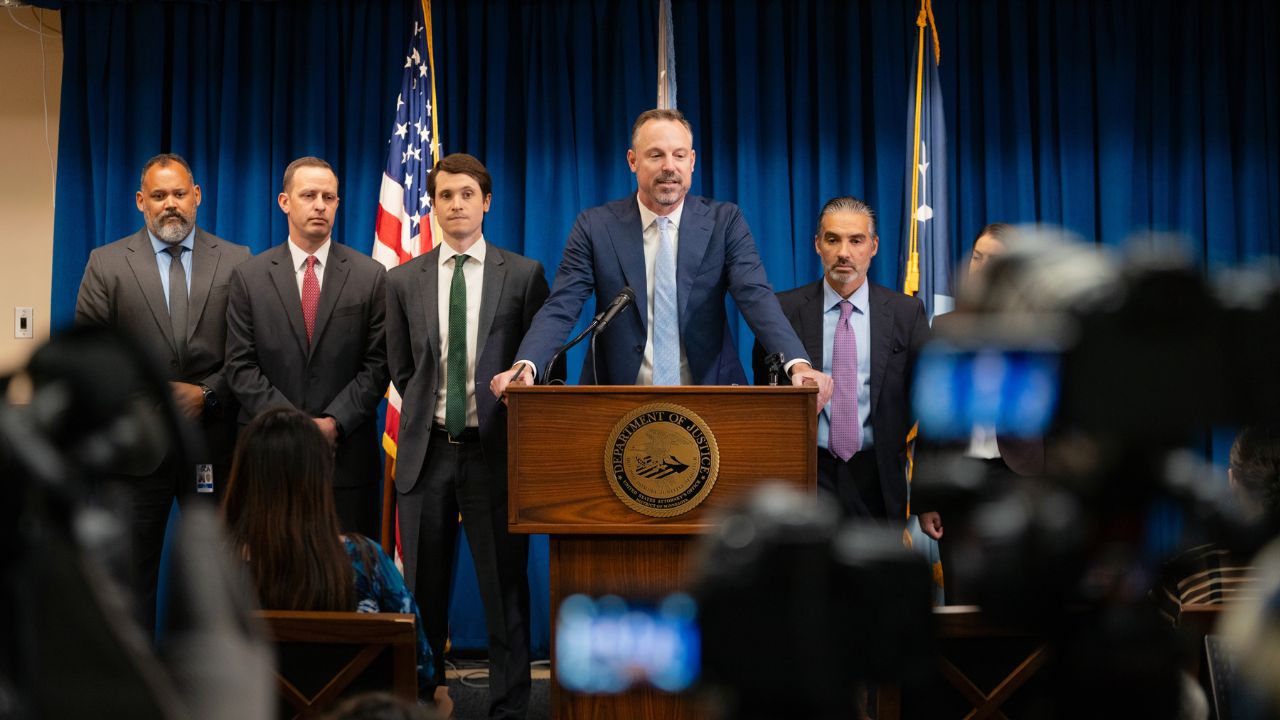
The departures also have drained the U.S. attorney’s office as it prepares complex cases, including trials in the fatal attack on a Minnesota state lawmaker and in a terrorism case, and investigations into fentanyl trafficking.
The prosecutors who remain have been flooded with new cases related to the immigration crackdown — allegations of assaults on federal officers and lawsuits challenging the legality of individual detentions of immigrants.
“This is potentially destroying all of the progress that we have made, working together between local and federal law enforcement officials in a very coordinated way, to actually go after the worst of the worst,” Brian O’Hara, the Minneapolis police chief, said in an interview.
This account of tumult at the U.S. attorney’s office in Minnesota is based on interviews with about a dozen people in Minnesota and Washington, D.C., familiar with the events. Some spoke on the condition of anonymity, saying they feared retaliation from the administration. Some read from notes they took during key moments.
Cindy Burnham, a spokesperson for the FBI in Minnesota, declined to comment for this article, as did Daniel N. Rosen, the U.S. attorney in Minnesota. Emily Covington, a Justice Department spokesperson, did not respond to a request for comment.
A Fraud Scandal
The crisis at the U.S. attorney’s office followed a turbulent year.
The Minnesota office was led temporarily by assistant U.S. attorneys for months as Trump’s nominee for U.S. attorney, Rosen, awaited confirmation.
Some career prosecutors in the office, which has a long reputation for winning complex and high-profile cases, were unsettled by a memo that Attorney General Pam Bondi issued in February 2025, signaling that the Department of Justice would “zealously advance” Trump’s policies.
For months, the prosecutors in Minnesota focused their attention on high-impact cases that were already underway, including the investigation into fraud in social services programs, largely insulating the office from some priorities in Washington. The office mantra became: “The best defense is a good offense.”
That approach unraveled late last year. News articles about the fraud cases — and later a video by a right-wing influencer — drew attention from Trump. Administration officials focused on the fact that most of the defendants charged in the sprawling fraud cases were of Somali descent. Although most Somalis in Minnesota are citizens or legal residents of the United States, White House officials cited them and the rash of fraud as a reason to send thousands of immigration agents to the state.
Tensions quickly rose on the streets between immigration agents and Minnesotans. And at the prosecutors’ office, the fraud investigations slowed as prosecutors said they were overwhelmed with requests for briefings from federal agencies on that issue.
Debating an Investigation
Not long after Good’s death, senior administration officials were quick to blame her for the shooting. Homeland Security Secretary Kristi Noem called Good a domestic terrorist, language that Vice President JD Vance echoed.
Even in a rules-shattering administration, the hasty conclusions about the shooting shocked federal prosecutors in Minnesota. Veteran lawyers in the office watched numerous videos of the shooting. Virtually all presumed there would be a civil rights investigation into the use of force, an approach often used in shootings involving law enforcement officers.
—
This article originally appeared in The New York Times.
By Ernesto Londoño/Ben Brewer
c.2026 The New York Times Company