

|
Getting your Trinity Audio player ready...
|
Hospitals have long said they face a crisis because of a looming California law. By 2030, the state wants all hospital facilities prepared to meet stringent building codes designed to withstand major earthquakes — or shut down.
Getting facilities upgraded could cost hospitals more than $100 billion, said David Simon, spokesman for the California Hospital Association. Given that that estimate comes from several years ago, that amount has likely grown, Simon said.
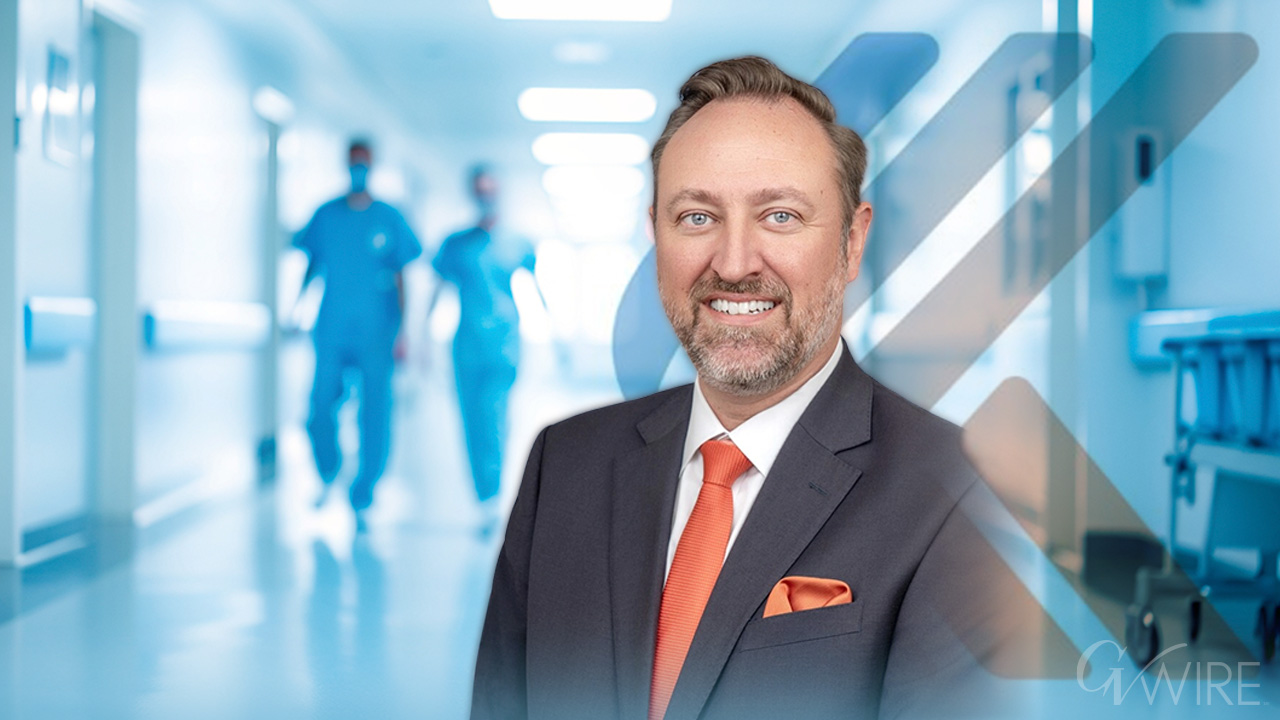
In Visalia, dozens of miles away from any significant fault line, getting Kaweah Health’s Mineral King wing — built in 1969 — up to code will likely cost hundreds of millions of dollars and shut the 206-bed facility down for more than two years, Kaweah CEO Marc Mertz told GV Wire.

“Where the heck do these people go for two years, because those 206 beds, they’re 99% full today. Every winter, it’s an extremely full building. It’s not like we can say, ‘We’ll take two years off and then we’ll take this building out of service and then bring it back,’ ” Mertz said. “It was never going to be viable.”
Technology, however, may save the hospital from that investment and loss of service to patients. If hospital modeling proves to the state that the building can withstand earthquakes, they could be spared the massive investment.
The seismic standard relief is not the only boon for the hospital, Mertz said. New programs will expand the health care workforce both for Kaweah and the Valley.
On a darker note, however, the biggest reduction ever in Medicaid spending by the federal government puts hospitals such as Kaweah on the backfoot, especially as the Medicaid-reliant hospital eked out a positive note financially.
State Wanted 50% Scale Model of Kaweah Hospital Made
The state’s solution for seismic safety would have required exterior steel facades and steel beams built around and throughout the Mineral King wing. Now, if the state accepts the model, the hospital could get by with a $10 million investment ensuring plumbing and utilities could withstand a major shake.
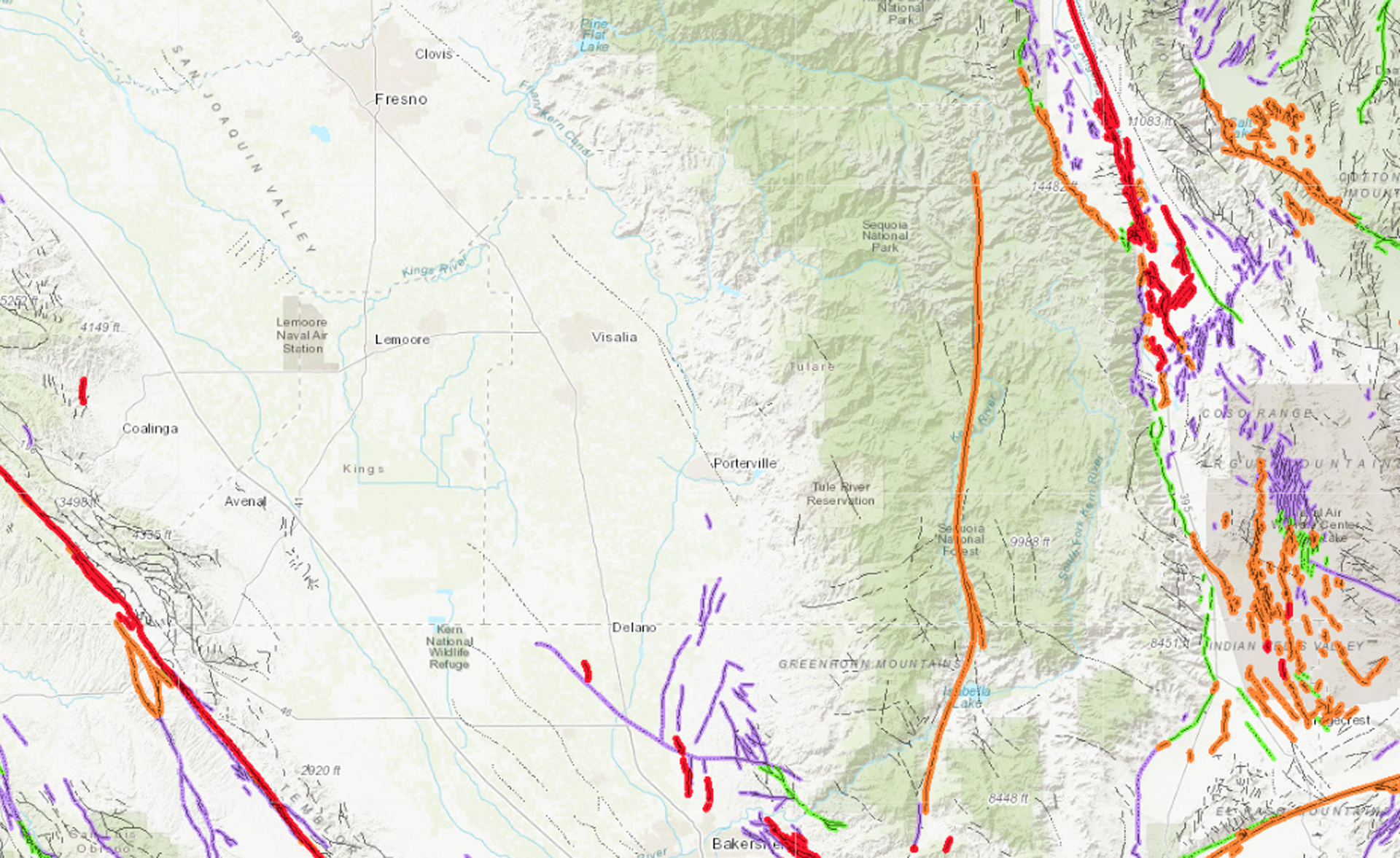
Mertz says the building is sound, especially being in a region so far departed from a fault line.
State geological maps show the nearest active fault as the Kern Canyon Fault, which runs through the Sierra Nevada mountains.
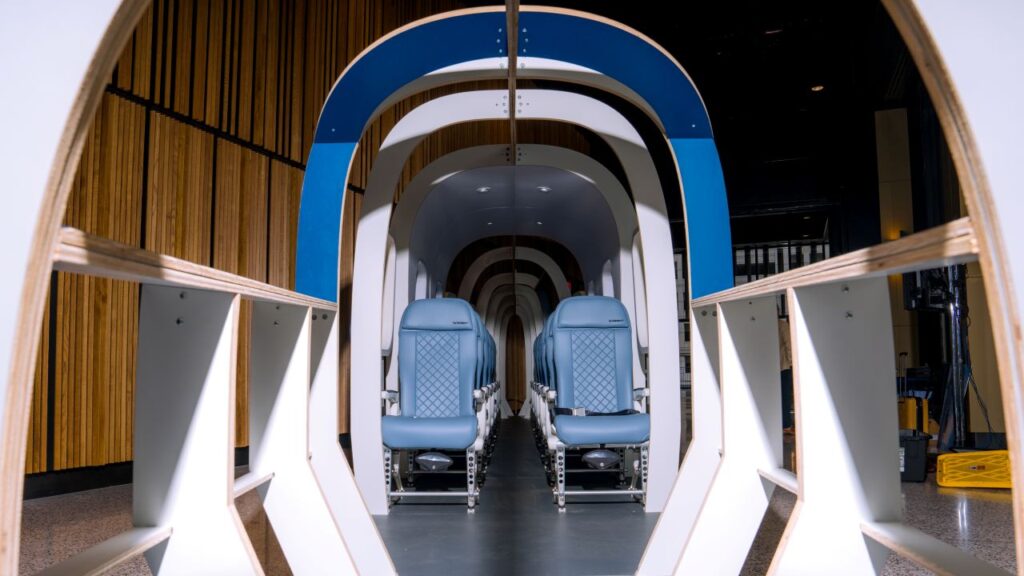
But before they were allowed to use a computer model to demonstrate stability, the state wanted Kaweah to have a physical model built and put through a simulated earthquake. This model would not have been a simple one built in an architectural office, however, Mertz said.
“We’re not talking about a tabletop model,” Mertz said. “It was huge, huge, huge. This is a four-story building, 206-beds. Pieces of it had to be 50% scale. The shake table we were looking at was in Japan.”
The cost for the physical test alone would have been in the tens of millions, he said. Instead, they convinced the state to use the computer model, saving them millions.
Mertz says he expects a response by mid-2026.
H.R. 1 Medicaid Cuts Not as Bad as Expected. Planning Helped
For the first six months of the fiscal year, Kaweah Health has maintained a positive balance, reporting $1.1 million in profit.
“So, profitable — which is a good thing. Not what we want it to be, but it’s certainly headed in the right direction,” Mertz said.
Getting to that point took flexibility in Kaweah’s budget, as well as preparing for the worst, he said.
On July 1 2025, Kaweah’s hospital board got the upcoming year’s budget presented to them. On the other side of the country, though, Congress was at the same time preparing to vote on President Donald Trump’s One Big Beautiful Bill, which would make the biggest cuts to Medicaid in the history of the program.
For a county with 62% of its population on Medicaid — or Medi-Cal in California — that could have meant drastic financial changes. Following the pandemic, Kaweah reported severe financial losses, joining several other hospitals needing a short-term loan to stay afloat.
They were already having to budget for the state’s newly increased minimum wage for hospital workers.
Changes in Medicaid could have threatened that financial stability even more, Mertz said. For the first time in hospital history, they reopened the budget to account for what they expected to be a $25 million reduction in revenue.
Impacts from H.R. 1 did not turn out to be as significant as initially thought, but anticipating those losses helped keep the hospital positive, Mertz said.
“Because of the other things that we’ve done, which is taking a critical look at the services that we provide, frankly, staffing and other things,” Mertz said. “We’ve been able to essentially hit the targets that we have for the fiscal year, which is essentially a break-even.”
Staffing changes did not include layoffs, but the hospital did eliminate some vacant positions, according to a spokesperson.
Kaweah Graduates First Nursing Cohort
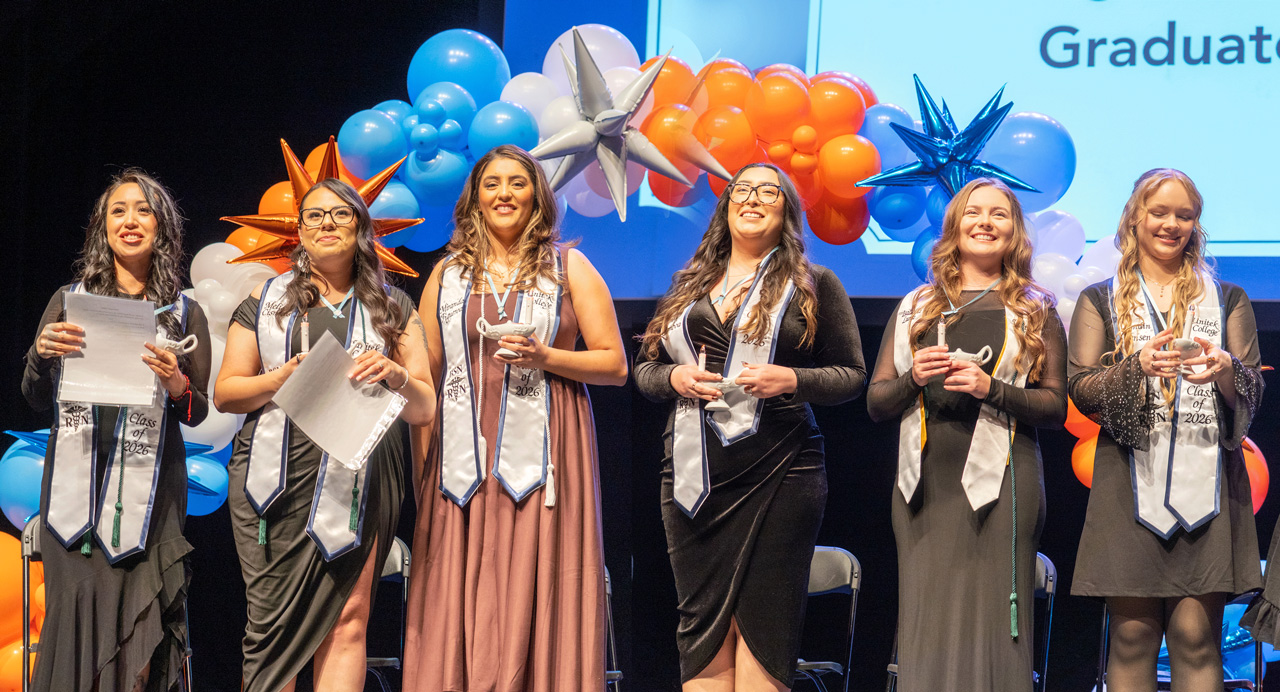
In January, Kaweah Health graduated its first cohort of nurses in the new partnership with Unitek College.
Central Valley hospitals have long cited workforce struggles as among their biggest challenges. Having enough physicians and nurses increases wait times for patients, Mertz said.
To remedy that, Kaweah created the Nursing Education Pathway that allows employees to attend school and work at the same time, earning their bachelor of science in nursing. The program typically takes three years to complete.
For graduates who stay at the hospital for three years, Kaweah Health pays for tuition costs.
The hospital had 13 people graduate, with 10 opting to stay on at Kaweah. Another 28 will graduate in March, Mertz said.
“It was really inspiring to see these staff from all kinds of different backgrounds, some clinical, some not, but be able to further their careers and do so here at Kaweah was just awesome,” he said.
The hospital will also begin working with Visalia Unified School District to expand the health care track at Mt. Whitney High School in Visalia.
The goal is to expose students to not just doctor and nursing careers, but also other careers such as surgical technician, physical therapist, or ultrasound technician.
Connecting students with residents can create mentorships that will pay off in the long run.
“That’s a long-term play and a long-term investment that’s going to pay off over decades,” Mertz said. “But to me, it’s super exciting just to create these opportunities for local kids to develop fantastic careers and do so close to home.”