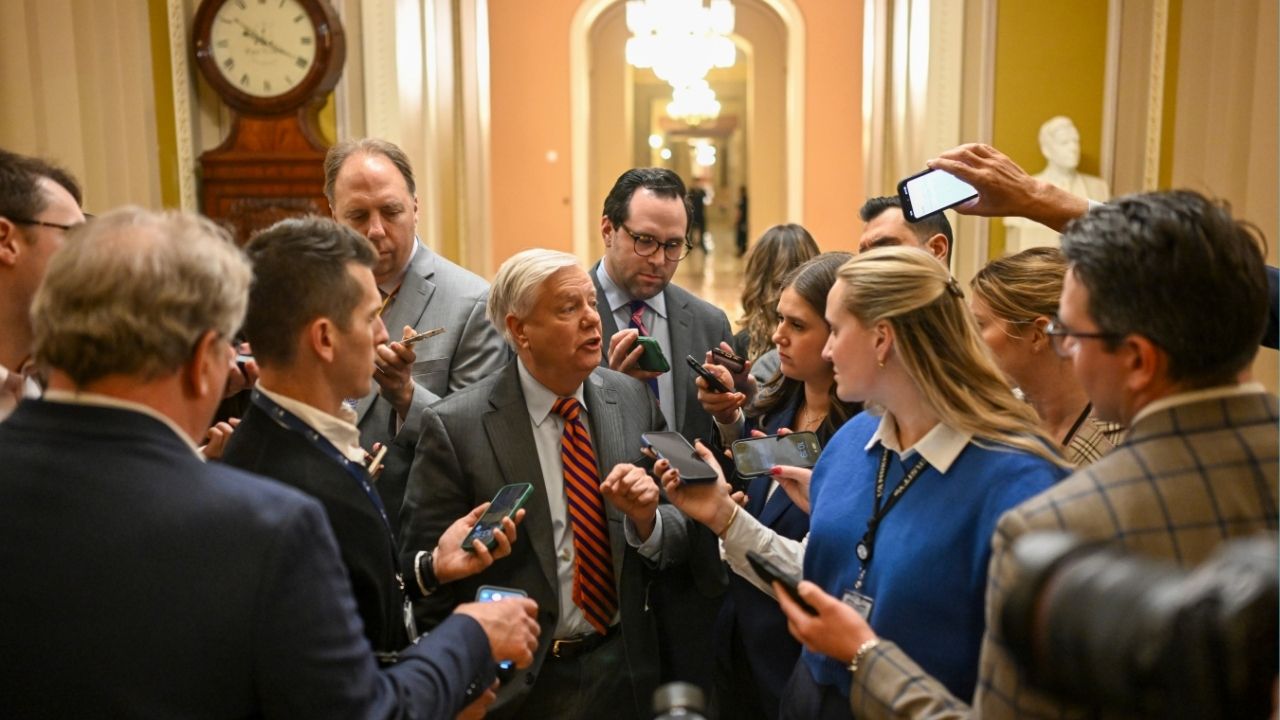
Sen. Lindsey Graham (R-S.C.) speaks to reporters amid ongoing talks toward a short-term budget deal at the Capitol in Washington on Thursday, Jan. 29, 2026. Democrats and the White House agreed to fund the Department of Homeland Security for two weeks while they negotiate restrictions on an immigration crackdown. Senators said they hoped to vote on the deal on Friday. (Kenny Holston/The New York Times)

Share
|
Getting your Trinity Audio player ready...
|
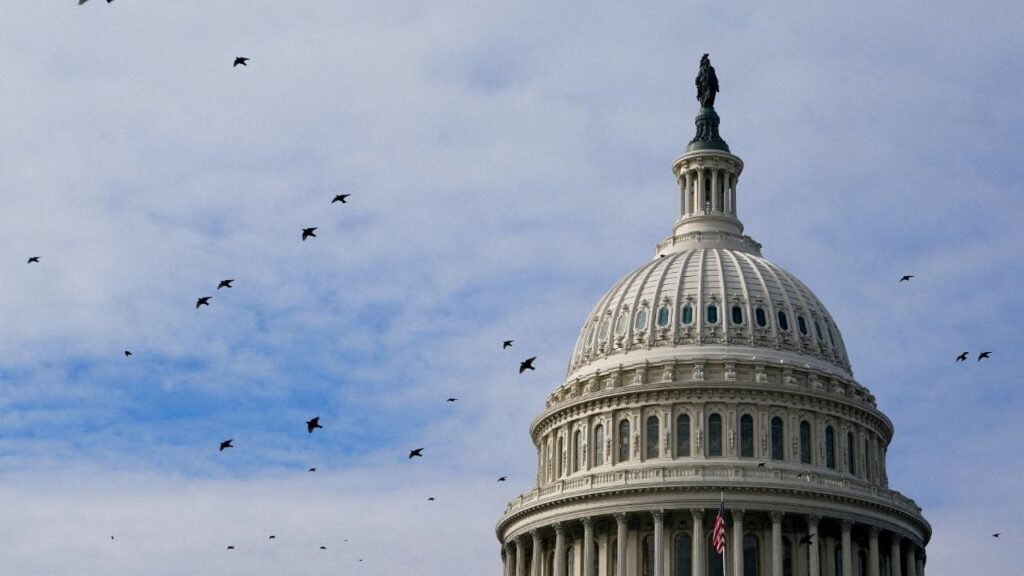
WASHINGTON — Senate Democrats struck a deal Thursday with President Donald Trump and Republicans that could avert a government shutdown and buy more time to negotiate restrictions on the administration’s immigration crackdown.
The agreement, if it holds, would allow the Senate to act before a Friday midnight deadline to fund a large portion of the government for the remainder of the fiscal year. It would also provide two weeks of funding for the Department of Homeland Security while lawmakers and White House officials negotiate over Democrats’ demands to rein in federal immigration agents.
Senators said they hoped to vote on the deal Friday, after their hopes of pushing it through Thursday night faded amid objections from rank-and-file Republicans.
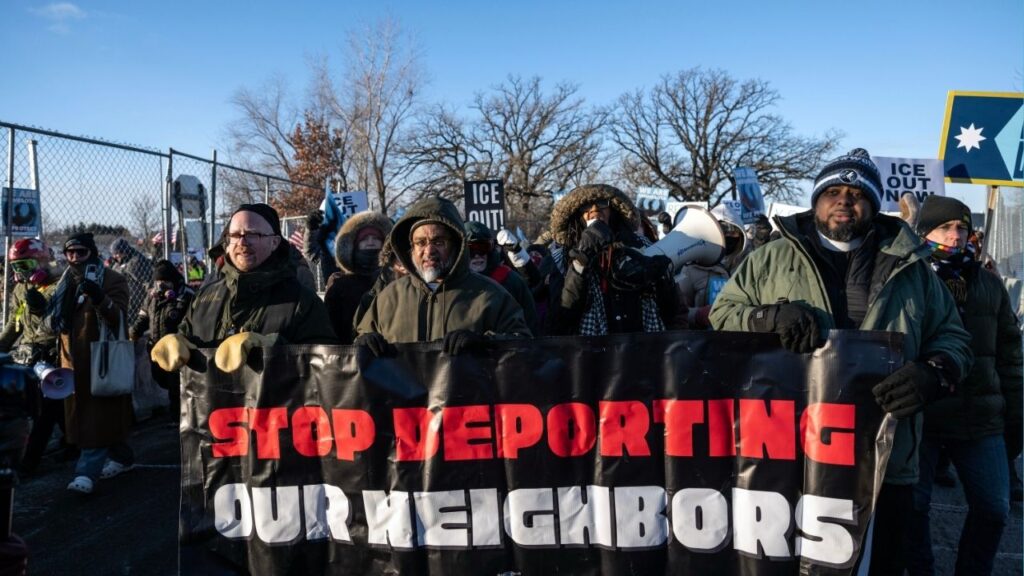
But the deal reflected an abrupt political shift that has taken hold at the White House and on Capitol Hill after the fatal shooting last weekend of Alex Pretti, an American citizen, by a federal agent in Minneapolis, the second such killing this month.
Trump Changes Face of ICE Operations
Trump has rushed this week to change the face of his immigration operations in Minneapolis and Republicans in Congress who rarely criticize him or his administration have vented their concern about the tactics being used and the goals of the operation, conceding that major changes are needed.
One of the Republicans who objected to swiftly passing the deal was Sen. Lindsey Graham of South Carolina. Graham called the agreement a “bad deal” and appeared to be unhappy that it included a House-authored provision to repeal a law that created a new avenue for senators to sue the government if federal investigators gained access to their phone records without notifying them.
Graham, who under the law was eligible to seek at least $500,000 in damages, had been among the only senators to publicly defend the measure.
It was also unclear how quickly the House could move on the legislation, which would need that chamber’s approval before it could become law. If it fails to pass, government funding would lapse Saturday morning.
Speaker Mike Johnson said that the earliest the House could act would be Monday.
“We may inevitably be in a short shutdown situation,” Johnson told reporters Thursday night at a screening of “Melania,” a documentary about the first lady, at the Kennedy Center. “But the House is going to do its job.”
—
This article originally appeared in The New York Times.
By Catie Edmondson and Carl Hulse/Kenny Holston
c. 2026 The New York Times Company
RELATED TOPICS:
Categories


US Warship Makes Israel Port Visit Amid Iran Tensions



Catherine O’Hara Dies at 71, TMZ Reports