

|
Getting your Trinity Audio player ready...
|
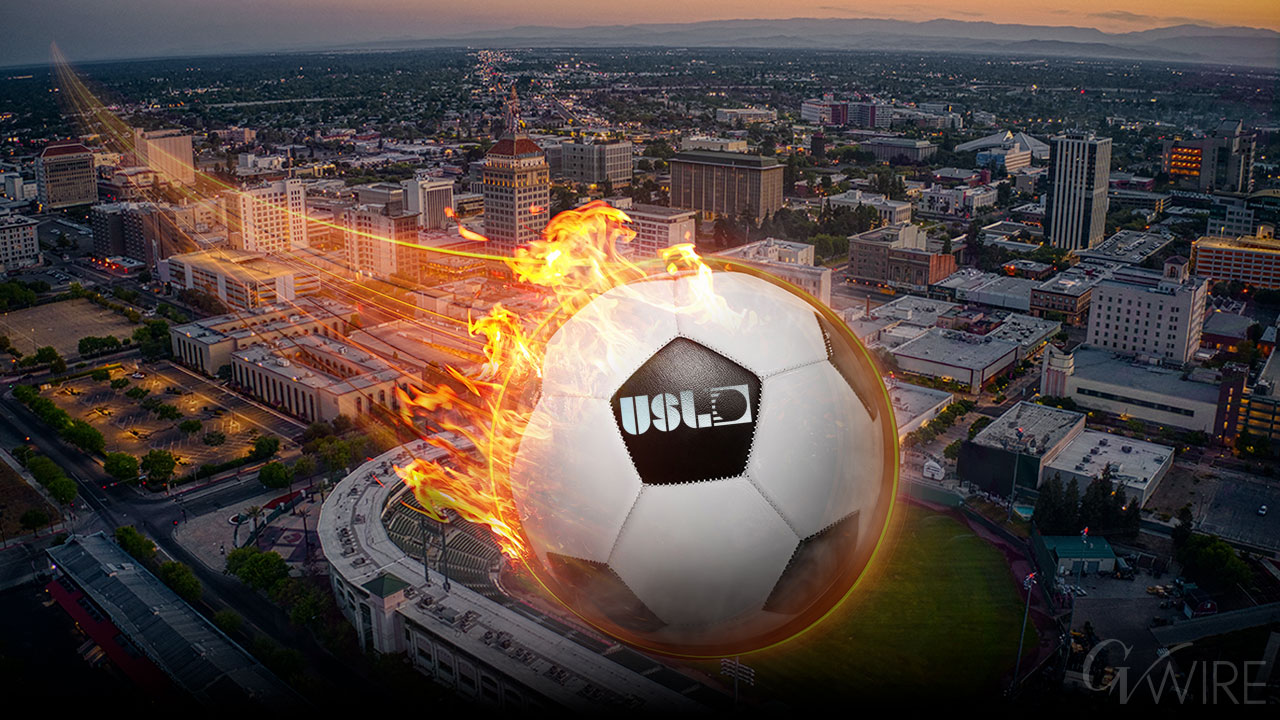
Fresno is getting soccer fever — just in time for the 2026 World Cup.
The world’s best soccer teams are coming to North America later this year. Meanwhile, Mayor Jerry Dyer is negotiating for Fresno to get its piece of the pitch.
Earlier this month, Dyer announced negotiations with the United Soccer League to return pro soccer to Fresno by 2028.

Dyer signed a letter of intent with the USL on Nov. 1, 2025, giving the parties one year to explore building a stadium and bringing a team to Fresno.
“I want to be a part of putting together a soccer team and a soccer stadium because I know the impact that will have on the future of our city, long after I’m gone as mayor,” Dyer said in an interview with GV Wire.
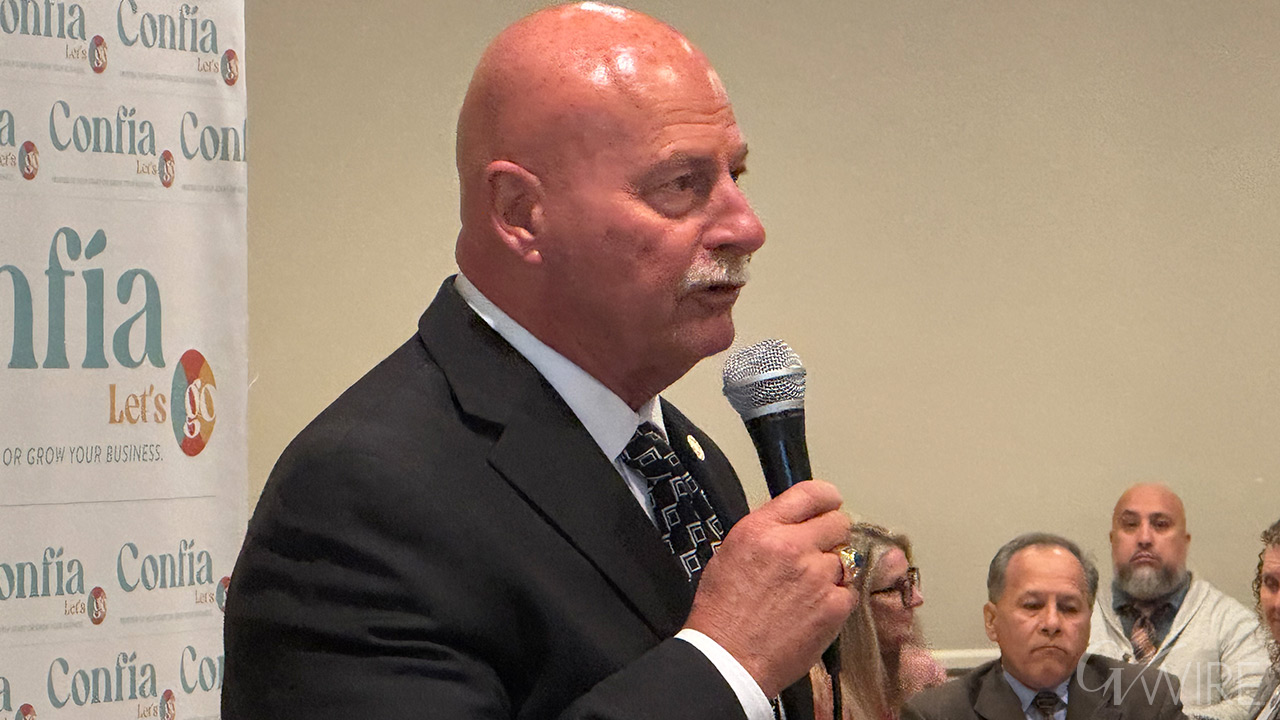
“We all know in Fresno soccer is well supported, and I am absolutely confident we’re going to have sellouts every single night.” — Mayor Jerry Dyer
Dyer’s recent soccer advocacy included a speech to the Fresno Area Hispanic Foundation.
“We all know in Fresno soccer is well supported, and I am absolutely confident we’re going to have sellouts every single night,” Dyer said.
Dyer called the letter a chance to perform due diligence. He said the USL plans to hold community meetings to learn more about Fresno and what the public wants in a soccer team.
He said soccer crowds have the potential to generate more revenue than the Fresno Grizzlies minor league baseball team.
“Anytime you have a USL soccer team, the number of people who show up for those games is significant. In fact, it’s not uncommon for them to sell out almost all of their games. The fan base, I think, is what separates them from what we’ve seen here with the Grizzlies,” Dyer said.
The USL is also bullish on Fresno.
“Fresno is at an important moment in its growth, with clear momentum around downtown investment and long-term planning. The city’s deliberate focus on revitalizing its urban core creates an opportunity for professional soccer to be part of something bigger — contributing to the activity and sense of community that make a downtown thrive,” said Justin Papadakis, USL deputy chief executive officer and chief real estate officer.
The obvious questions remain unanswered: Who would own the team and who would pay for the stadium?
Where Will the Stadium Be?
Fresno has been a USL destination in the past, but stadium issues drove the most recent franchise to Monterey.
The USL is equivalent to minor league baseball — a developmental league for Major League Soccer. Fresno FC, also known as the Foxes, played at Chukchansi Park from 2018 to 2019 before moving to Monterey.
A converted baseball stadium was not the answer. City officials estimated it cost $100,000 to convert the baseball field to soccer and back.
The USL-Fresno memo calls for work to develop a 7,000-seat stadium. The stadium would have 5,000 fixed seats, with expansion for more, Dyer said. If the city or a private developer builds it, the USL will come.
“We believe a new venue and professional men’s and women’s teams can complement that vision, and we look forward to working with Mayor Jerry Dyer and the city of Fresno to explore how professional soccer can align with the city’s future,” Papadakis said.
Dyer said the stadium would be either downtown or in Chinatown on city-owned property. He is not yet releasing a specific location.
“More than likely, the city will own the land and there will be some type of shared ownership of the stadium,” Dyer said. “The USL is just as interested in revitalizing downtowns as it is in bringing soccer to a city.”
Any deal made has to be financially sound, Dyer said.
“Whatever we do as a city, we’re going to minimize the liability the city will incur financially. But we also know we have to share risk in this. There is no doubt there will be shared ownership of some sort and shared revenue,” Dyer said.
Paying for a New Stadium
Dyer said it is “premature” to talk about how much the city is willing to spend. He estimated it would take about $50 million to build a stadium.
Dyer said financial arrangements will also be discussed.
“Would it be a shared partnership in ownership of the stadium? How would the proceeds be distributed — parking revenue and similar sources? Are there outside equity firms? We know there are, and that some have already expressed interest in investing,” Dyer said.
Councilmember Miguel Arias, who represents the downtown and Chinatown area, said city financing options could mirror those used to build Chukchansi Park — which opened in 2002 as Grizzly Stadium amid much debate.
He agreed that professional soccer needs its own stadium. However, Arias also said there are limits on how much the city can spend.
“We have to adopt balanced budgets, we have limited bonding capacity, but all of that will be part of the consideration once we know what the ownership group and the league are going to do on their part,” Arias said.
Arias said he would be willing to spend as much as the city did on Chukchansi Park — a $40 million bond over 30 years that is still being paid off.
While the city is near that limit with obligations for infrastructure projects — street paving, a 911 dispatch center, and a new police headquarters, among others — Dyer said some obligations will soon come off the rolls, freeing up money.
Councilmember Nick Richardson said he is willing to spend public money on a stadium, but it is not his top priority.
“As long as it’s not more than we’re spending on infrastructure improvements, I think that’s where the sweet spot is,” Richardson said. “Infrastructure needs to be our priority.”
Could Sarasota Owners Own Fresno Team?
The top level in the USL — comparable to Triple-A baseball — is known as the USL Championship, with 24 teams and two expansion markets planned.
The letter of intent obligates the USL to deal in good faith only with the city for a possible relocated or expansion team. The city also agreed not to solicit a soccer stadium from a non-USL team. The USL will bear all pre-development costs, including studies and projections.
“It’s incumbent upon the league to then go out, find the team and they will have an agreement with that team, and so for us, it’s really about the stadium and partnering with the USL,” Dyer said.
Dyer floated the idea of the owners of the Sarasota Paradise, a USL League One club — comparable to Double-A minor league baseball — owning the Fresno team.
The Paradise are owned by Marco Assis, CEO of Overland Park, Kansas-based interpreting firm Propio Language Services, and Marcus Walfridson, a veteran soccer official originally from Sweden. Owners can operate more than one team.
Dyer said Walfridson has already met in Fresno and that the Sarasota group was “very interested.” The team and the city had a Jan. 20 Zoom meeting scheduled.
Walfridson is pairing with Adam Smith — former head coach with both Fresno FC and the Fuego— to form Fresno Pro Soccer LLC. Smith said the goal is to put a local ownership group together.
“I believe in this community and put something together that will last,” Smith said.
Dyer said the soccer stadium would serve professional teams, as well as youth clubs, football games, and non-sports events such as concerts.
Dyer Envisions Soccer as Economic Hub
Dyer said the investment could be worth the risk, potentially generating sales tax revenue, parking income, and jobs.
“Soccer stadiums are really an economic hub for downtowns, and they serve to revitalize the area around them,” Dyer said.
That was the intention behind Chukchansi Park when it opened in 2002.
“To some degree, Chukchansi Park stimulated economic growth in the area. But soccer will do so tenfold,” Dyer said.
Dyer also cited figures estimating that each soccer match could generate $1.5 million to $3 million in economic benefit to the city. Councilmember Annalisa Perea cited the same figures at a Jan. 13 news conference.
Perea’s office said the numbers are not from a Fresno-specific study, but “conservative estimates based on standard economic modeling and what we’ve seen in other cities. They’re based on approximate spending patterns from sports and tourism events, attendance expectations, and standard economic multipliers used nationwide by public agencies.”
The figures are based on 15 matches with attendance of at least 8,000, spending at least $100 per game. The councilmember used a multiplier effect between 1.5 and 1.8.
A New York Times story casted doubts about the true benefit to communities.
Fan Club President Excited
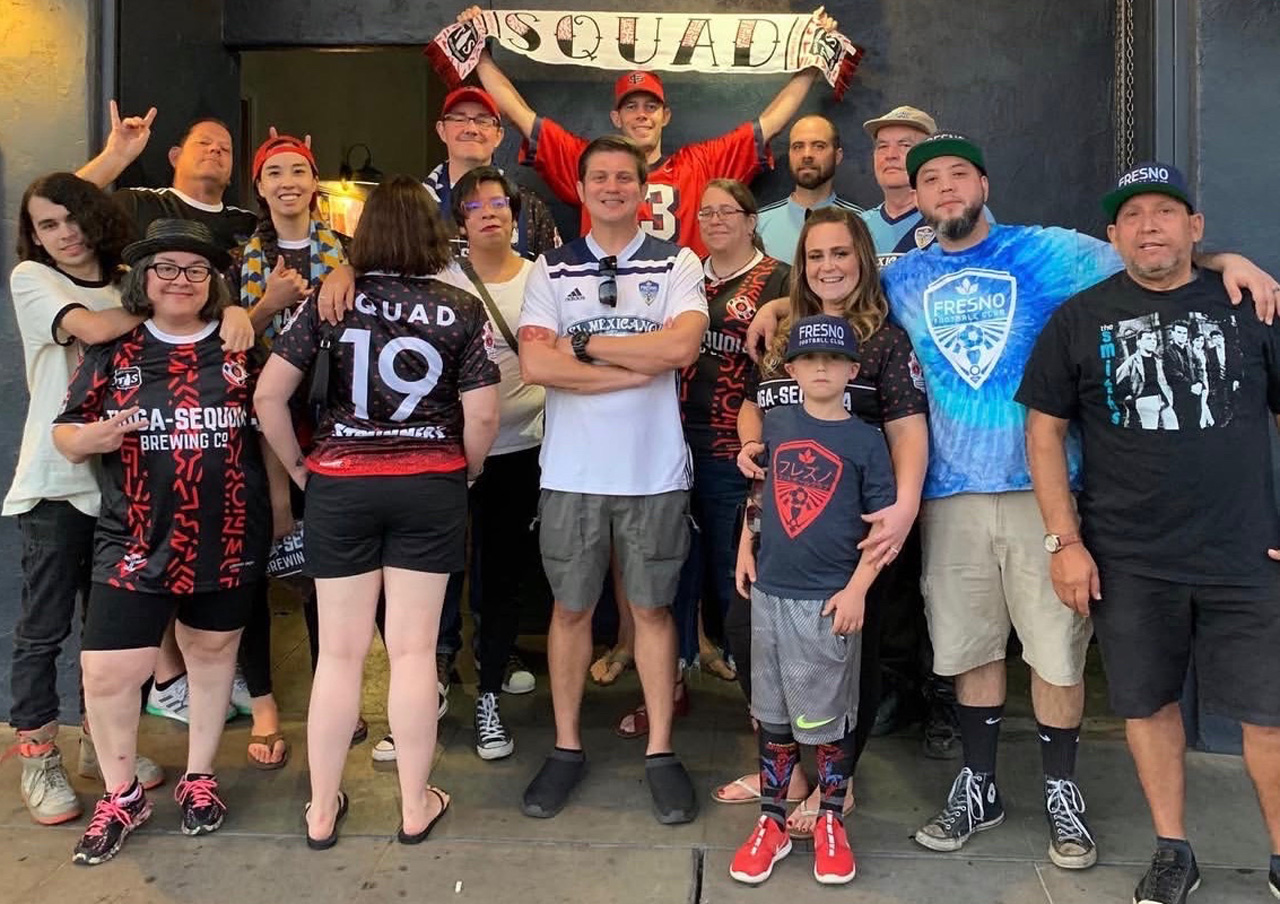
Edward Stewart is president of the Fresno Fire Squad, a soccer fan club that supported the Fuego, Fresno FC, and soccer in general. The group once boasted 250 members.
He called Fresno’s pursuit of a USL team “a great idea.”
“Fans are very hesitant, very cautious because of teams not making it in Fresno in the past. A lot of people are taking a wait-and-see approach to this new venture,” Stewart said.
He said he believes Fresno can fill a 5,000-seat stadium.
“If the product is good, I think Fresno has shown it will turn out,” Stewart said. He recalled attendance around 4,000 for the Fuego and Foxes.
Fans, Stewart said, would gather at places like Tioga Sequoia, across the street from Chukchansi Park, before and after games.
Stewart said he is hesitant about using taxpayer dollars.
“I would prefer for it not to be publicly funded. If the city can give them good deals on land and other incentives, that’s great. But what we’ve seen with Chukchansi is that the public is still essentially on the bill for that. I would hate to see that happen again,” Stewart said.
Recent Pro Soccer in Fresno
The USL kicks off the 2026 season in March and runs through October.
USL Championship teams on the West Coast include the Oakland Roots SC, Sacramento Republic FC, and Monterey Bay FC — the former Fresno Foxes. Teams play 16 home matches each season.
Monterey Bay plays at Cardinale Stadium, a 6,000-seat venue on the campus of CSU Monterey Bay. The pro team spent $11 million on renovations, according to its website.
Oakland will play its games at the Oakland Coliseum, the stadium vacated by the Oakland A’s Major League Baseball team and once home to the NFL’s Las Vegas Raiders.
Fresno has had three USL entries in recent history.
The Fresno Fuego played in the lower-level USL League Two from 2003 to 2017. For several seasons, the team played at Chukchansi Park.
Fresno Football Club, also known as the Foxes, played in the USL Championship from 2018 to 2019 at Chukchansi Park. Unable to secure a soccer-only stadium, the franchise moved to Monterey.
The Central Valley Fuego FC played in USL League One from 2022 to 2024, with home matches at Fresno State.
The current version of the Fuego operate several amateur clubs and are building a small stadium on property near Blackbeard’s Family Entertainment Center (the minigolf course will remain open).
Fuego Club President Brian Easler supports pro soccer returning.
“The more soccer the better. Fresno is probably the only big city left in the state that’s not being talked about,” Easler said.