
|
Getting your Trinity Audio player ready...
|
It was a common refrain for Donald Trump and his allies during the 2024 campaign: The Biden administration was purposely encouraging mass numbers of immigrants to cross the border in order to vote illegally.
As president, Trump has pushed his administration to address the alleged crimes, including prompting many states to upload tens of millions of voter records through a federal immigration verification tool run out of the Department of Homeland Security.
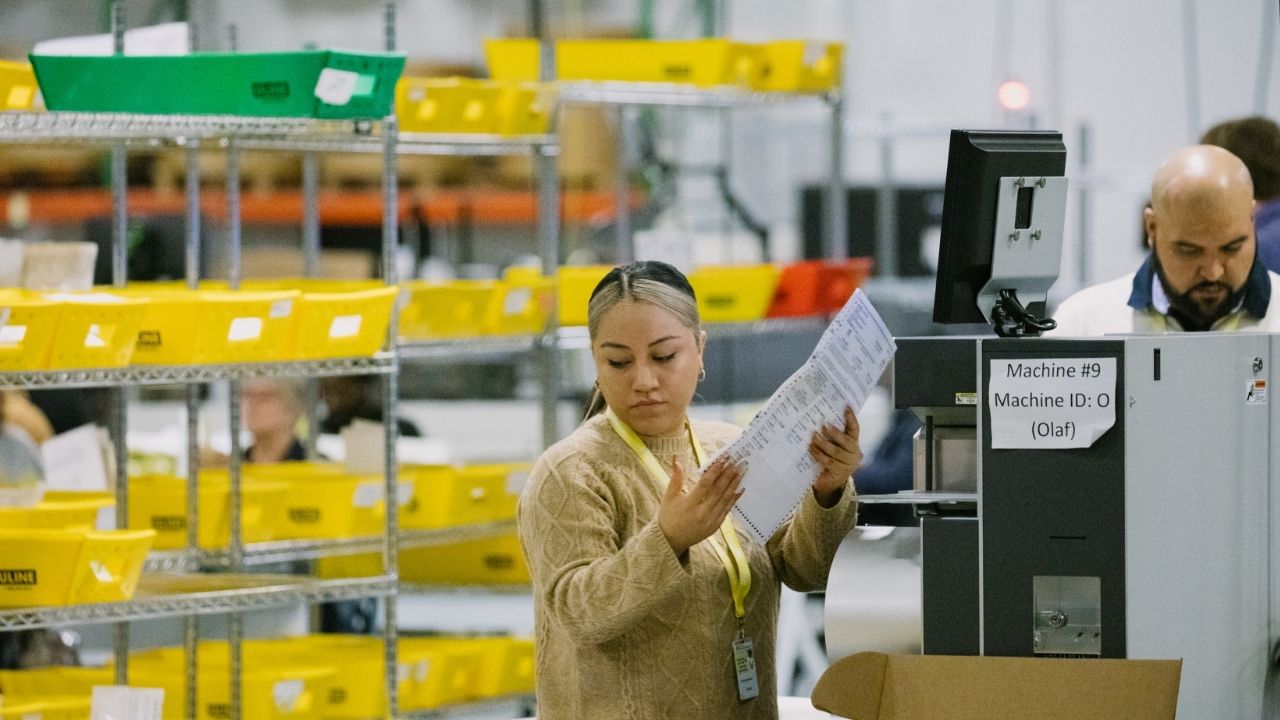
But with the review underway, the results so far indicate there is no evidence of widespread fraud, according to interviews with government officials and documents reviewed by The New York Times.

Out of 49.5 million voter registrations that have been checked, the department referred around 10,000 cases to Homeland Security Investigations for further investigation of noncitizenship, or roughly .02% of the names processed, according to Matthew Tragesser, a spokesperson for U.S. Citizenship and Immigration Services, the DHS agency that oversees the program. A Justice Department spokesperson also said the administration believed around 10,000 registered noncitizen voters had been found.
They did not specify how many of those people had voted.
Verification Tool Flagged Citizens
Even that number could be inflated. The verification tool has mistakenly flagged some people who appear to actually be citizens, according to some local election officials.
In Charlotte County, Florida, for instance, elections supervisor Leah Valenti, an appointee of Republican Gov. Ron DeSantis, said she found that just 15 out of 176,000 names she uploaded to DHS came back as noncitizens. Of those, she found that three were people mistakenly added to the rolls who never intended to register to vote; they have since been removed. Two others already sent in documentation to prove their naturalized citizenship, she said.
“We didn’t get a mass onslaught of people,” said Valenti, who is a proponent of using the DHS system to verify voters’ eligibility. “We have clean voter rolls.”
Tragesser said the program was “doing exactly what it is supposed to do — providing states with an easy-to-use tool to stop aliens from hijacking our elections.”
While the findings affirm that noncitizens do sometimes wind up on the voter rolls, the small numbers so far puncture the claims that Trump and his allies have made for the past decade that elections are riddled with illegal votes cast by immigrants who lack permanent legal status. Studies consistently show little if any evidence for such crimes on a large scale.
The review, which is voluntary for states or local election departments, has prompted complaints from officials in Democratic-run states who have declined to participate. They have warned that the system could effectively create a federal database containing personal information on some 200 million people — with a risk of erroneously flagging legal voters and impeding their access to the ballot box.
“We’re talking about a system here that is unproven, untested and therefore unreliable,” said Steve Simon, the Democratic secretary of state in Minnesota and former president of the nonpartisan National Association of Secretaries of State.
Abigail Jackson, a White House spokesperson, suggested that the newly expanded verification program might identify more noncitizen voters if it were used by Democratic states, many of which have voter ID laws and other voter restrictions that are less strict than those in some Republican states.
“This process takes time, especially given strong opposition from blue states, with notoriously bad voter roll maintenance, that have refused to check their rolls” against the DHS system, Jackson said.
Democratic-Run States Say They Have Effective Ways to Ensure Only Citizens Vote
Election officials in Democratic-run states say they already have effective ways to ensure only citizens are voting in federal elections.
The DHS-run program has long been used primarily to help government officials verify citizenship status for people applying for driver’s licenses or trying to gain access to health care or Social Security benefits.
For years, some local election officials have had arrangements with DHS to use the tool to verify the citizenship of voters. But the program, called the Systematic Alien Verification for Entitlements, or SAVE, was not designed for the mass uploads that would be needed to fully vet voter rolls.
Under the first Trump administration, officials explored the idea of expanding the tool by making it easier for election officials to use. But some homeland security officials worried that doing so would lead to mistakes and could potentially disenfranchise voters based on faulty matches or determinations.
Yet last year, the administration moved to expand the use of the SAVE system for voter records in response to an executive order from Trump. It began sending invites to state election officials that would allow them to upload voter data on a mass scale — including full name, date of birth and social security numbers — to check for anyone who was not a citizen on their voter rolls. The administration has also, for the first time, brought in data from the Social Security Administration that had previously been kept separate.
At least 14 states — all with Republican secretaries of state — publicly indicated last year that they would use the revamped DHS system to upload voter information, according to an analysis of public statements, records and interviews with people involved.
Eleven Democratic secretaries of state wrote a letter to DHS in December, raising alarms about the potential impact on eligible voters, warning that the expanded version of SAVE “will introduce unnecessary and unwarranted reliability, privacy and security issues into the sensitive voter information data we are entrusted to protect.”
Many Democratic states have also refused to provide similar information to the Department of Justice, which is suing at least 24 states that have refused to turn over data.
In some cases, the reviews are identifying voters who appear to be citizens, inviting more confusion, election officials say.
Missouri County Clerks Say System Is Flawed
In Missouri, 70 county clerks in December signed a letter sent to state House and Senate leadership describing the system as flawed, saying it regularly included “individuals we know to be U.S. citizens — our neighbors, colleagues and even voters we have personally registered at naturalization ceremonies.”
St. Louis County, Missouri, found that around 35% of roughly 690 people initially flagged by the SAVE tool were registered at naturalization ceremonies, said Rick Stream, the Republican elections director for the county.
A spokesperson for the Missouri secretary of state’s office said that the state’s review using the SAVE tool was still in the early stages and that it would not be based solely on the tool itself. “Any potential issues identified through this process must be researched, verified and resolved at the local level in accordance with Missouri law and due process,” she said.
In South Carolina, a top election official emailed a wide array of federal agencies, expressing confusion over the tool after seeing preliminary results in July.
“Unfortunately, the information has raised more questions than it answered,” she wrote, according to emails obtained by American Oversight, a watchdog group.
In Louisiana, the system found 403 noncitizens out of 3 million registered voters, or .01%, with 83 having voted, according to a November memo obtained by the Times through a public records request. The memo also identified that some of the people were eligible for prosecution. “I want to be clear: Noncitizens illegally registering or voting is not a systemic problem in Louisiana,” Secretary of State Nancy Landry, a Republican, said in a public statement in September.
—
This article originally appeared in The New York Times.
By Alexandra Berzon and Nick Corasaniti/Michelle Gustafson
c. 2026 The New York Times Company