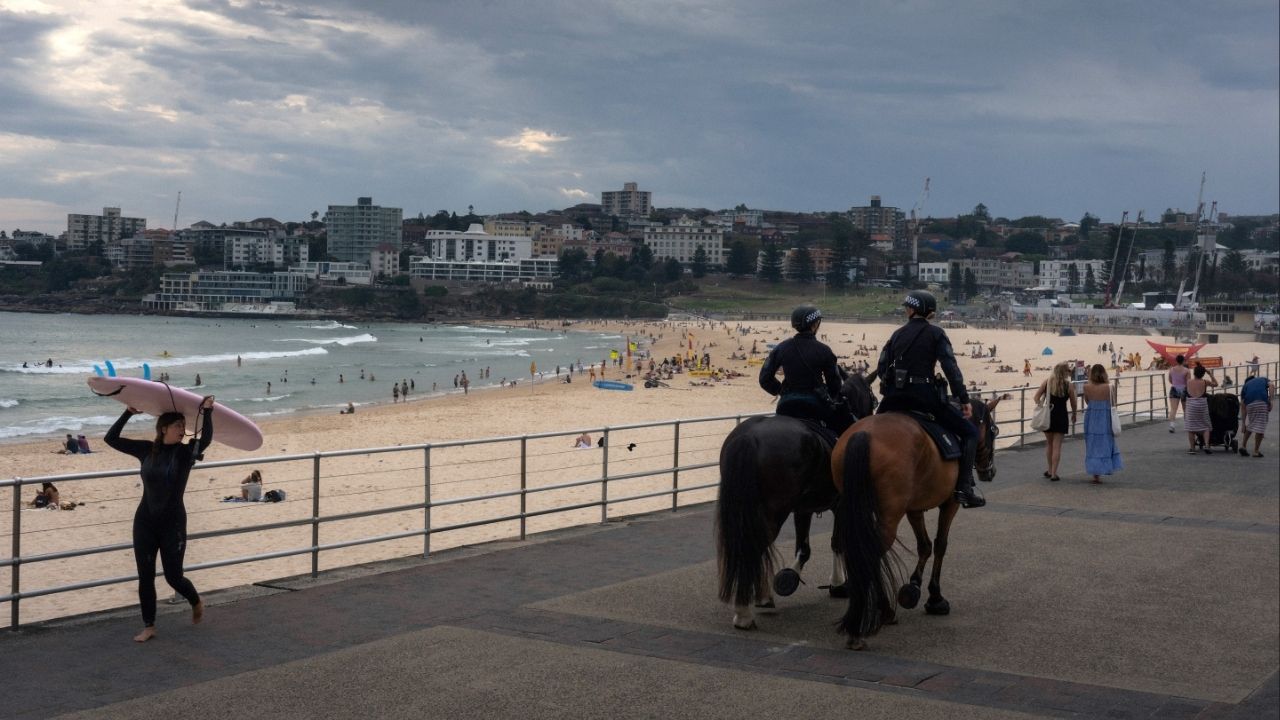
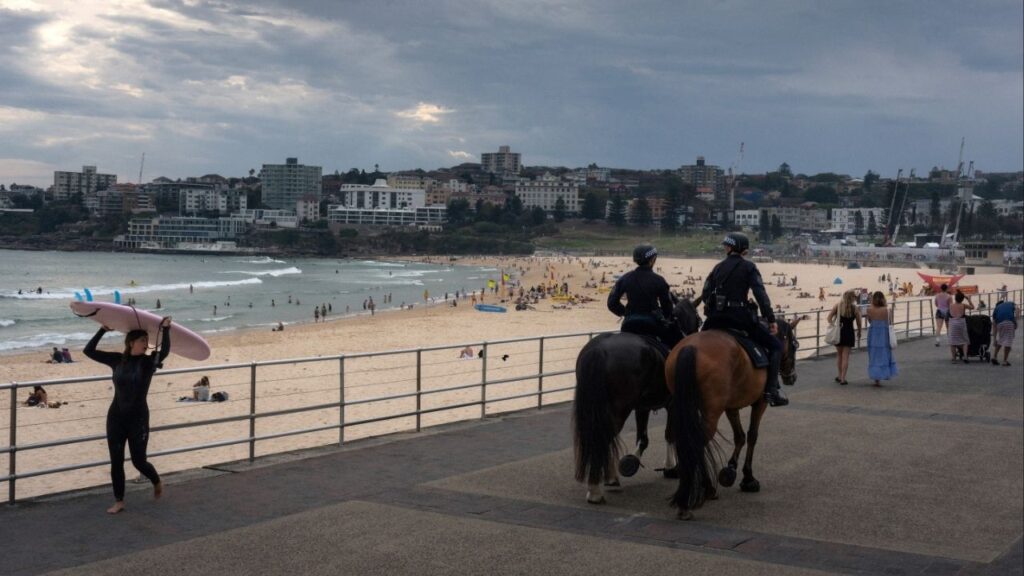
Police on horseback patrol Bondi Beach in Sydney, Australia, Dec. 21 2025. While new restrictions on firearms have broad support, new police powers to crack down on some protests were criticized as limits on civil liberties. (Matthew Abbott/The New York Times)

Share
|
Getting your Trinity Audio player ready...
|
SYDNEY — The Australian state of New South Wales, of which Sydney is the capital, passed new laws Wednesday that further restrict gun ownership and empower police to shut down protests, in response to last week’s terrorist attack on a Hanukkah celebration.
The state legislation comes just 10 days after the country’s deadliest mass shooting in decades, which left 15 people dead at Bondi Beach in Sydney. It is the first of a slew of actions the country’s leaders have pledged in the aftermath of the massacre to tighten gun laws, criminalize hate speech and crack down on groups spreading extremist ideology.
The slate of laws was passed at 3 a.m. after a lengthy debate. Chris Minns, the premier of New South Wales, acknowledged that they were “extraordinary measures” that would be controversial, but said they were proportionate and necessary steps to keep the public safe in light of the attack in Bondi.
“Sydney and New South Wales have changed forever as a result of that terrorist activity last Sunday,” he said at a news conference following the passage.
The new laws afford police broad powers to prohibit and disperse protests for up to 90 days after an incident has been declared terrorism.
Those restrictions were met with concern from lawmakers, activists and some religious leaders that an unfair association was being drawn between the actions of the two gunmen behind the mass shooting, and the largely peaceful protesters expressing concerns about the humanitarian crisis in the Gaza Strip and criticizing Israel’s conduct in the war.
Authorities in Australia have said that the shooters, who displayed Islamic State group flags in their car before launching the attack on families gathered at a Hanukkah event, were motivated by antisemitism.
The Australian Greens, a minority party, accused Minns’ Labor Party of ramming through the restrictions on protests along with the gun laws, which have broad support.
“The attack on protest will not make Australia safer, and is part of a broader false political narrative linking the actions of the appalling two terrorist shooters to a global movement to end violence, oppose a genocide and demand justice,” it said in a statement.
The organizers of pro-Palestinian marches that have filled Sydney’s harbor bridge this year said in a statement that they would file a constitutional legal challenge, calling the law “draconian” and accusing Minns’ government of exploiting the attack in Bondi to quash dissent.
Minns said the law was about deterring “divisive, inflammatory” gatherings in the immediate aftermath of a terrorist incident. He said his government would also explore legal options to restrict the chanting of certain phrases, including “globalize the intifada.” Minns said some of the new laws, including the restrictions on protests, would take effect immediately.
“In these circumstances of heightened tensions, words can lead to actions,” he said.
Among the laws passed overnight were also measures to criminalize the display of flags of groups deemed terrorist organizations by Australia, including the Islamic State, Hamas and Hezbollah.
In New South Wales, Australia’s most populous state, the newly introduced gun restrictions will cap the number of firearms that one individual can own at four, with exceptions for farmers and others in rural areas.
Sajid Akram, one of the Bondi Beach shooters who was killed by police, had six legally obtained firearms registered to him.
The state will also audit existing gun licenses and hold a gun buyback program along with the federal government, according to Minns.
Australians are broadly supportive of tighter gun laws, with three quarters saying they wanted more restrictions in a poll conducted last week.
—
This article originally appeared in The New York Times.
By Victoria Kim/Matthew Abbott
c. 2025 The New York Times Company
RELATED TOPICS:
Categories

Fresno Man Dies After Being Shot by Neighbor, Police Allege


Fresno Underpass Closed Due to Flooding