

|
Getting your Trinity Audio player ready...
|
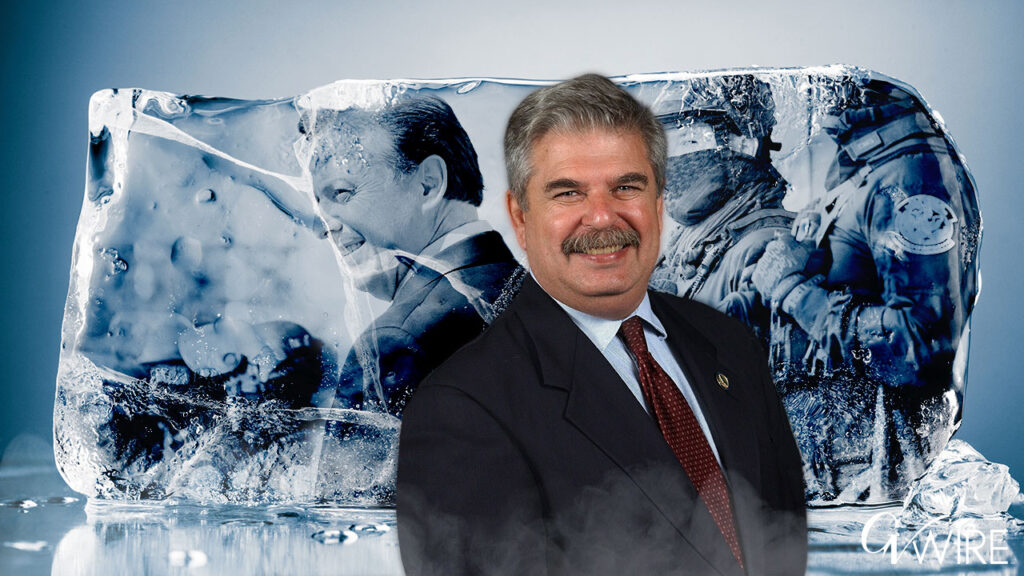
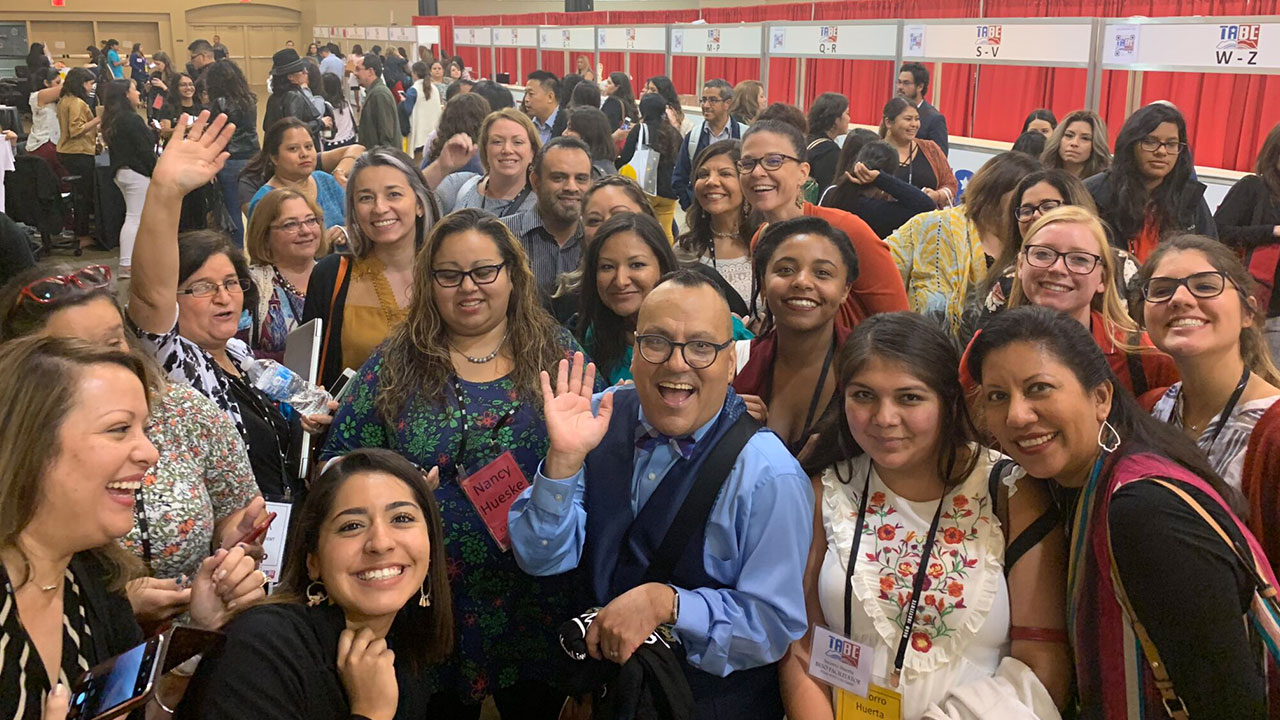
In the bilingual education world, José Medina is a superstar.

A former teacher-turned-principal-turned-researcher, Medina spreads his message about validating and acknowledging a student’s native language and expression on social media and in schools across the country with a sassy, no-nonsense style, telenovela-level energy, and strong research to back it up.
Medina, 54, is co-author of the Guiding Principles for Dual Language Education and provides training and coaching for dual language schools nationwide. He has tens of thousands of online followers on TikTok, YouTube and Instagram.
In one of his most viral TikTok videos, which has over 250,000 likes, he calls on teachers to respond positively if a child mixes languages by saying something like “My mom is planching my clothes,” combining the Spanish word for ironing, “planchar,” with the English “ing” ending. “We say, ‘Oh my goodness, look at you, moving the parts of language that you needed!’” he says, snapping his fingers.
This story was originally published by EdSource. Sign up for their daily newsletter.
He says teachers have been taught to be what he calls “linguistic oppressors” — telling students that the way they speak a language is wrong.
“Once we own the fact that we’re linguistic oppressors, we can become linguistic oppressors in recovery. And that is where the sauciness, the awesomeness lies,” he said. “The way we recover is by implementing biliteracy instructional practices that value everything that a child brings into the space.”
Medina’s Childhood Shaped His Dual-Language Teaching Guide
As a child in El Paso, Texas, in the early 1970s, Medina did not feel valued. He was called a “wetback” as a young child and ridiculed for not speaking English. He also knew he was different in other ways.
“I knew that I wasn’t the child that my parents wanted,” Medina said. “I knew that from a very young age I wanted to play with dolls. I knew that I wanted to jump rope rather than play marbles or baseball. I knew that I couldn’t catch a ball. I also knew that at a very young age, I wanted to not be alive. I didn’t know what that meant, but I wished that I would disappear.”
When Medina started school at an all-English kindergarten, he was scared. He would punch, kick, scream and run from the classroom. A few days in, the principal called his parents and told them they could not serve him. When they tried again in first grade, he was sent home again.
Ashamed and unsure of what to do, his parents enrolled him in a Catholic school. There, the nuns tied him to a gurney and wheeled him into the classroom by force, where he was introduced to his classmates as Joe.
Medina tells this story often. He calls it his “testimonio” or testimony. He’s quick to say that the El Paso Independent School District has come a long way since then. But it still feels raw, still hurts. He shares it because he wants principals and teachers to understand what it felt like, how it still feels. He wants them to change how schools welcome children like him and how they value students’ languages and identities.
If a child uses a Spanglish word like “parquear” for “to park” instead of the Spanish “estacionar,” Medina said, “My job as a teacher isn’t to tell that student that’s wrong. My job is to say, ‘I love that. How else would we say that in a different context?’”
Medina, based in Texas, works primarily with dual language schools, which teach children in both English and another language, with the goal of helping them become literate in both.
How Not to Design Dual-Language Programs
He said many of these schools, especially in California, designed their programs so that the languages are completely separate.
“All of the instruction in math is in Spanish, as an example, and then we get upset that the kids don’t know how to mobilize that math content understanding in English,” Medina said. “We’ll teach the kids to read in Spanish or Mandarin solely in the early childhood grades, but we never make the connection to English literacy, so the kids get to third, fourth or fifth grade, and they don’t know how to read in English.”
Instead, he recommends that schools begin teaching literacy in both languages from the beginning and make sure children are taught math in both languages.
Teachers and principals who have worked with Medina said he transformed their schools. Many said he is exceptionally good at building trust with teachers. He always finds things to praise, but also speaks candidly about what he wants them to change.
Alexandra Galván, a teacher on special assignment in the La Mesa-Spring Valley School District in San Diego County, said she learned a lot from watching him give teachers feedback. Medina calls it his “wows, wonders and what ifs.”
“That language felt very safe and brave,” Galván said. “It created an environment for teachers that changed their negative outlook and made them more open to critical feedback.”
Charter School Sees 30 Point Jump in English and Math
Lisa Lamb, CEO of Norton Science and Language Academy, a TK-12 charter school in San Bernardino, said that after working with Medina for two years, the school saw an almost 30-point jump in English and math scores, and more than 80% of students improved their scores, which she attributes in part to his coaching.
“His presence in the field has made a significant impact,” said Julie Melgosa Benmellah, an author and dual language specialist who has known Medina since 2015. “He has the ability to call folks in, to inspire, motivate and challenge teachers without putting them on the defensive, but not steering away from the hard conversations.”
Some of those hard conversations are about gender identity and sexual orientation. For Medina, inclusion is about much more than just which language you use in the classroom. He has spoken at conferences, including the California Association for Bilingual Education, on the importance of accepting and valuing LGBTQ students and using gender-inclusive language in Spanish and English.
This is a controversial subject among some Spanish speakers, but Medina does not shy away from it. His whole life, he’s felt pressure not to be himself, so he knows the impact on kids.
As a small child, his mother scolded him for cutting out a picture of the singer Juan Gabriel, who he now considers his first crush. And at a family Christmas party when he was 7 or 8, one of his uncles threatened to kill him because he was running in a way the uncle considered feminine.
Even in his professional life, he’s felt pressure not to be himself. When he got his first teaching job, the principal told him, “I would tone it down.”
So in his presentations to educators, Medina also speaks proudly of his husband of 22 years, alongside stories about being the child of immigrants and a Spanglish speaker.
He said some people have written comments on evaluation forms like, “I loved everything about the PD, but why did he have to mention his husband?”
Medina brushes it off. “Why wouldn’t I mention my husband?” he asked. “My job is to make folks be aware of the things that make them uncomfortable so that we can better serve students.”
About the Reporter
Zaidee Stavely covers English learners and immigrant families and hosts EdSource’s Education Beat podcast.