
|
Getting your Trinity Audio player ready...
|
JERUSALEM — Nearly two months into the ceasefire between Israel and Hamas, Israel continues to bar journalists from freely entering the Gaza Strip to report, despite a long-standing petition brought by journalists seeking access to the territory.
On Sunday, the Israeli Supreme Court gave the government an extension in responding to the petition, the ninth such delay since the case was filed in September 2024.
The Israeli government, which has yet to fully explain why it continues to bar journalists, is slated now to give its latest response Dec. 21, according to court filings, a delay that could be extended further.

Since the start of the devastating two-year war, Israel has largely barred international journalists from freely reporting in Gaza. The Israeli military has allowed reporters in on supervised excursions, but press freedom advocates say that is not nearly enough to effectively document the war.
Palestinian reporters have still been able to work in Gaza — albeit at great personal cost — throughout the conflict. Palestinian journalists working with Reuters, The Associated Press and other outlets have been killed in Israeli attacks, including in a strike on a Gaza hospital where they were reporting.
The Foreign Press Association in Israel, which filed the petition, on Tuesday denounced the latest delays in litigating the case. In a statement, the group — which represents journalists working for the international press in Israel, the West Bank and Gaza, including The New York Times — called the situation “beyond absurd.”
“These repeated delays have robbed the world of a fuller glimpse of conditions in Gaza and made a mockery of the entire legal process,” the association said.
The Israeli prime minister’s office and the Israeli military did not immediately respond to requests for comment.
“Since the war began, Israel has prevented our international journalists from entering Gaza except when accompanied by the military, limiting reporting on the ground that is vital to understanding the conflict and assuring the free and credible flow of information,” a spokesperson for the Times said.
“The Times has supported appeals to the Israeli Supreme Court for safe and increased access to Gaza, and we call on Israel to lift restrictions without delay, allowing all journalists to work securely and without fear or hesitation.”
Tightly Controlled Media Visits
The Israeli military has allowed international reporters to enter Gaza on a limited number of tightly controlled visits accompanied by Israeli forces. Participants are not generally able to use those visits to independently investigate particular Israeli strikes or conduct interviews with Palestinians. The military has also sought to put conditions on what journalists publish from the tours, such as reviewing footage before broadcast.
Israeli officials have previously argued that allowing journalists to freely report in Gaza could pose a security risk to Israeli soldiers, as reporters might, for example, give away military positions. But critics argue that the Israeli government’s real concern is more about preventing bad publicity.
Sara Qudah, the Middle East and North Africa director for the Committee to Protect Journalists, compared Israel’s approach in Gaza to restrictions on press coverage during conflicts imposed by autocracies like Myanmar and Russia. She called the ban on the entry of international journalists “a deliberate barrier to accountability.”
The CPJ says more than 200 Palestinian media workers have been killed in Gaza during the war. Israel has said some of those killed belonged to armed groups such as Hamas, an accusation generally denied by their employers.
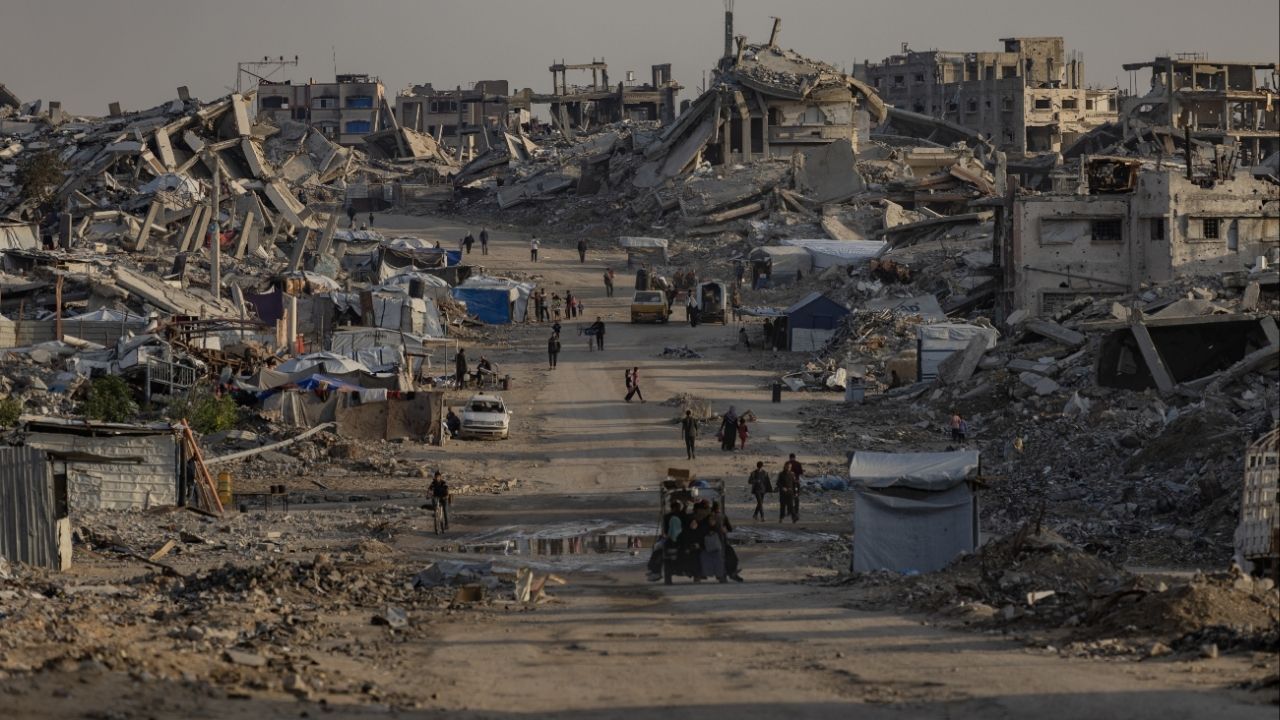
The war has already dealt severe blows to Israel’s international standing: The Israeli offensive razed much of Gaza and killed tens of thousands of people. Hamas ignited the war with its Oct. 7, 2023, attack on southern Israel, killing roughly 1,200 people and taking 250 hostages.
Israel and Hamas agreed to a ceasefire in mid-October. Though some violence has persisted, the fighting has diminished from the height of the war, when Israeli soldiers swept through Palestinian cities.
The Israeli government told the Supreme Court in late October that it was planning on “reexamining its policy on the entry of journalists” within 30 days, in light of the truce, according to court filings. That deadline came and went, and the court decided on additional extensions.
—
This article originally appeared in The New York Times.
By Aaron Boxerman/Saher Alghorra
c. 2025 The New York Times Company