
|
Getting your Trinity Audio player ready...
|
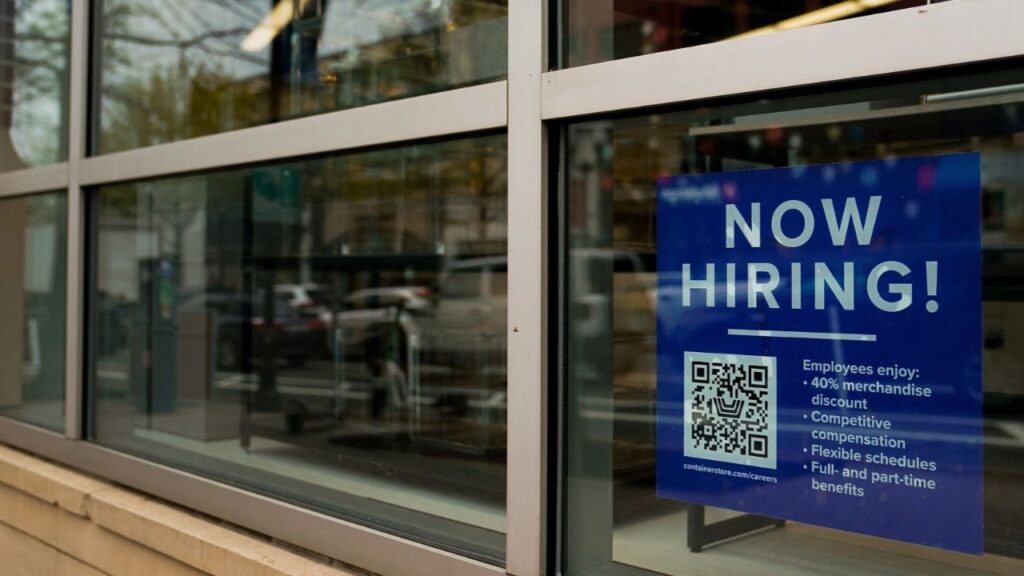
The US economy added 165,000 jobs in October — 100,000 more than expected by economists — and the unemployment rate ticked down unexpectedly to 4.1% amid a fairly broad-based improvement in the job market.
Here is a look at four notable data points from the Bureau of Labor Statistics report.
Foreign-Born Workers Lead Gains
The US labor force had contracted notably during President Donald Trump’s first year back in office, and economists connected the large outflows of foreign-born workers that led the decline to Trump’s immigration crackdown. Recently that has been reversing.

The workforce has expanded sharply in the last three months in particular, and all of the net gains in labor force participation and employment — as measured by the payrolls report’s household survey — have come from foreign-born workers. Employment and participation among native-born workers have fallen since July.
Manufacturing Comeback
Factory work is another corner of the job market experiencing a U-turn to the upside. In Trump’s first year, the manufacturing sector shed 93,000 jobs even as he imposed tariffs on imported goods to try to boost domestic factory employment.
That decline began reversing this year, and since December 2025 the sector has added 101,000 jobs, leading to a net gain of 8,000 factory jobs since Trump returned to the White House.
Jobless for Longer
The recent uptick in the pace of hiring has not yet begun to shorten the length of time that people who lose a job are out of work. While layoffs remain subdued and job gains have been sufficient in number to lower the unemployment rate, those with the misfortune of losing a job on average are remaining out of work for longer than any time in the past five years.
Excluding the short-lived surge in unemployment during the COVID-19 pandemic, both the median and average duration of unemployment — 11.9 weeks and 27.1 weeks, respectively — are the longest in about a decade.
AI Impacts
Most economists agree that the ever-widening adoption of artificial intelligence tools by employers has yet to produce major job displacements across the economy. That doesn’t mean they are entirely absent.
“The most AI-exposed sectors, information and finance, continued to struggle and have shed jobs on a trend basis,” Michael Pearce, chief US economist at Oxford Economics, noted following the jobs report. “By contrast, professional and business services, which also has high AI adoption, bucked that trend and added 70,000 jobs in October while seeing upward revisions to past months. Those gains were broad, spanning temporary help and management and technical consulting services.”
(Reporting by Dan Burns; Editing by Andrea Ricci )