

|
Getting your Trinity Audio player ready...
|
Israeli President Isaac Herzog said he planned to choose Sunday which party leader will get the first opportunity to form a government after elections last month produced no clear winner.
Herzog held talks this week with representatives of each of the parties that won enough votes to enter the 120-seat parliament. The parties recommended the candidate whom they support to form a government. The president, who has few formal powers, is supposed to give a mandate to the person he believes has the best chance of forming a government.
The opposition bloc led by Gadi Eisenkot, a former military chief of staff, was endorsed by the most parties, giving him the support of 67 members of the new parliament, or Knesset. That means Herzog is likely to give him the mandate to try and create a government, analysts say.

The coalition led by Prime Minister Benjamin Netanyahu finished second, with the parties that recommended him giving him 46 seats in the legislature. United Torah Judaism, an ultra-Orthodox party and longtime ally of Netanyahu, declined to endorse anyone.
On Thursday, Herzog said it was not “totally clear” who could form a government. He said he would hold “personal conversations” with some of the parties’ leaders and “turn over every rock” in an attempt to bring about the establishment of “stable and good government for the people in Israel.”
Negotiations between the parties could lead to a number of potential coalitions or none at all, in which case new elections could be held.
If Herzog selects Eisenkot, the opposition leader will likely need the backing of lawmakers from outside the Jewish-led parties in his coalition to secure enough votes. He could turn to Arab or ultra-Orthodox members of parliament, or he could reach out to members of Netanyahu’s right-wing Likud party.
If Netanyahu receives the mandate, he would likely need to win over some opposition lawmakers.
The election results had been expected to be inconclusive, but there were some surprises.
Likud outperformed many preelection opinion polls to become the biggest party in parliament. Still, it won fewer seats than in the last elections in 2022, and the party and its allies did not get enough to secure an outright majority of 61 seats.
Turnout by supporters of Israel’s Arab parties was extraordinarily high, propelling the parties to a record result.
Israel’s parliamentary system typically requires parties to find enough common ground to assemble a majority in Israel’s 120-seat parliament.
The system has produced some unlikely alliances and, on occasion, unstable, short-lived governments: From 2019-22, five elections were held in Israel.
In the coming days, the parties likely will enter into intense negotiations that could end in the establishment of a government or deadlock, making another election impossible to rule out.
Here are some possible scenarios for how the parties may align to form a government.
A Jewish-Arab Alliance
For Netanyahu’s opponents, securing a majority could depend on support from Arab parties. But that would be challenging politically for Eisenkot.
If Eisenkot were to work with both Arab parties — the Joint List, an alliance of three Arab-led factions, and Raam, a pragmatic Islamist party — he would have a significant majority in parliament.
Eisenkot has rejected alliances with parties that do not support Israel’s Jewish character or the defeat of Hamas, the militant group in the Gaza Strip that led the Oct. 7, 2023, attacks on the country. Many of Eisenkot’s voters could view an effort to partner with the Arab parties as breaking a campaign promise. That would be a potentially damaging for Eisenkot in a political landscape in which another election could be imminent.
Eisenkot also could form a minority government by leaving Arab lawmakers out of the coalition but securing their agreement to support it. The Joint List has said it would not join a governing coalition, but it has proposed to help the Jewish-led opposition parties oust Netanyahu from office and prop up an Eisenkot-led government.
But it is unclear how sustainable such an arrangement would be.
A Unity Government
A unity government led by Netanyahu and Eisenkot offers another path to a clear majority. But such an alliance could prove uneasy for both leaders.
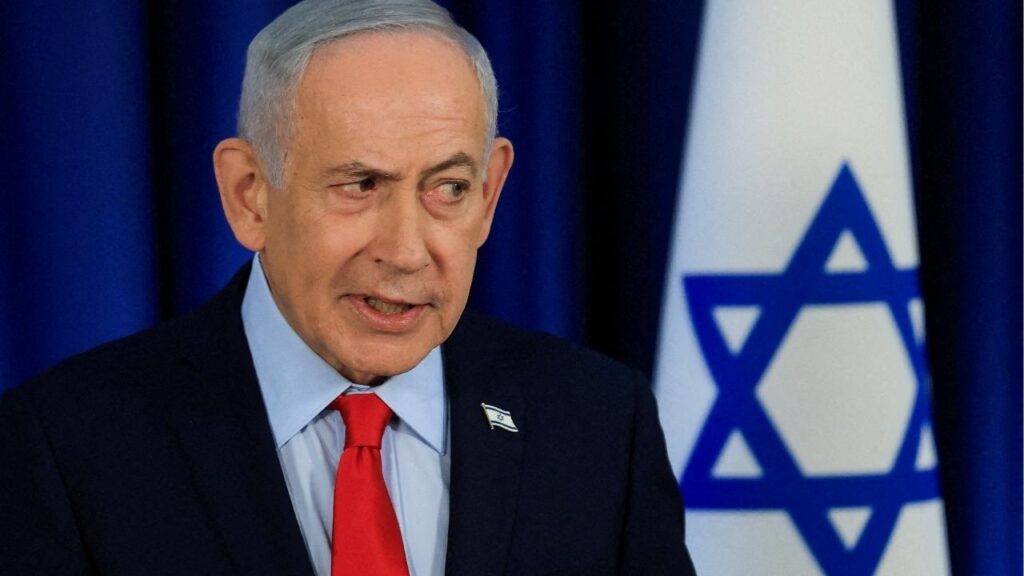
Eisenkot’s campaign focused on the urgent need to unseat Netanyahu, whom he has called unfit to serve as prime minister. Netanyahu may not be keen to share power, or delegate significant authority, to his fierce rival.
One possible unity government could bring together the Likud party; Eisenkot’s Yashar party; Together, an alliance between two former prime ministers, Naftali Bennett and Yair Lapid; and Yisrael Beiteinu, a right-wing party led by Avigdor Liberman, who broke with Netanyahu and has since been a rival.
Final results gave such a bloc 66 seats, a clear governing majority, if a shaky one.
An Ultra-Orthodox-Backed Government
Eisenkot could seek the support of the two ultra-Orthodox parties, which are longtime allies of Netanyahu but have grievances against him. That might prove difficult, given that the opposition has long criticized military draft exemptions for ultra-Orthodox men.
But United Torah Judaism’s decision not to recommend Netanyahu could be a sign that it wants to work with Eisenkot to form a government and reach a compromise on legislation to conscript ultra-Orthodox citizens into the military.
Liberman has long refused to sit in a government with ultra-Orthodox lawmakers. On Friday, however, he suggested he was open to working with them, saying it was “permitted and desired” to be flexible on the issue of conscription.
“This is painful for me, and I know it’s painful for many others,” he said on social media. “But in light of the challenges we’re dealing with today, the national interest of the state of Israel and the people of Israel must stand above all other considerations.”
—
This article originally appeared in The New York Times.
By Adam Rasgon, Adina Renner and Pablo Robles
c. 2026 The New York Times Company