
|
Getting your Trinity Audio player ready...
|
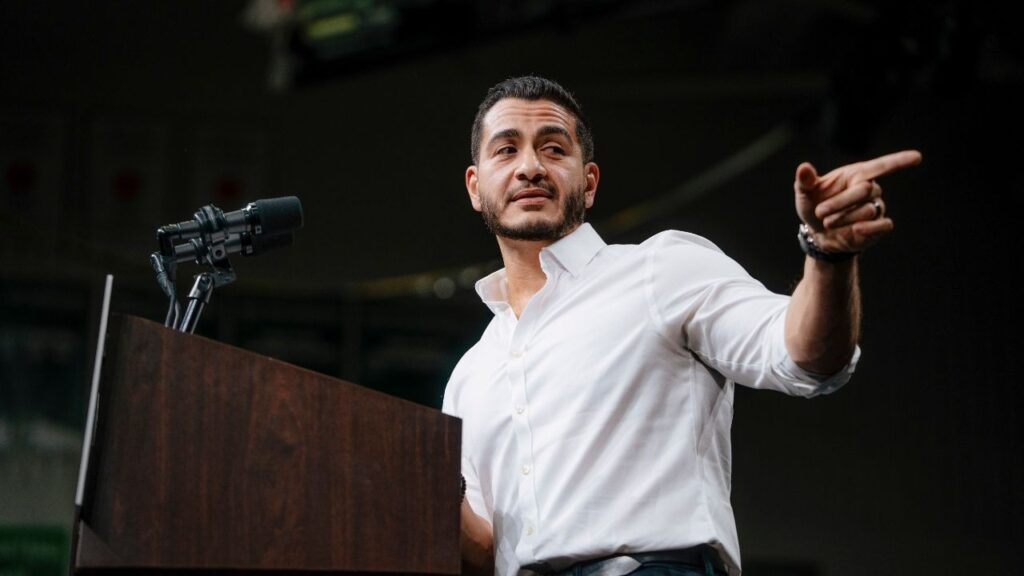
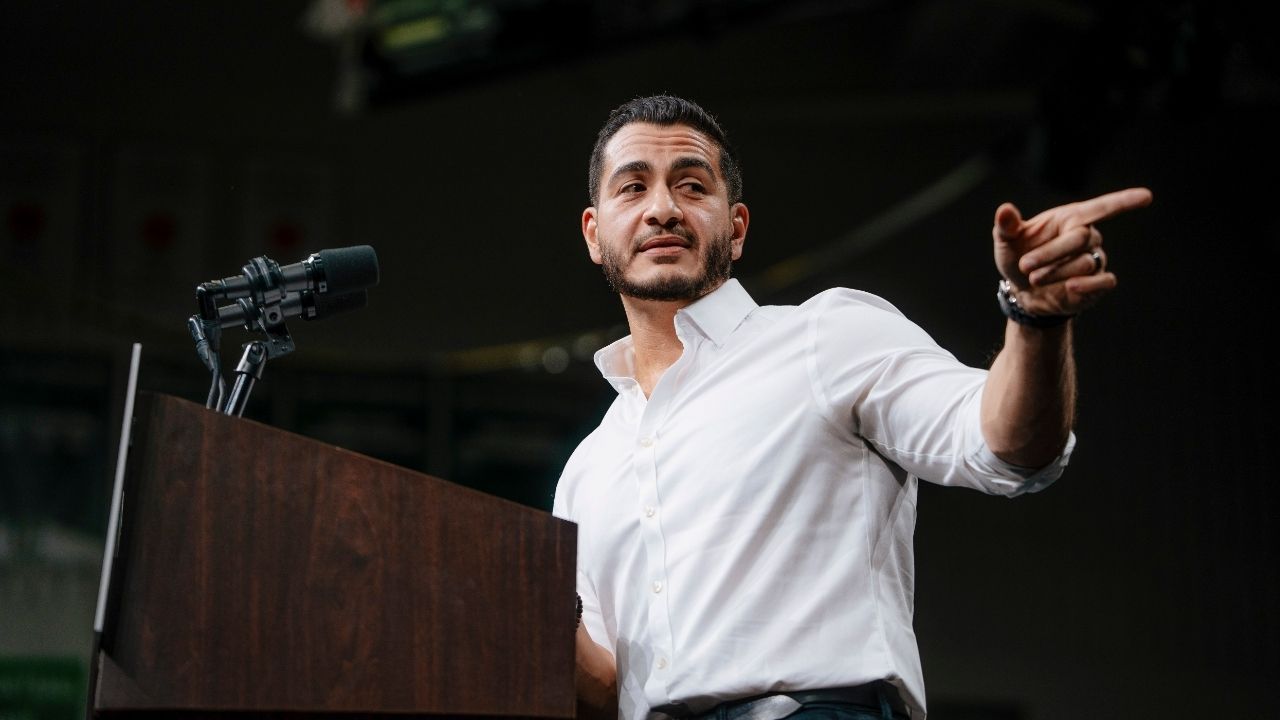
Rep. Haley Stevens of Michigan, who lost to Abdul El-Sayed in a bitter Democratic primary for Senate in August, has grown increasingly critical of him as the election draws near, injecting unusual intraparty tensions into the final days of a pivotal midterm contest.
While Stevens reiterated Wednesday night that she plans to vote for El-Sayed, she did so through seemingly gritted teeth in a televised interview just hours after her fiance said that he would be voting for former Rep. Mike Rogers, El-Sayed’s Republican rival. She also called on El-Sayed to denounce an ad from an outside group that she has argued amounts to “fearmongering about Israel,” and to take down an ad from his campaign featuring Tucker Carlson.
“Of course, I’m voting for our Democratic nominee for Senate,” Stevens said on CNN. “I’m voting for the Democratic ticket. But I want to encourage this campaign to shut out the hate and to call it out and to make people who are in my coalition, right — make them feel comfortable about coming to the polls.”

Stevens’ remarks are an unwelcome development for El-Sayed in a high-stakes race. It is rare for the loser of a primary who has endorsed the winner to be publicly critical this close to the general election.
It’s not the first time it has happened in this year’s midterms. In Texas, Sen. John Cornyn has missed few opportunities to needle Ken Paxton, who beat him for the Republican nomination in May. Cornyn, however, has not made as many cable news appearances as Stevens.
Stevens, a staunch supporter of Israel, said on CNN that she is representing Jewish Michiganders who supported her and are angry about advertising that they view as antisemitic. The campaign of El-Sayed, a vocal critic of Israel, has said it was “not affiliated in any way” with the ad that has come under scrutiny. But Stevens said that does not go far enough.
“He can disavow these ads, and he can reassure these undecided voters who are still out,” she said.
A spokesperson for El-Sayed’s campaign declined to comment on Stevens’ remarks.
El-Sayed, speaking to reporters earlier Wednesday, dismissed concerns that Stevens’ fiance was backing Rogers over concerns about El-Sayed’s Israel policy.
“I’m building a movement to take on the challenges that Donald Trump is facing,” El-Sayed said. “If folks have issues that are more important to them than that, that’s fine — that’s their choice.”
The public criticism from Stevens made clear that there has been little private reconciliation between the primary rivals despite her vow to vote for him. While Stevens couched her public remarks as constructive criticism, she has been more critical of El-Sayed in private, according to a person who has spoken with her, leaving some allies wondering if she would in fact vote for him.
She said in a text message Wednesday that she would not appear with El-Sayed in the campaign’s final week. “I am not campaigning with Abdul,” she wrote.
Stevens’ criticism of El-Sayed had been building.
On Sunday, in another CNN interview, she said, “I can’t say that I agree with everything that’s gone on.” She questioned El-Sayed’s efforts to appeal to Black voters and suggested that he was too focused on foreign policy.
El-Sayed’s campaign said that its leadership remains in frequent contact with Stevens and that she had campaigned on his behalf at mid-October Democratic event in Oakland County, which she had carried in the primary. It also said El-Sayed had brought on several staff members from Stevens’ campaign after the primary.
El-Sayed’s campaign said it had also asked Stevens to campaign alongside him. It did not respond to a question about why that had not happened recently.
“The Abdul campaign is grateful for Congresswoman Stevens’ immediate and sustained support,” Roxie Richner, a spokesperson for El-Sayed, said in a statement.
Stevens’ tepid support — and the awkward dynamic between the two Democrats — is one of the most public points of tension among Democrats in Michigan, who remain far more divided than party leaders had hoped to be going into the election next Tuesday.
Opinion polls show that El-Sayed and Rogers are running neck-and-neck in Michigan, a traditional battleground state where a Republican has not won a Senate race in more than three decades. The battle between El-Sayed and Rogers could play a critical role in the national fight for Senate control.
Israel remains a dividing line for some Democrats in the state, and Jewish voters say they are torn about whether to support El-Sayed, who has called Israel’s government “evil.” El-Sayed is also trying to overcome tensions between Black and Arab American voters in the Detroit area.
El-Sayed and Stevens clashed regularly over Israel during the primary race, with El-Sayed assailing Stevens over support she received from the American Israel Public Affairs Committee, a lobbying group. AIPAC is now backing Rogers.
—
This article originally appeared in The New York Times.
By Reid J. Epstein and Tim Balk/Nick Hagen
c. 2026 The New York Times Company