
|
Getting your Trinity Audio player ready...
|
In the past few weeks, President Donald Trump has tried to block reporters from three news outlets whose coverage he found too negative: CNN, MS NOW and Politico.
At first, journalists from those three outlets couldn’t get into the White House complex at all. But after the outlets sued the administration, a federal judge forced Trump to let them back in, at least for a couple of weeks while the litigation got underway.
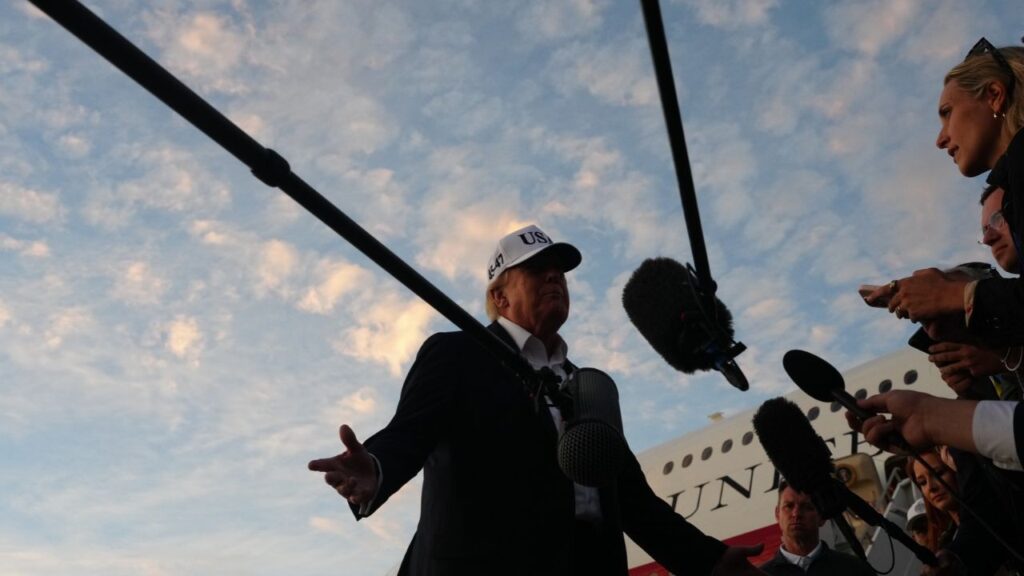
Then, a day after the ruling, a new twist: Trump barred CNN from traveling with him on Air Force One. He did it again the next week, then barred a Politico journalist from a scheduled trip on the plane, too.

Exactly what authority the president has when it comes to the makeup of his press detail is the subject of multiple lawsuits in federal court in Washington. On Thursday, Judge Timothy J. Kelly extended his order preventing the White House from barring the three outlets from its grounds.
The clashes with these outlets — and a related case involving The Associated Press — raise a number of legal and journalistic questions.
Here’s what to know:
Who Decides Who Gets to Cover the President?
The White House Press Office is in charge of issuing credentials that let journalists in and out of the White House complex. Many enter on temporary press passes only for certain presidential events, but more than 1,200 journalists hold what is known as a “hard pass,” a White House official said.
That credential, which requires a background check by the Secret Service, gives journalists access to “Pebble Beach,” an area where TV crews do their stand-up shots; a portion of the West Wing driveway; the James S. Brady briefing room; and the “lower press” space, where White House news media assistants do their work.
What Does the Law Say About Journalists’ Access to the White House?
Although the White House Press Office hands out the passes, the courts have ruled that the First Amendment protects journalists from unnecessarily arduous restrictions and from being arbitrarily “excluded from sources of information,” according to a 1977 court ruling. It said that after the White House set up facilities for the news media, it couldn’t deny access to any particular outlet arbitrarily.
That case also established the precedent that White House hard passes can’t be stripped from reporters without rigorous procedures, including proper notice of the basis for denial, an opportunity to respond and a final written statement of the reasons for denial.
These requirements have played a central role in the access disputes during Trump’s presidencies: In 2018, the White House revoked the hard pass of CNN’s Jim Acosta, and the next year it suspended the hard pass of Brian Karem, a Playboy magazine correspondent.
In both cases, federal judges ruled that the White House hadn’t accorded the journalists due process.
And in the ruling involving CNN, MS NOW and Politico — which explicitly restored the hard passes for the journalists — the judge also criticized the White House for failing to follow due process.
In court filings, the White House has claimed that the president has an interest “in enforcing minimum standards for bona fide journalists and safeguarding national security information,” according to a government filing.
“President Trump will continue calling out the biased media and delivering his message directly to the American people without apology,” White House spokesperson Davis Ingle said in a statement.
Why Were the Outlets Still Blocked From Air Force One?
Kelly’s order didn’t explicitly address the outlets’ so-called pool assignments.
There are different tiers when it comes to covering the president. The Oval Office is about the size of a one-bedroom apartment, far too small to accommodate all the hard-pass holders on the White House grounds. Other venues on the White House beat, including Air Force One, have space constraints as well.
The solution is the pool system, in which small groups of hard-pass-carrying journalists are allowed into tight quarters on a rotating basis. Pool reports feature notes, observations and quotes from presidential events and go out to a wide audience.
For decades, the White House Correspondents’ Association and the press corps determined the rotations in the pivotal press pool, but the White House took control of those assignments in February 2025, claiming that it would provide access to outlets previously denied the opportunity to question the president.
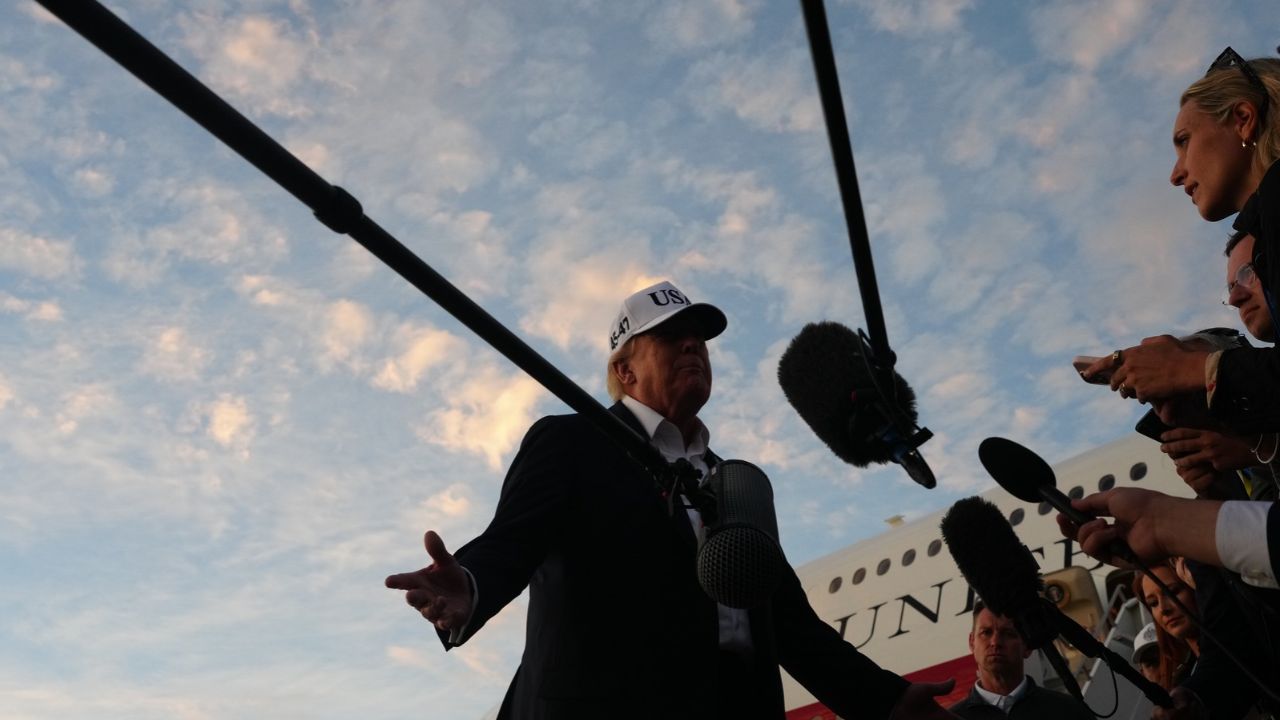
Trump used that power to block CNN and Politico from their pool assignments. Just days after Kelly’s order, he stopped CNN from serving its scheduled turn as the TV pool reporter for a trip to Tennessee. The network again found itself barred from pool duty Oct. 1, when Trump traveled to Texas and Oklahoma to barnstorm for Republican candidates.
Politico was excluded from its pool rotation for Trump’s trip Monday to Nebraska. An MS NOW news executive said in a court declaration that the outlet had been excluded from participation in the White House’s secondary TV pool. A White House official said MS NOW’s inclusion in the pool had come at the invitation of the White House in the first place.
That said, CNN was allowed to fulfill pool duties on two other occasions.
In court filings, CNN, MS NOW and Politico have asked Kelly to restore the same level of White House access that they had before the September ban, a request that covers their pool rotations.
Have Any Other Outlets Been Barred From Those Smaller Spaces?
Yes. In February 2025, the White House also removed Associated Press journalists from the press pool over the wire service’s decision not to refer to the Gulf of Mexico as the Gulf of America. Other outlets, including The New York Times, also use the Gulf of Mexico to refer to that body of water.
The AP sued, and a federal judge restored its access. But the U.S. Court of Appeals for the District of Columbia Circuit paused the heart of the judge’s order while the White House appeals.
How Have Other News Organizations Responded?
When Trump barred the three outlets from the White House grounds, other news organizations banded together to blast the ban and support the ousted journalists.
The major television networks suspended their pool coverage of Trump entirely, breaking a practice that dated back decades.
The TV pool, an independent arrangement consisting of five networks (ABC News, CBS News, CNN, Fox News and NBC News), has long rotated the responsibility of providing television coverage of the president, splitting the financial costs, sharing footage with one another and affiliates, and selling it to other outlets.
Once the outlets got their hard passes reinstated, the five networks decided to resume pool duties, with a caveat: Each time that CNN is removed from a pool rotation, the group of networks decides whether to provide a substitute crew. Otherwise, CNN’s slot will be left unfilled, and Trump will not receive major network coverage.
—
This article originally appeared in The New York Times.
By Erik Wemple/Alex Kent
c. 2026 The New York Times Company