

|
Getting your Trinity Audio player ready...
|
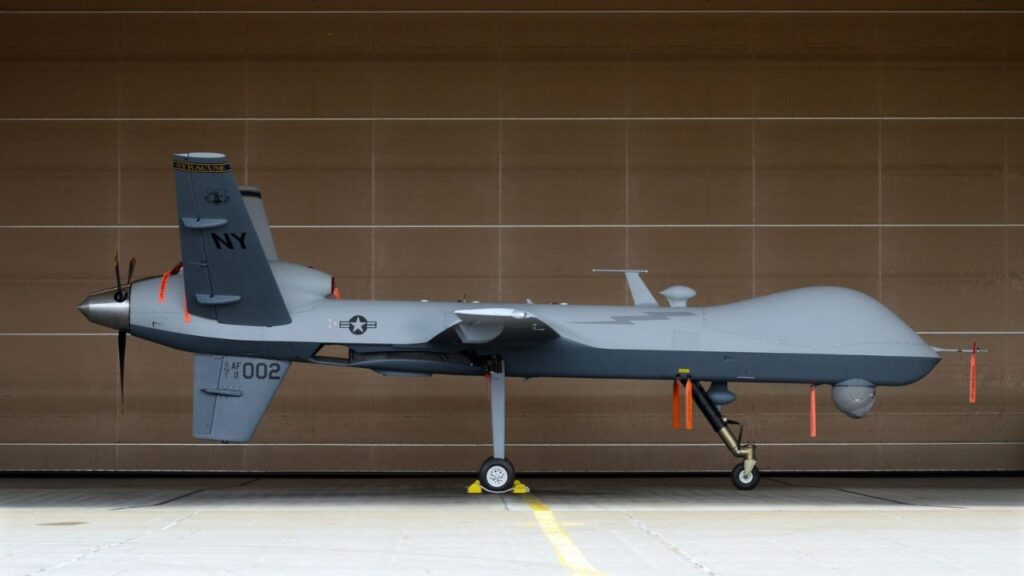
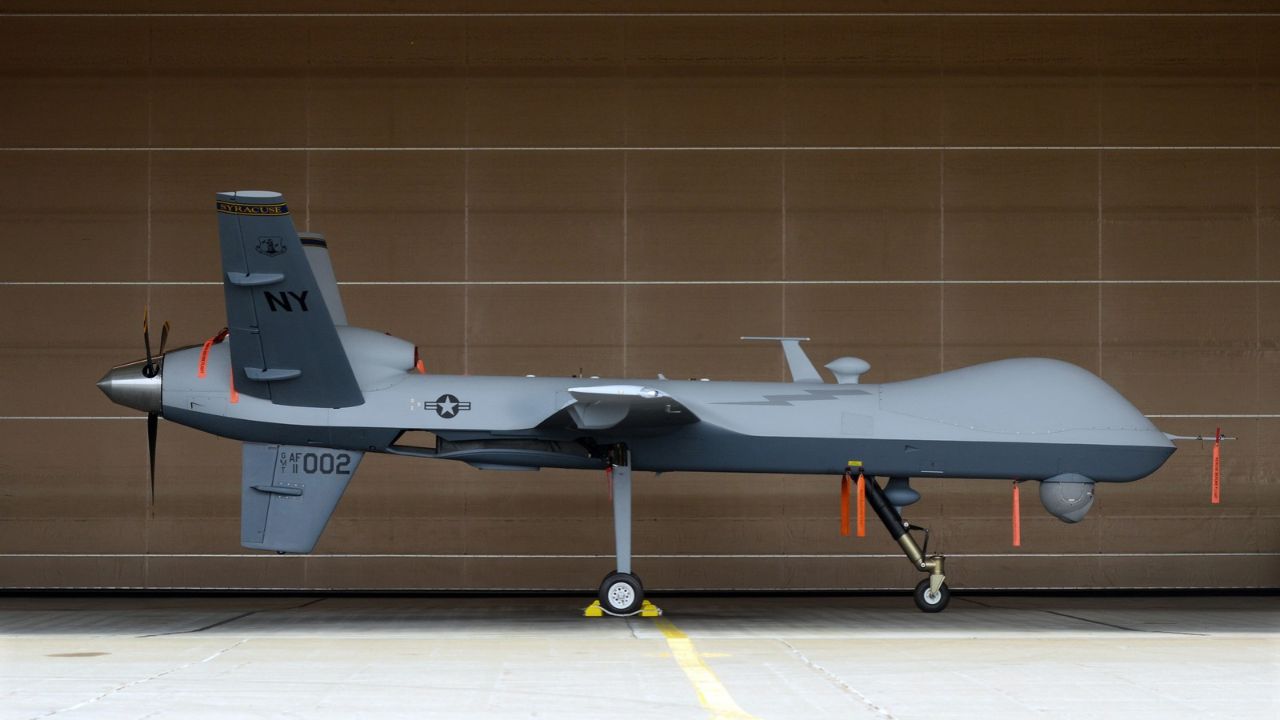
In a sign of the Trump administration’s new focus on combating Latin American cartels, the U.S. military has moved a number of MQ-9 Reaper drones from Africa to Colombia and Ecuador, U.S. officials said.
MQ-9 Reaper drones are often used for precision strikes like the lethal operation that killed Maj. Gen. Qassem Soleimani, who led the powerful Quds Force of Iran’s Revolutionary Guard, in 2020. The aircraft, which can cost up to $50 million, are in short supply after losses in the Iran war, where at least 45, or about a quarter of the overall U.S. fleet, have been destroyed.
The transfer was described by two U.S. officials familiar with the decision who asked not to be named because they were not authorized to speak publicly on an operational matter.

The move comes as the administration ramps up its military offensive against Latin American trafficking groups. The top U.S. military commander for most of Latin America, Gen. Francis L. Donovan, has said that the United States plans to expand operations from strikes on boats to strikes on land.
The redeployment of drones is “a significant signal from the administration that we are getting serious,” said Francisco Palmieri, a former U.S. diplomat who helped shape U.S. counternarcotics strategy, including during the first Trump administration, and who served as acting ambassador to Colombia under President Joe Biden.
‘Unmistakable’ Political Symbol
Palmieri said he could not comment on the significance of the redeployment at the operational level. “But as a political symbol, it’s unmistakable,” he said. “It’s a sign of a commitment to expand both the level and type of cooperation.”
Signs of an escalating U.S.-led military campaign against drug traffickers have raised concerns among human rights advocates that attacks could endanger civilians. And experts say killing members of trafficking groups, even top leaders, does little to effectively stem the flow of drugs since those killed can be replaced.
The MQ-9 Reaper, which can stay aloft for longer periods and carry a larger payload of missiles and bombs than its predecessor, the Predator, has been used in airstrikes against groups such as the Islamic State and al-Qaida in the Middle East and al-Shabab in Africa.
The drone is capable of carrying thermal cameras as well as equipment that can intercept electronic communications, and it has been called the U.S. military’s “hunter-killer.”
The Trump administration has made exerting greater influence in Latin America a priority, focusing especially on security. It has built a coalition of regional leaders that has pledged to help dismantle cartels; the group’s official slogan is “We do bad things to bad people.”
US Claims Drug Traffickers Are Enemy Combatants
Washington has previously justified lethal strikes on drug traffickers by claiming that they are enemy combatants.
A range of legal experts say the administration’s lethal strikes on alleged drug boats off South America are illegal because those killed, even if they are committing crimes, do not pose a direct threat to the United States.
Colombia and Ecuador — home to trafficking groups designated as terrorist organizations by Washington — are among a handful of nations that have agreed to conduct joint operations with the United States within their borders.
It is not clear how many MQ-9 Reaper drones have been sent to each country, though the U.S. officials said it was a small number, or how many of the aircraft have already arrived.
In September, CNN first reported that reapers assigned to the Pentagon’s Africa Command were likely to be sent to Latin America, but it was not clear exactly where the drones would go.
The Defense Ministries in Colombia and Ecuador did not respond to requests for comment. U.S. Southern Command, which oversees the region, declined to comment, citing operational security reasons.
Defense officials in Colombia and Ecuador have acknowledged plans to receive MQ-9 Reaper drones, according to local news media.
Colombian officials said over the summer that they had agreed to receive three MQ-9 Reaper drones, and that Colombia would consider purchasing one additional craft.
“Two were turned over to Ecuador for cooperation and are already operating in our skies,” Gian Carlo Loffredo, Ecuador’s defense minister, said in a radio interview Friday.
Ecuador President Daniel Noboa was the first regional leader to allow joint military operations in his country this year and has recently faced scrutiny over the presence of U.S. troops at one base. Ecuador’s constitution bars foreign military bases in the country, a prohibition voters affirmed in a referendum last year.
Colombia’s new right-wing president, Abelardo De La Espriella, has launched an aggressive military effort targeting leaders of several groups said to be involved in cocaine trafficking.
Reaper drones might help track down leaders in complex mountain and jungle terrain, where they have long managed to hide from the local authorities. But analysts say that moving the drones from Africa to South America could also hinder combating terrorist groups in Africa.
This year alone, the Pentagon’s Africa Command has conducted scores of strikes against al-Shabab in Somalia — relying heavily on MQ9 Reaper drones.
–
This article originally appeared in The New York Times.
By Annie Correal and Eric Schmitt/Heather Ainsworth
c. 2026 The New York Times Company