


|
Getting your Trinity Audio player ready...
|
In the two battleground states with the most bitter and complicated Senate primaries, Maine and Michigan, Democrats emerged feeling stronger and more unified, according to new polls from The New York Times and Siena University.
More than 60% of Democrats or independents who said they lean toward the Democratic Party in each state said they thought the primary process strengthened the party through vigorous debate. Only about one-quarter said they thought the process exposed divisions and made Democrats weaker.
Beyond the primary battles, the polls hinted at signs of unity emerging around the party’s direction and ideology among Democratic voters nationally and in the battleground states.

More than 80% of Democrats nationally said they think the party is focused on the right things. And in Maine, Michigan and New Hampshire, large majorities of Democrats said they were pleased with the party’s focus.
Two-thirds of Democrats nationally said they think the party is neither too far to the left nor too far to the right. In New Hampshire, 70% of Democrats are unconcerned about ideological extremism within the party.
The party’s new sense of solidarity comes after nearly two years of fraught intraparty reckoning as Democrats debated how to rebuild their brand after their 2024 defeats. Those ideological, generational and strategic splits were apparent in a series of hard-fought primary races across the country, where different wings of the party battled over their future direction.
In Maine, the Democratic Party was rocked by the implosion of the campaign of the party’s initial nominee for Senate, Graham Platner, who dropped out after an accusation of rape, which he denied. The party quickly coalesced around Troy Jackson, a former state legislator, who is now running against the Republican incumbent, Susan Collins.
“After Platner dropped out, we connected as a Democratic community over being in a tough spot,” said Rebecca Tibbetts, 56, a Democrat living in Westbrook, Maine. “The momentum and fire that Platner ignited in us is still there. This has only made us stronger.”
But underneath that veneer of harmony, Democratic voters are notably divided over how much to embrace the democratic socialist movement as part of their coalition, after a series of high-profile victories by self-described democratic socialists in races across the country.
Nearly 4 in 10 Democratic voters nationwide said they considered themselves democratic socialists. Support for the movement was higher in more Democratic states. In Maine, about half of Democrats said they were democratic socialists, and 44% said the same in Michigan.
The broader idea of socialism was viewed positively by most Democrats: 55% of Democrats said they viewed socialism favorably, and 20% viewed it unfavorably. A quarter were not sure.
“Democratic socialism is about taking care of people in the community,” said Chelsea Foote, 30, who works at a dentist’s office in Ann Arbor, Michigan. “It’s the social aspect of socialism. Our current system of government is not supporting that.”
The split over socialism hints at coming debates within the party as Democrats look toward what is widely expected to be a crowded and contentious presidential primary race in 2028.
Candidates who identify as democratic socialists won a series of primaries this spring and summer. In New York City, Claire Valdez, an Assembly member and close ally of Mayor Zohran Mamdani, and Darializa Avila Chevalier, a pro-Palestinian activist, defeated House candidates backed by the party establishment. Melat Kiros defeated a 15-term House incumbent in the Denver area. And Angie Nixon, a state lawmaker from Jacksonville, shocked Democrats by trouncing her centrist primary opponent to win the party’s nomination for Senate in Florida.
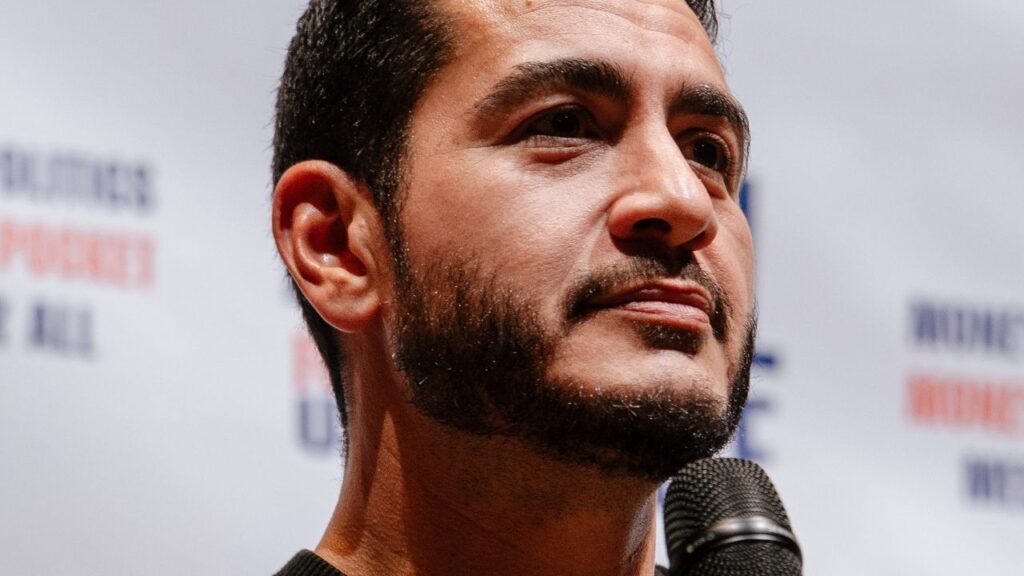
In other high-profile races, candidates from the party’s progressive wing, including Abdul El-Sayed in Michigan and Jackson in Maine, won the nomination, elevating left-leaning Democrats in midterm battlegrounds.
Neither man is a member of the Democratic Socialists of America. Still, the ideology has emerged as a divisive issue in Michigan, where Republicans have frequently denounced El-Sayed, the Senate nominee, as a “radical socialist.”
For most Democrats, the line of attack does not hold water; 59% of Democratic voters nationally said it does not matter whether Democratic candidates consider themselves to be democratic socialists.
The idea of socialism is not viewed as universally positive among Democrats in Michigan, though. More than 20% of Democrats in the state say they view socialism unfavorably.
“I’m not a fan of socialism,” said Crystal McIntosh, 41, a Democrat living in the Detroit area who works in the legal field. “I’d love to see things work, but I’m scared.”
But it is not a major issue for most voters: Only 5% nationally listed opposition to communism or socialism as the main reason they want the Republican Party to control Congress.
The label could, however, carry some political peril for Democrats in competitive districts, where swing voters are often critical to building a winning coalition: 34% of independent voters said they would prefer a Democratic candidate who does not identify as a democratic socialist, while 45% said the label didn’t matter to their vote.
Nationally, half of political independents said they viewed socialism negatively. In Michigan, that number was 63%.
Ashley Winston, an independent living in East Leroy, Michigan, said she is feeling torn over whom to support in her state’s Senate race.
“I find myself way more in the middle,” said Winston, 38, a real estate agent. “I don’t support the Democratic Party’s focus on socialism, but I’m not happy with where the Republicans are right now.”
On one issue where there was once a stark divide within the Democratic Party, there is now growing consensus. A majority of Democrats now support limiting America’s aid for Israel, a matter that has bitterly divided the party since 2023, when just 39% wanted to limit the aid.
Above all, Democrats remain divided over whether they are divided. About half of Democrats say they think the party is united, while 46% said the party is divided.
That number is nearly identical to when the question was asked 10 years ago. In 2016, 48% of Democrats said they felt their party was divided.
—
This article originally appeared in The New York Times.
By Ruth Igielnik and Lisa Lerer/Nick Hagen
c. 2026 The New York Times Company