|
Getting your Trinity Audio player ready...
|
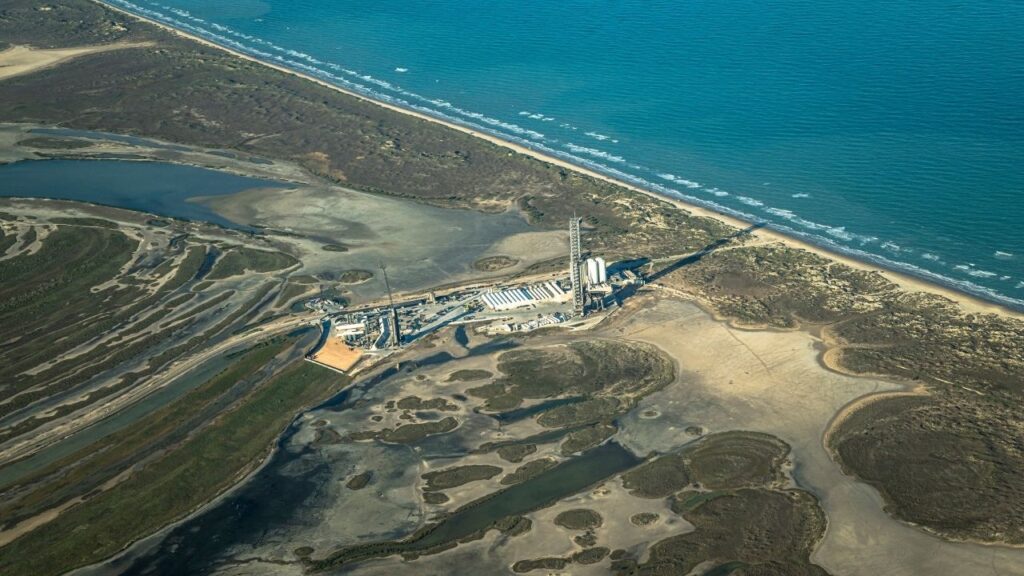
WASHINGTON — A federal judge on Monday cleared the way for a land exchange that would allow SpaceX, the rocket and satellite maker run by Elon Musk, to expand its launching and production site into a federal wildlife refuge in Texas.
Judge Fernando Rodriguez Jr. of U.S. District Court for the Southern District of Texas declined a request from conservation and tribal groups for a preliminary injunction to block the land exchange.
The decision was a win for SpaceX, which wants to scale up its Starbase site in South Texas. It came as the Trump administration considers another contentious proposal to trade a parcel of land in Yosemite National Park in California to a private developer.

Under the proposed land swap with SpaceX, the U.S. Fish and Wildlife Service would give the company about 715 acres that are currently part of the Lower Rio Grande Valley National Wildlife Refuge, according to an environmental assessment issued in May.
The parcels are near an area where SpaceX tests components of its Starship rocket. They include portions of the Palmito Ranch Battlefield, the site of the last land battle of the Civil War.
In return, SpaceX would give the government around 683 acres it has purchased elsewhere in Cameron County, Texas. Some of these tracts would be added to the Laguna Atascosa National Wildlife Refuge, about 20 miles up the coast.
Rodriguez, whom Trump nominated during his first term, said the plaintiffs had not shown that they were likely to suffer irreparable harm as a result of the land exchange. The plaintiffs included the Center for Biological Diversity, a conservation group, and the Carrizo/Comecrudo Nation of Texas, a nonprofit group that represents members of the Carrizo/Comecrudo Tribe.
Laiken Jordahl, the national public lands advocate at the Center for Biological Diversity, suggested that the group might appeal the decision. “This court order is not the final word,” Jordahl said in a statement. “These lands hold incredible spiritual, historical and conservation value for the people and wildlife of South Texas. We won’t stop fighting to keep this irreplaceable public wildlife refuge safe from SpaceX bulldozers.”
Representatives for the Interior Department, which includes the Fish and Wildlife Service, declined to comment. Representatives for SpaceX did not immediately respond to a request for comment.
The Lower Rio Grande Valley National Wildlife Refuge is a sanctuary for the ocelot, one of the most endangered mammals in the United States. Its tidal flats also provide crucial habitat for migratory shorebirds like piping plovers and red knots.
SpaceX’s operations have caused significant damage to the fragile bird habitat surrounding the launch site, according to a New York Times investigation. A rocket launch in 2024 sent debris flying into the refuge, crushing birds’ nests and igniting a small fire, the investigation found.
After Trump returned to office in January 2025, the Fish and Wildlife Service began racing to complete the land swap with SpaceX, according to government emails and documents obtained by the Center for Biological Diversity via a public records request.
In one April 2025 email, a senior official at the Fish and Wildlife Service suggested the “most expedited schedule possible” for finalizing the deal. At the time, Musk was leading the Department of Government Efficiency, the sweeping initiative to cut federal funding and staffing.
—
This article originally appeared in The New York Times.
By Maxine Joselow/Meridith Kohut
c. 2026 The New York Times Company