

|
Getting your Trinity Audio player ready...
|
George Chuvalo, a Canadian heavyweight who earned the reverence of boxing fans and sports writers for the toughness he showed while losing to the likes of Muhammad Ali and George Foreman, died Saturday, his 89th birthday.
His death was announced by the World Boxing Council and Tom Doyle, a close family friend.
The Toronto Star reported in 2017 that Chuvalo had been living for at least a couple of years with “significant cognitive impairment.” He resided at a long-term care center in Toronto, according to The Canadian Broadcasting Corp.

Chuvalo had an impressive pro record of 73 victories, 18 losses and two draws. Sixty-four of his wins came by knockout, giving him more than Ali, Rocky Marciano, Joe Frazier and Mike Tyson had fights.
Yet Chuvalo, who repeatedly lost bouts for the world heavyweight title, was known above all for his defeats.
“I knocked out all the number 4s,” he told the Canadian magazine Maclean’s in 1999. “I had trouble with the ones, twos and threes.”
‘Toughest Guy I Ever Fought,’ Ali Said
The losses were plentiful, but they had an aspect of heroism.
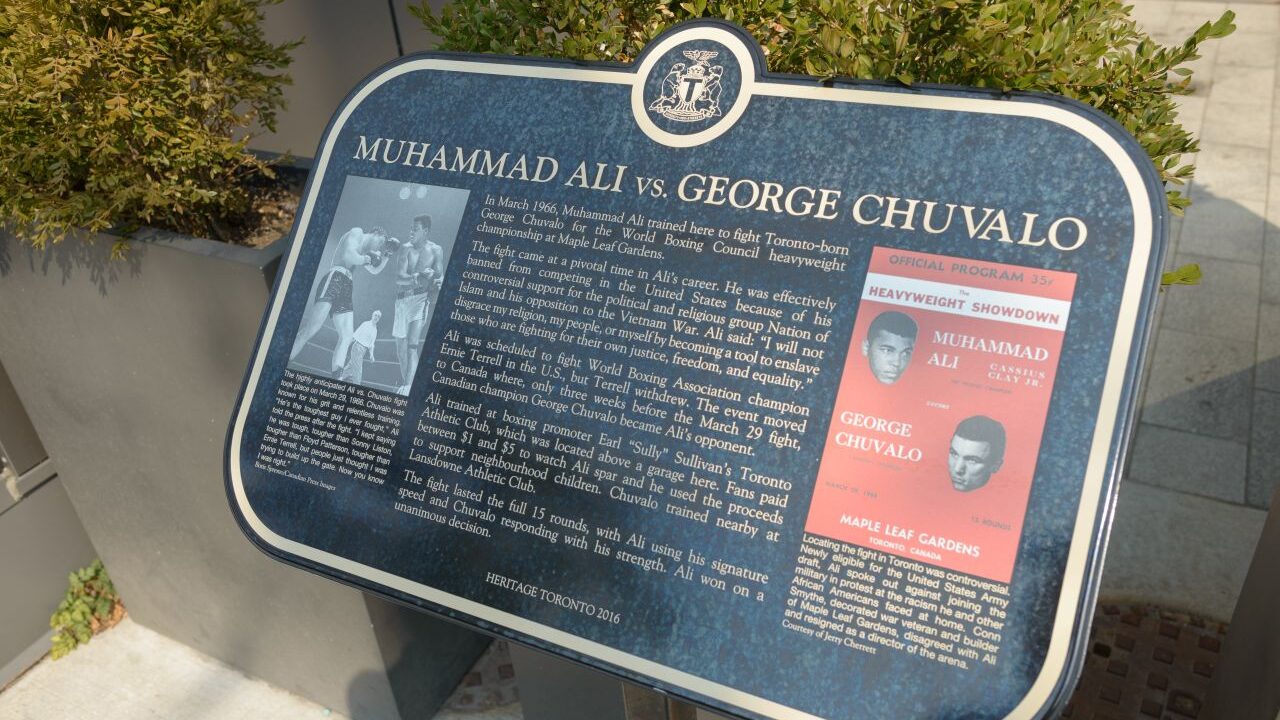
In 1966, Chuvalo lost to Ali, then known as Cassius Clay, by unanimous decision — but he also became the first person to take Ali the distance, battling him for 15 bruising rounds.
“He’s the toughest guy I ever fought,” Ali told The Toronto Star afterward.
The next year, Frazier broke Chuvalo’s cheekbone. “My eyeball felt like a grapefruit,” Chuvalo said after the fight. Still, he did not go down.
In 1971, Foreman knocked Chuvalo diagonally from one end of the ring to another, pounding him until there was blood on the referee’s shirt. Again, he stayed upright.
Chuvalo had a rematch with Ali in 1972. The flight was set to last a maximum of 12 rounds — and again, Chuvalo fought Ali to the end. Afterward, his face bloody and swollen, he told a crowd of journalists, “Gentlemen, I enjoyed the fight.”
Nobility of a Gladiator
Dave Anderson, a sports writer at The New York Times from the 1970s to the 2000s, often recalled that episode in his columns.
“He had the nobility of a gladiator,” Anderson wrote in 1993. “He belonged in the Roman Coliseum, fighting lions while wearing mail, not boxing gloves.”
Anderson credited Chuvalo with “a chin that seemed to have been transplanted from the Canadian Rockies,” and in a 1997 article he wrote that Chuvalo deserved to be put atop a list of the “best chins” in boxing history.
That was also the conclusion of a best-chins list published this year by The Fight City, a boxing news and commentary website. Chuvalo was the only heavyweight listed who had never been knocked down.
In his memoir, “Chuvalo: A Fighter’s Life” (2013), written with Murray Greig, he said his ability to withstand blows to the head came from his short neck and habit of chewing gum.
His thickheadedness was literal, not metaphorical. He loved Scrabble and habitually read Freud and Jung. Still, he fought like a brute — slowly, with a short reach, always hoping to get in close and inflict body blows. He regathered himself after each punch. He was heavy, plodding and unstoppable.
“It was like trying to fell an oak tree,” Floyd Patterson said after their 1965 fight.
In his book, “Heavyweight Boxing in the 1970s,” Joe Ryan, a former boxing promoter, quoted Marciano saying, “If every fight was scheduled for 20 rounds, George Chuvalo would be heavyweight champion.”
He retired in 1978 not knowing that his hardest battles were still ahead of him.
Retired in 1978
George Louis Chuvalo was born Sept. 12, 1937, in Toronto. His parents were immigrants from Bosnia and Herzegovina, then a part of Yugoslavia. His father, Stipan, adopted the name Steve and skinned cattle at a meat plant. His mother, Kata (Kordic) Chuvalo, also worked at a meat plant, plucking chickens. The family frequently ate animal parts that the factories threw away.
“You have to know real poverty to want to earn your living as a fighter,” Chuvalo wrote in his memoir.
He became interested in boxing the moment he saw a boxing magazine. Between the ages of 14 and 15, he added 75 pounds of muscle, largely by doing pushups in his room at night.
While still a teenager, he sparred with a local amateur champion named Glen Mowat, who broke his nose. He fought Mowat again the very next day. Three months later, Chuvalo was toying with the older man in the ring. Chuvalo went pro at 18.
A Life of Pain and Tragedy
The following year, he was introduced by a friend to Lynne Sheppard. They began going out, and before long she was pregnant. When he decided to marry her, Chuvalo wrote in his memoir, he learned that she was just 15. Her father signed papers that allowed the marriage. Chuvalo had four children, all boys, by the time she was 20.
He was by far Canada’s most frequent heavyweight champion from the late 1950s until the late 1970s.
The family slowly started to spiral in the spring of 1984, when their youngest son, Jesse, tore off his kneecap in a dirt bike accident. To cope with lingering pain, he started using heroin. He became addicted and, still in his early 20s, shot himself to death.
Two more of the Chuvalos’ sons, Georgie Lee and Steven, died from heroin overdoses. Lynne Chuvalo died by suicide from overdosing on pills.
“If you added up every punch I ever took,” Chuvalo wrote in his memoir, “it wouldn’t begin to equal the pain of losing three sons and a wife to drugs and suicide.”
He remarried a colleague of his wife’s, Joanne O’Hara, in 1995, and began to turn his life around. He made a living by giving impassioned speeches throughout Canada warning young people about the dangers of drugs.
A complete list of his survivors was not immediately available.
Chuvalo’s survival through personal trauma encouraged analogies with his record of never being knocked to the mat. He did not use such tough-guy vocabulary himself.
When trying to sleep, he said, he was wracked with guilt and terror. “You don’t want to be me after midnight,” he told Maclean’s. The man of the “granite chin” told The National Post of Canada, “I am not made of stone.”
In a 2013 essay for Toronto Life magazine, Chuvalo said he found solace with one of his grandsons, Jesse, named after his first son who died. “He never hangs up the phone,” Chuvalo wrote, “without telling me he loves me.”
This article originally appeared in The New York Times.
By Alex Traub
c.2026 The New York Times Company