
|
Getting your Trinity Audio player ready...
|
NEWPORT BEACH, Calif. — Earlier this month, dozens of Newport Beach residents lined up at a City Council meeting to deliver the same message: Leaders of the Southern California coastal enclave needed to prevent another fracas like the one that took place July 4.
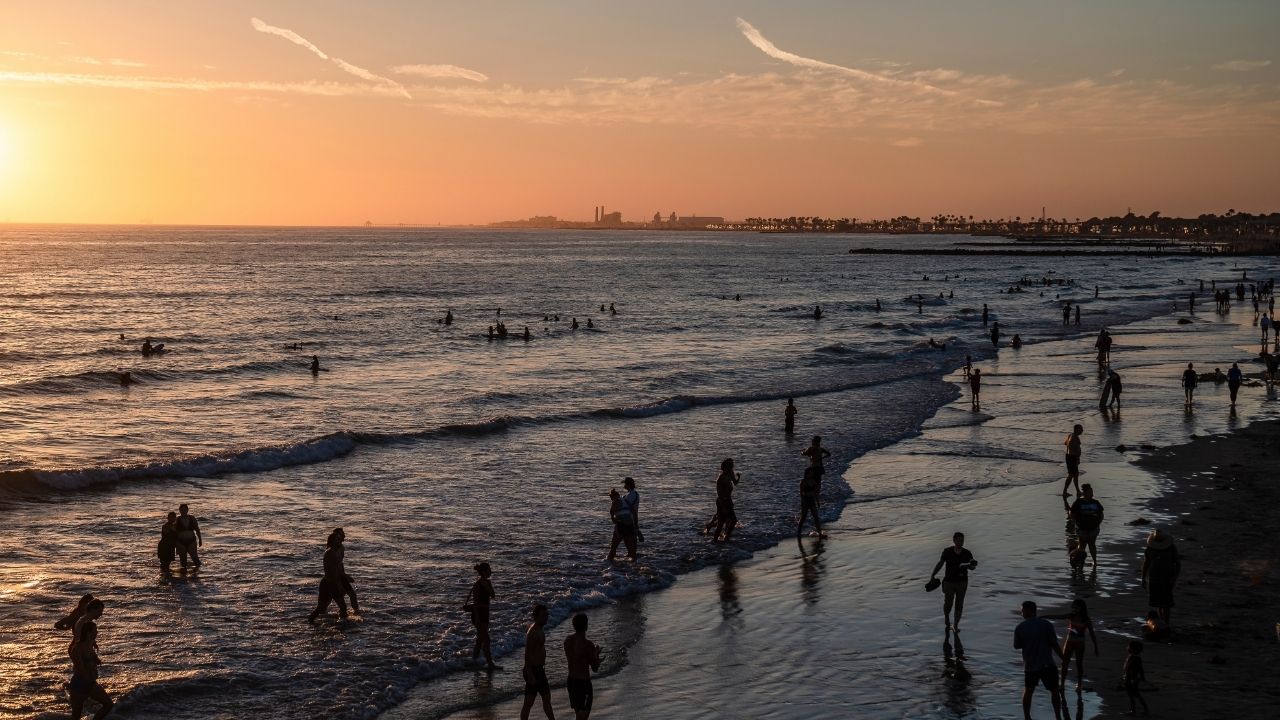
Thousands of young people had descended on the beaches of the city’s storied Balboa Peninsula, attracted by posts on TikTok and other social media. Many seemed intent on making trouble. They shot illegal fireworks in all directions, scuffled and even looted an upscale grocery store. More than 300 people were arrested July 4 alone. Most of them were 25 or younger, and most were from out of state.
The mess was “a predictable consequence of a growing reputation that Newport Beach has become a place where bad behavior is tolerated,” Maureen Cotton, the president of a local community group, told the council members.

City leaders vowed to undertake a broader review of regulations aimed at managing crowds on the beach. At its meeting on Tuesday, the City Council will discuss potential changes, including a youth curfew, expanding the city’s definition of a public nuisance and restricting mass gatherings planned on social media.
The Independence Day rowdiness tapped into national anxieties about social-media-driven “teen takeovers” and other misbehavior by young people.
But it also became the latest front in a long-running debate about who controls one of California’s most precious resources: its coastline.
Similar battles have played out in other beachfront communities across the country, including in Florida’s Panhandle and in New York.
Although residents urged City Council members to consider a wide range of solutions, such as further restricting short-term rentals and holding parents accountable for teens, there was one fix that nearly all of them, including Cotton, agreed on: “I’d love you to seriously consider limiting vehicle and pedestrian access to the peninsula on the Fourth of July,” she said.
In California, the public’s right of access to the beach is enshrined in the state constitution. But the specific rules governing that access — and how those rules are enforced — are often a point of contention between visitors, coastal property owners and beachside communities.
Beachfront real estate has become increasingly expensive, with Newport Beach homes hitting an average sale price of $3.7 million, according to Zillow. Beach city residents say they pay a premium to live peacefully, with ocean views.
At the same time, Californians who once lived in coastal cities have been moving farther inland to fast-growing suburbs in the Riverside and San Bernardino areas, or even out of state, to cities such as Phoenix and Las Vegas. For inland residents, summer treks to the beach are one of few low-cost respites from punishing, dangerous heat.
Locals say summertime crowds have become unsustainable, with roads often so packed that they can barely leave their own homes. The hundreds of thousands of visitors, they say, wreak havoc, leaving trash and throwing materials that shouldn’t be burned into bonfires on the sand.
Leaders of California beach cities have tried to limit parking near the shore, curb gridlock by enforcing Byzantine traffic patterns and crack down on behaviors that they say diminish their quality of life.
In Laguna Beach, just south of Newport Beach, city officials prepare for summer as if they are going to battle. Residents have sought to keep visitors from parking on side streets, prompting clashes over whether those measures also effectively block access to the sand itself. There, and in Malibu farther north, videos on social media last summer showed property owners trying to shoo away beachgoers, drawing outrage.
Legal fights over blocked beach roads are common, such as a decades-long conflict over access to beaches in Hollister Ranch, near Santa Barbara.
Such efforts have often met opposition from the powerful California Coastal Commission, which since 1972 has been tasked with protecting the beach and public access to it.
Newport Beach has been no stranger to such fights. A decade ago, a plan to remove wood-burning fire rings from two of its large beaches spun into a regulatory proxy war over public beach access and air quality protections. Today, Newport Beach has some bonfire rings designated for wood and some that require charcoal.
More recently, in an effort to discourage rowdy behavior, Newport Beach increased fines for drinking on the beach, restricted the size of beach shades and boosted penalties on the owners of short-term rental properties for guest misbehavior. The city also began a public messaging campaign called “Not in Newport” to tell young visitors to take their fake identification cards and illegal fireworks elsewhere.
None of that was enough July 4. Over the course of the holiday weekend, more than 420,000 people flooded onto the city’s beaches, which have long been party destinations on summer holidays. Police made more than 400 arrests, including the 328 arrests after illegal behavior escalated July 4 itself.
At the City Council meeting days later, the police chief showed a slide comparing Newport Beach’s response to the social media “takeover” with similar incidents in other cities: In Raleigh, North Carolina, and in St. Louis, police made dozens of arrests and they also responded to multiple shootings at each gathering, including at least one that was fatal.
“I would like to note there were no shootings, no serious injuries that occurred, no structures burned to the ground,” said Dave Miner, the city’s police chief. “Newport Beach had a very massive law enforcement response.”
The events in Newport Beach were hard to predict, officials said. Mayor Lauren Kleiman said authorities had flagged plans for similar unsanctioned gatherings in nearby Huntington Beach and at Knott’s Berry Farm, an Orange County theme park.
Another mass gathering at Newport Beach, planned for Sunday night, was discussed online. The Newport Beach police department deployed 100 officers, including from other departments. But the expected crowd never showed up.
Still, members of the City Council said that they were open to figuring out ways to block or restrict traffic onto the Balboa Peninsula on big holidays.
“We get to be stewards of something that is amazing, but we don’t own it and we don’t control it,” Noah Blom, the mayor pro tem, told residents at the meeting. “If that was the option: put a gate on the peninsula, or blow the bridge, for my money, I’d be right there.”
Tactics deployed by some beach communities, such as high parking fees and residency requirements in the Hamptons in New York, would be unlikely to pass legal muster in California. Kleiman said she had reached out to the Coastal Commission to figure out what kind of regulations the city could impose.
Kate Huckelbridge, the commission’s executive director, said in a statement that the agency planned to work closely with the city to help prevent another situation like the July 4 incident. She did not address questions about whether the city would be allowed to restrict beach access.
—
This article originally appeared in The New York Times.
By Jill Cowan/Ariana Drehsler
c. 2026 The New York Times Company