
|
Getting your Trinity Audio player ready...
|
When the Trump administration began its overhaul of foreign aid in January 2025, officials made no secret of their disdain for giant aid organizations and private businesses who received multimillion dollar contracts to deliver health services to poor nations. They characterized them as “beltway bandits” who charged bloated amounts of overhead.
They vowed to shut down the big U.S. players and instead channel aid through smaller organizations based in the countries receiving assistance.
But a new analysis shows that the opposite happened: In 2025, a handful of the largest, U.S.-based organizations were given huge new infusions of cash, while smaller groups in developing countries were all but shut out.

During its first days in power, the administration froze foreign aid and began to dismantle the U.S. Agency for International Development. Hundreds of local organizations delivering HIV drugs, malaria tests and other care dismissed their staff and shut their doors. Days later, the administration said it would continue some lifesaving programs. Over the next months, courts and Congress insisted the administration must continue to disburse health funds.
The only system that could move that money was the handful of large nongovernmental organizations and contractors that were still afloat.
These organizations are unlikely to see these large grants continue past this year. The administration has been negotiating dozens of new bilateral health funding agreements, which lay out a plan to give more money directly to governments.
However, the new analysis by a team of researchers from the Health Security Policy Academy offers insight into the scope of disruption last year, which was felt in drug shortages, fired heath workers and missed rounds of malaria prevention and vaccinations.
“They did the exact opposite of what they said they were going to do,” said Dr. KJ Seung, a physician in the Division of Global Health Equity at Mass General Brigham, and a member of the team that conducted the funding analysis for the academy, a policy think tank affiliated with the medical center.
The Analysis Found:
- The for-profit contractor Chemonics received $173 million more during the 2025 financial year than it did in 2024, a 16% increase. Chemonics generated annual revenue of about $1.6 billion before this surge in funding.
- Global Solutions Ventures, a for-profit joint venture between two development consultancies, saw an $82 million rise in its funds, a 727% increase. The company took over the operation of many of the remaining HIV programs.
- The nonprofit FHI360, based in North Carolina, received $444 million more than in 2024, a 110% increase.
- Jhpiego, a nonprofit health organization affiliated with Johns Hopkins University, received $194 million more, a 133% increase.
The findings raise questions about the amount of aid dollars that are still going to U.S.-based overhead costs. Nonprofit agencies typically had a negotiated indirect cost rate that accounted for 15% to 25% of the value of the award, while the rate for businesses could be as high as 35%.
In the last year of the Biden administration, the top 25 recipients of U.S. global health funding received 67% of the total amount awarded, the analysis found. After the Trump administration’s restructuring began, they received 91% of the funds through the rest of the 2025 fiscal year, the report shows. From 2024 to 2025, there was a 40% decline in the number of recipients in the global south, from 613 groups to 384.
“Transition Year’
In an emailed response to questions, the State Department said that the figures for 2025 reflected a “transition year.”
The department’s statement said that the funding flow picture “is rapidly changing” because of the bilateral health agreements the administration has signed — 27 so far.
“As these bilateral compacts get stood up, we are moving health spending onto a stable path towards self-reliance, with more funding moving to local governments and partners,” the statement said. “Through these compacts, all funding will be provided in coordination with local health authorities for the first time, reflecting a historic shift in local input and buy in into global health programs.”
Seung said the huge spike in funds to a small number of big organizations was the inevitable outcome when State Department officials had only a few mechanisms left to keep operating the programs deemed lifesaving.
“They painted themselves into a corner. They had to get out of it and move this money somehow,” he said. Only the largest organizations had the financial cushion to weather the months of stop-and-start funding disruptions, and retain the personnel and systems to receive funds and run programs.
In many cases, the organizations that last year received an increase in funds, along with instructions to swiftly expand their work into a half-dozen or more new countries, subcontracted that work back to the groups who had been the original implementing partners. This created an entire new layer of bureaucracy and administrative costs that did not exist before the so-called efficiency reforms began.
Few of the organizations among the surviving funding recipients would answer questions from The New York Times on the record about the surge in the money they were awarded last year, saying that the U.S. government prohibited them from talking about their contracts with the media.
Executives at five of the organizations that saw their funding increase noted that the scope of their work grew sharply alongside the new funds, as programs were hastily remade. They said that the funding they received in 2025 was within the ceiling set by the State Department for the multiyear life of their original grants — in other words, that the 2025 infusion may simply have been a front-loading of funding that normally would have been spread over years.
Hally Mahler, the vice president of global programs for FHI 360, said that 2025 was not the first time the organization has seen funds increase dramatically from one year to the next (with COVID-19 as the most recent example) and that it was not uncommon to be obligated a large amount of money in September, when it is close to expiring. The administration was under pressure to disburse some of these funds because of a number of court cases arguing that the money had been unlawfully impounded.
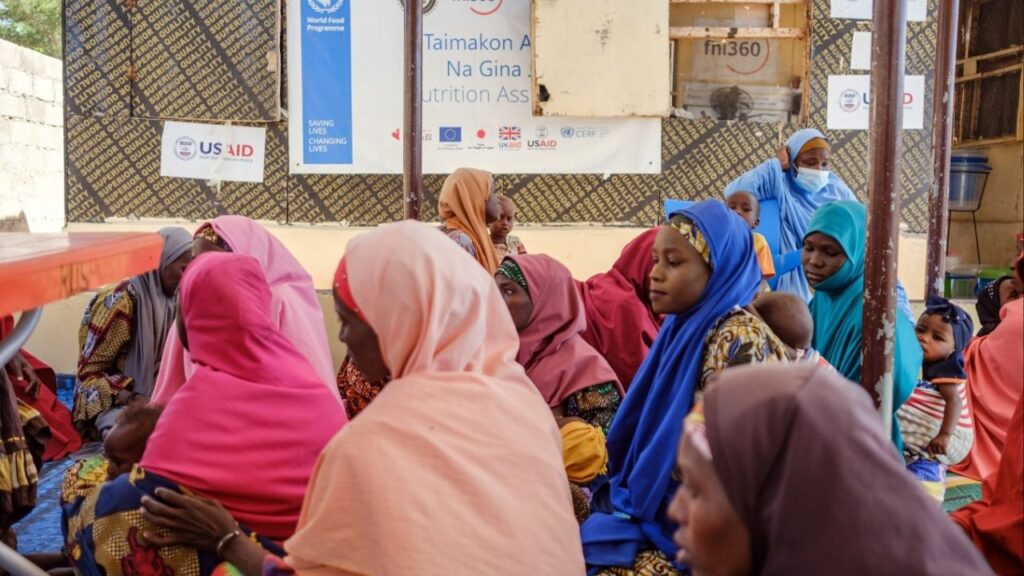
The U.S. government invested millions of dollars in supporting the process of “localization” over the years — aiding nongovernmental organizations in developing countries to build the auditing and governance structures needed to receive funding from USAID directly.
But most of their awards were abruptly terminated last February, and many organizations closed down, or laid off most of their staff. Few had the external donors or financial cushions that kept Chemonics, FHI360 and Jhpiego operational.
Another organization leader, who declined to be identified, described the process of contacting some of the local groups who had once been receiving grants directly to do HIV and malaria work to ask them to return to delivering services and programs, now as sub-recipients. It is a move that, in effect, sets back the clock 10 or 15 years.
This year, though, may prove to be different. The administration is emphasizing direct government-to-government funding in its new health agreements. Local organizations may return to delivering services, now contracted by the Nigerian or Kenyan government, rather than the United States. They, in turn, may seek support from the big international aid organizations that have multicountry and historical expertise.
—
This article originally appeared in The New York Times.
By Stephanie Nolen/Taiwo Aina
c. 2026 The New York Times Company