
|
Getting your Trinity Audio player ready...
|
Attorney General Pam Bondi had a pretty good idea her days were numbered.
President Donald Trump had complained too freely, too frequently, to too many people about her inability to prosecute the people he hates. She was falling short of Trump’s unyielding, unrealistic demands for retribution against his enemies. She had made mistake upon mistake in her handling of the Epstein files. Her critics were in the president’s ear.
Last month, Bondi told a friend that Trump’s willingness to fire Kristi Noem from her post as homeland security secretary meant she might be in jeopardy too.

But Bondi had not expected Trump, the man responsible for elevating her to one of the most powerful positions in the country, to drop the curtain quite so soon, according to four people familiar with the situation.
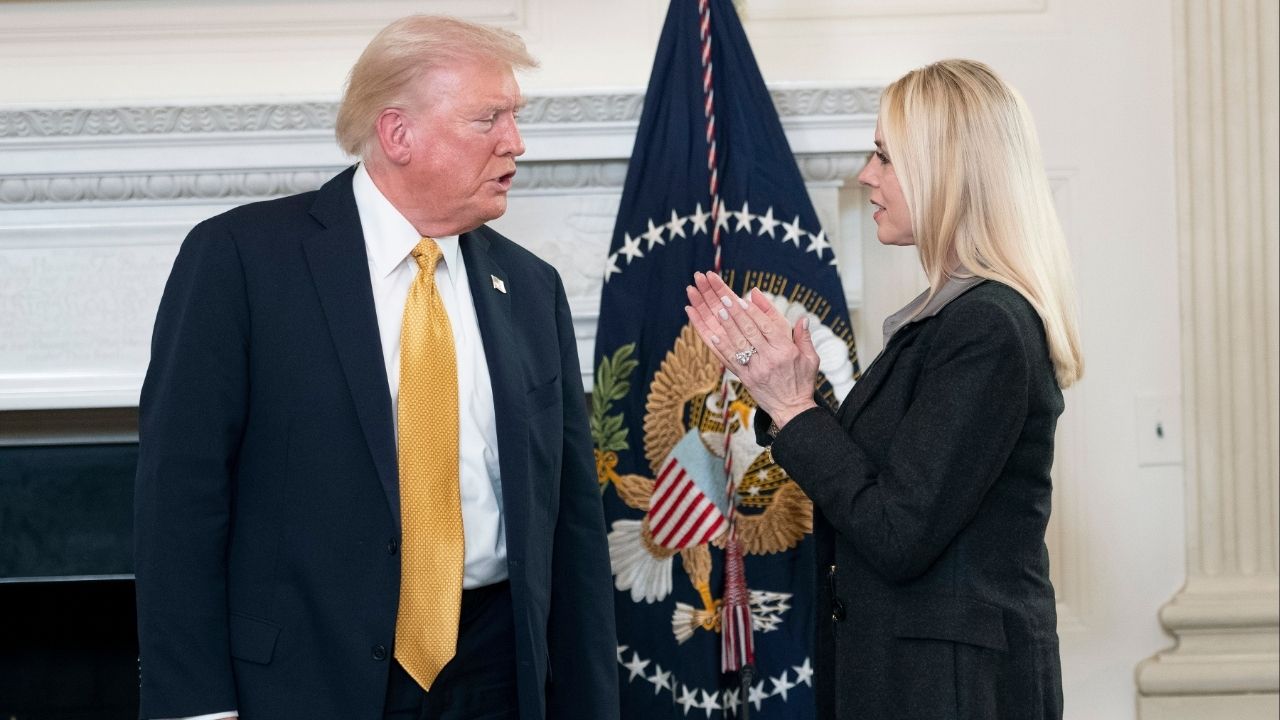
On Wednesday, the 60-year-old Bondi, downcast but determined, joined Trump for a glum crosstown drive to the Supreme Court, where they watched arguments in the birthright citizenship case. In the car, Trump told her it was time for a change at the top of the Justice Department.
Bondi hoped to save her job or, at the very least, buy a little more time — until the summer — to give herself a graceful exit.
She ended up with neither, and grew emotional Wednesday in conversations with friends and colleagues after she realized she was out. The next morning, Trump made it official, and fired her via social media post.
Bondi’s precipitous fall laid bare a cornerstone truth of Trump’s second term: Loyalty, flattery and obeisance are prerequisites for power, but they don’t provide durable protection from a president intent on carrying out his maximalist personal and political goals.
Bondi, even her allies acknowledged, was largely responsible for putting herself in a vulnerable position. Her turbulent 14 months were characterized by a series of missteps and messaging misfires that had, increasingly, alienated Republicans on Capitol Hill.
Her firing came roughly two weeks before she was required to appear before the House Oversight Committee to testify under oath about her actions in the Epstein case.
But the far greater danger, as Bondi knew better than anyone, came from Trump, upon whom she heaped lavish, and at times cartoonish, praise.
But while she effused, he fumed.
Trump has been particularly angry about the Justice Department’s failure to win cases involving his political opponents, including against former FBI director James Comey and New York Attorney General Letitia James.
One key Trump adviser outside Bondi’s line of authority, federal housing official Bill Pulte, had long pushed for her firing, blaming her for slow-walking and bungling the James and Comey cases, among other things, according to people familiar with the situation.
People close to Bondi, and some administration officials, also said that Boris Epshteyn, the longtime Trump legal adviser, was a key detractor of Bondi’s and a significant factor in Trump’s decision to make the move.
Neither Pulte nor Epshteyn immediately returned requests for comment.
Bondi’s most important ally in the West Wing, chief of staff Susie Wiles, found it increasingly difficult to defend the woman she called her “sister.” Nonetheless, she made a passionate argument for retaining Bondi until the end, according to officials.
In recent weeks, Bondi tried to shore up her position by moving more aggressively against investigative targets singled out by Trump, including former Obama official John O. Brennan and a former White House aide, Cassidy Hutchinson, whom the president has accused of lying about his actions on Jan. 6, 2021, according to officials briefed on the effort.
It is not entirely clear if any specific action or event finally tipped the balance for Trump, who had been reluctant to fire senior officials to avoid reprising the chaotic turnstile personnel turnover of his first administration.
But with the dismissal of Noem and now Bondi, that might be changing. His calculus appears to have shifted after the quick confirmation of Markwayne Mullin as Noem’s replacement. Now, Trump’s allies see Lori Chavez-DeRemer, the embattled labor secretary, as a potential contender for the next Cabinet secretary to be dismissed.
After Trump announced Bondi’s firing on Truth Social on Thursday, saying “she will be transitioning to a much needed and important new job in the private sector,” she said serving the president had been “the honor of a lifetime.”
The president said Bondi’s deputy, Todd Blanche, will replace her on an acting basis. But he has also floated the idea of putting Lee Zeldin, the administrator of the Environmental Protection Agency, in the job.
Zeldin, a former Republican congressman from New York who unsuccessfully ran to be governor, has been one of Trump’s most reliable foot soldiers.
“He’s our secret weapon,” Trump said of Zeldin in February at a White House event promoting the coal industry.
But given the reasons Bondi was fired, whoever replaces her permanently will face the monumental task of satisfying Trump’s appetite for retribution.
—
This article originally appeared in The New York Times.
By Glenn Thrush and Tyler Pager/Doug Mills
c. 2026 The New York Times Company