
|
Getting your Trinity Audio player ready...
|
TEL AVIV, Israel — On a recent weeknight, a veteran Israeli rock singer gave a free concert to a small audience in an odd venue — an underground parking lot in central Tel Aviv that affords protection from incoming Iranian missile fire.
“It’s a small escape from our miserable reality today,” said one concertgoer, Maggie Litman, 60. She added that her parents’ home in Bat Yam, just south of Tel Aviv, was destroyed by an Iranian ballistic missile during the last war, nine months ago.
Wartime guidelines limit gatherings to 50 people. Mattresses were laid out along the walls of the improvised concert space. Someone had set up a tent in one corner.

Polls have shown overwhelming support among Israeli Jews for the war against Iran being waged together with the United States, despite the fear and disruption caused by hundreds of missile launches sending millions into bomb shelters at all hours of the day and night.
Many Israelis, like Litman, say there was no choice but to fight, while at the same time expressing skepticism that this would be the last war, or would solve Israel’s national security problems.
Many have grown up with Benjamin Netanyahu, Israel’s longest-serving prime minister, warning that Iran’s nuclear program posed an existential threat. Iranian leaders have called for Israel’s disappearance and destruction, and “Death to Israel” has been a popular chant at rallies in Iran supporting the Islamic Revolution.
Support for the war crosses Israel’s political lines, and opposition leaders have given Netanyahu their backing. Even in the middle-class area of north Tel Aviv, a bastion of Israeli liberalism, where part of a missile hit last week, many residents justified the war.
“Iran doesn’t hide its ultimate goal — to destroy us,” said Yosef Livne, 77, who lives a street away from the blast and had come with his wife to see the damage.
Although he was “not in the right-wing camp,” he said, “it’s not a matter of right or left. I’m eighth generation in Israel, and I don’t want to be the last.”
The bomb, part of the payload from a missile with a cluster-munition warhead, contained about 200 pounds of explosives, according to the police, and blew off the outer wall of an apartment building. Most people were in shelters, and only a few were mildly injured. Hours later, residents milled around looking dazed. Some wheeled suitcases out of damaged buildings on their way to hotels.
Although there is general support for the war, many residents expressed a lack of trust in Netanyahu and his hard-right government.
After the 12-day war against Iran in June, Netanyahu declared that Israel had achieved a “historic victory” that would “stand for generations.”
“We didn’t believe it then and we don’t believe it now,” said Danielle Leshem, 34, a lawyer who lives near the blast site in Tel Aviv.
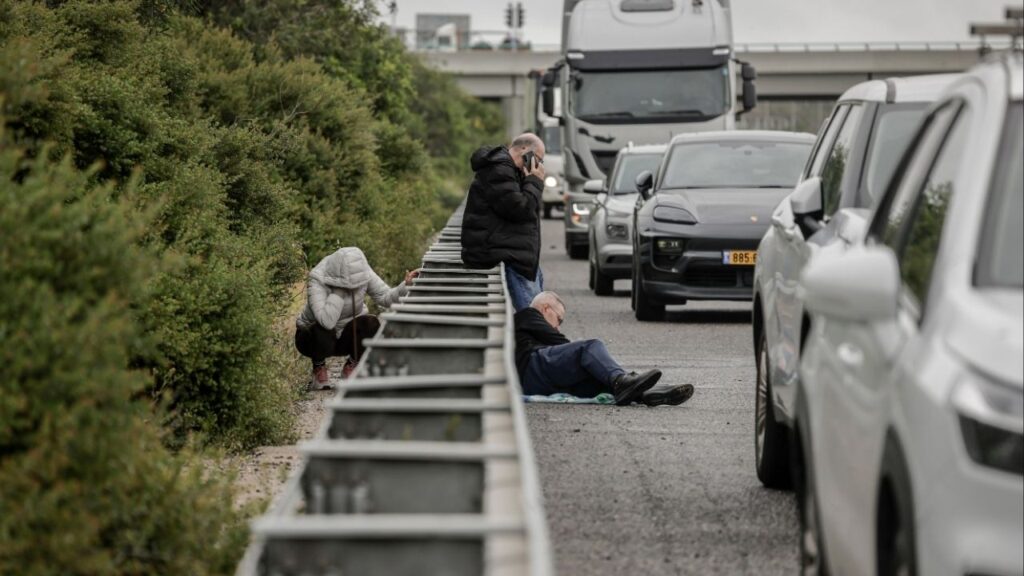
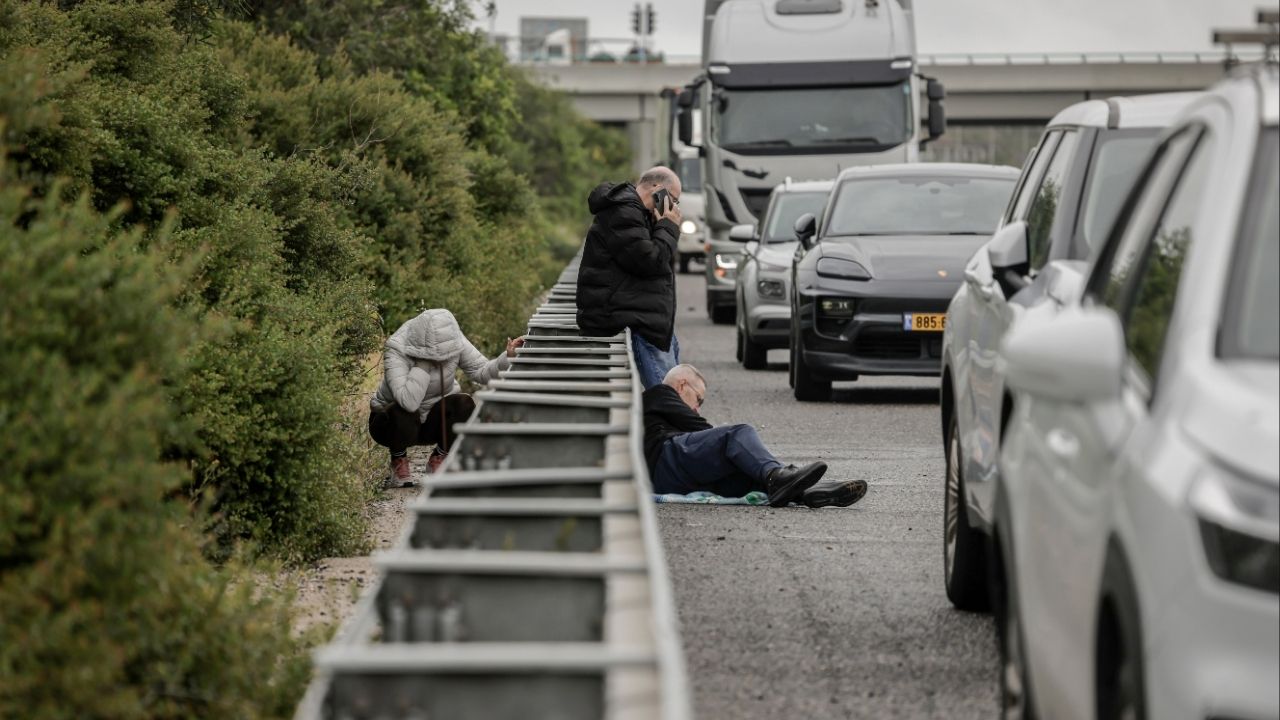
The Israeli military says it has intercepted about 90% of the Iranian missiles. Still, that means dozens have penetrated the air defenses, and even the interceptions cause showers of deadly shrapnel and debris. Many Israelis have no fortified spaces in their homes and are forced to rush out to public shelters.
Not all make it in time.
“It feels like Russian roulette,” said Dana Berzak, 40, a pastry chef and mother of three who lives two buildings away from the blast. “They planned for decades for war with Iran, but they didn’t prepare adequate protection.”
Compounding the threat, Hezbollah, the Iran-backed Lebanese militia, joined the fighting in early March, prompting a renewed Israeli offensive in Lebanon.
At least 19 people have been killed in Israel since the war began by missile and rocket fire from Iran and Lebanon, according to authorities.
In the southern desert city of Dimona, more than 80% of the residents voted for Netanyahu’s conservative Likud party or one of his coalition partners in the last election in 2022. A ballistic missile from Iran struck there on March 21, rattling Israelis, not least because the city lies only 8 miles from the country’s main nuclear research facility and reactor.
Emanuel Binyamin, 73, said he and his wife were sheltering inside their home when the missile landed several feet away, setting the building ablaze. They were trapped inside for 20 minutes until firefighters arrived to escort them out.
There was “nothing to salvage, not even a towel,” said Binyamin, a wastewater treatment facility manager and longtime resident of Dimona. Still, he said he had no doubt that the war against Iran was a necessary investment in Israel’s future.
“Whatever we don’t do now,” he said, “we will have to pay for with compound interest.” His grandchildren and great-grandchildren, he said, would reap the benefit of the current military campaign.
But the longer the war goes on, the more support is likely to wane, particularly as the Israeli government has not articulated any clear end game. Israelis say that unless the hard-line clerical and military leadership of Iran is overthrown and replaced with a completely different government, they expect to be back at war a few months from now.
Some Israelis who generally support the war with Iran say they have suspicions about the timing and Netanyahu’s motives. Elections are expected in October, at the latest, and Netanyahu is still standing trial on corruption charges, giving him all the more reason to want to remain in office.
A coalition of anti-Netanyahu groups organized protests across Israel last month against what they called Netanyahu’s “forever war.”
“It is clear this is not only about security,” said Shai Resnick, 36, who lives near the blast site in north Tel Aviv. “Elections are coming up.”
Still, she said, Iran’s leaders “state clearly that they don’t want us here. The war is bigger than me or Netanyahu.”
—
This article originally appeared in The New York Times.
By Isabel Kershner/Avishag Shaar-Yashuv
c. 2206 The New York Times Company