
|
Getting your Trinity Audio player ready...
|
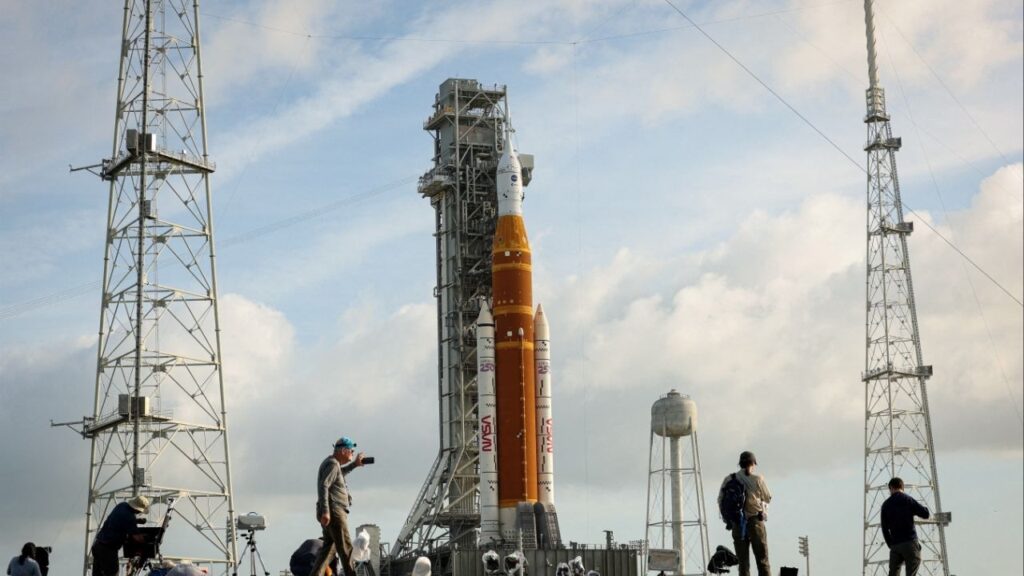
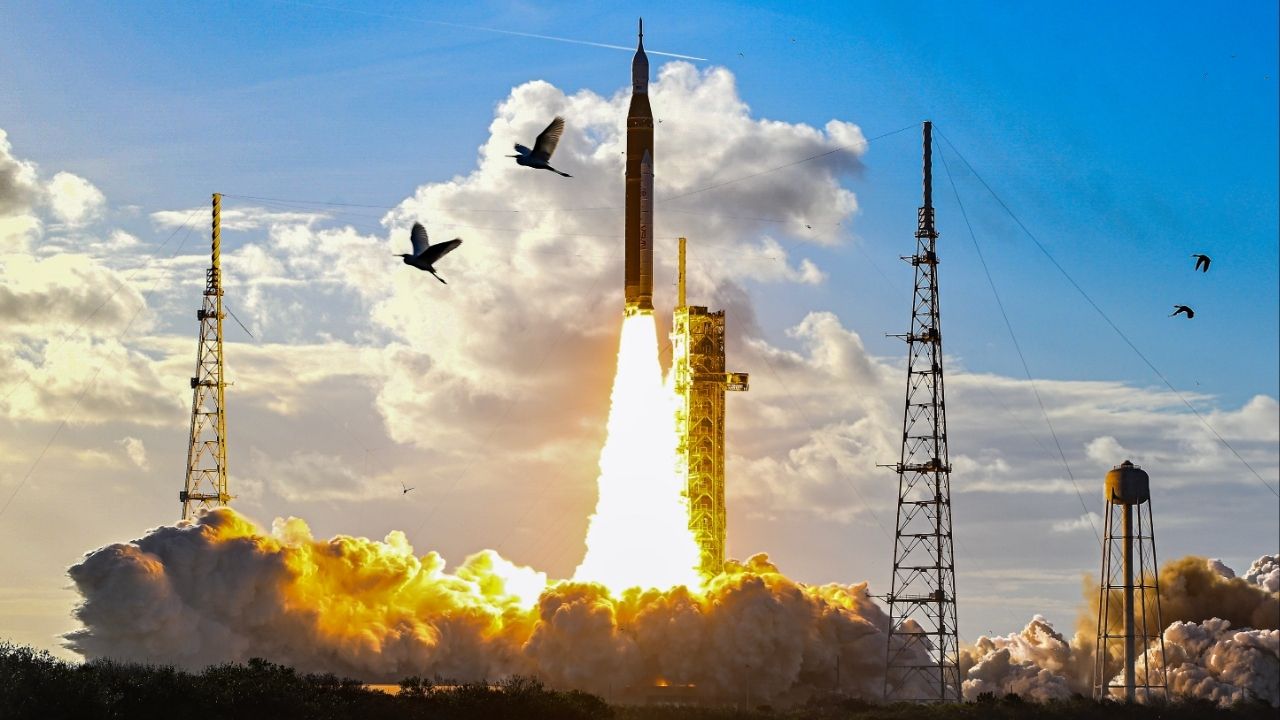
When the engines of the Artemis II rocket cut off about eight minutes after liftoff Wednesday, observers could look for a little stuffed toy floating in the cabin of the Orion crew capsule. That signaled that the astronauts, after the intense acceleration of leaving Earth, entered the weightless part of their flight.
The toy — or zero-gravity indicator, as space enthusiasts like to call it — is not one you can buy. It is a custom design by Lucas Ye, 8, of Mountain View, California, who won a NASA-sponsored contest that thousands of people entered.
His creation is Rise, a round, smiling moon wearing a baseball cap that shows half of Earth’s surface. It is a nod to the iconic “Earthrise” photograph taken by William Anders, one of the astronauts on Apollo 8, as the spacecraft circled the moon.

“This little guy, Rise, really resonated with us,” Christina Koch, one of the Artemis II astronauts, said when the astronauts publicly revealed Lucas as the winner last Friday.
Like Apollo 8, Artemis II will go to the moon and back without landing.
The toy’s visor includes other symbols — two spacecraft, one representing Apollo and the other, Artemis — and stars in the pattern of the Orion constellation. The Artemis spacecraft is known as Orion. On the back of the toy is a footprint representing Neil Armstrong’s imprint on the lunar surface during the Apollo 11 mission.
Before the public announcement, NASA emailed Lucas’ parents, Fan Ye and Clara Zhao, with the news. They started messaging each other about how to surprise Lucas.
The notifications, however, appeared on an iPad at home. Lucas’ older brother, Oliver, saw those and promptly told Lucas.
Lucas’ reaction?
“Very, very, very, very, very, very surprised,” he said.
Like many children, Lucas is fascinated by outer space. He can, for example, quickly rattle off the names of dwarf planets in the outer solar system: “Eris, Pluto — obviously — and Makemake, and also Sedna and Haumea. Also a bunch of other things. There are a lot more dwarf planets than you think there are.”
About a year ago, Lucas’ mother, looking for activities to nurture his interest, found an announcement for the zero-gravity indicator contest. “He was very excited, and that’s when we got started,” Zhao said.
The competition was open to people of all ages.
“We were able to get a really broad international audience to participate in this competition,” said Trisha Epp of Freelancer, the agency that ran the contest for NASA. “We had thousands of entries come in from, I think, over 50 countries.”
The contest only required entrants to sketch out a design, but Lucas, with the help of the whole family, put together a prototype using a dryer ball for Rise’s head.
Zero-gravity indicators date to the first time an astronaut went to space. Yuri Gagarin, the Soviet astronaut who launched to orbit in 1961, brought along a small doll.
Only recently have astronauts launching from the United States started doing that.
When SpaceX was developing its Crew Dragon spacecraft, its first demonstration flight to the International Space Station did not have any people aboard, but it did carry a plush toy known as Little Earth Buddy.
The second demonstration flight included two NASA astronauts, Bob Behnken and Doug Hurley.
“Bob and I are not necessarily the most sentimental dudes,” Hurley recalled this week. But they wanted to start and continue traditions in space, and floating toys seemed to be one that people liked.
Hurley’s son, Jack, and Behnken’s son, Theo, were dinosaur enthusiasts, so they brought along Tremor, a glittery blue and purple sauropod.
“It’s nice to see that that tradition is going to continue,” Hurley said.
Last Friday, Reid Wiseman, the Artemis II mission commander, showed a zippered compartment at the bottom of Rise that would hold a microchip with the names of more than 5.6 million people who wanted to be included in the moon mission.
That might not be the last thing Lucas ever makes for NASA. “I would probably like to become an engineer at NASA,” he said. “When I grow up, I’ll probably be designing a space station around Mars or something.”
At the invitation of NASA, the Ye family was in Florida to watch the launch. (They, not American taxpayers, paid for the trip, but they had a prime viewing spot.)
—
This article originally appeared in The New York Times.
By Kenneth Chang/Kenny Holston
c. 2026 The New York Times Company