
|
Getting your Trinity Audio player ready...
|
U.S. warplanes and attack helicopters have ramped up assaults against Iranian drones and naval vessels in an effort to reopen the Strait of Hormuz, U.S. officials said, as oil prices remained high Friday amid new attacks on energy sites in the Persian Gulf.
As the U.S.-Israeli war on Iran approached the three-week mark, U.S. commanders have been scrambling to accelerate plans to thwart Iran’s ability to choke off the strait, the critical passageway in and out of the Gulf. Iran has used a lethal combination of mines, missiles and armed drones — and the threat of using them — to all but shut down shipping through the strait, through which passes a large part of the world’s oil and natural gas.
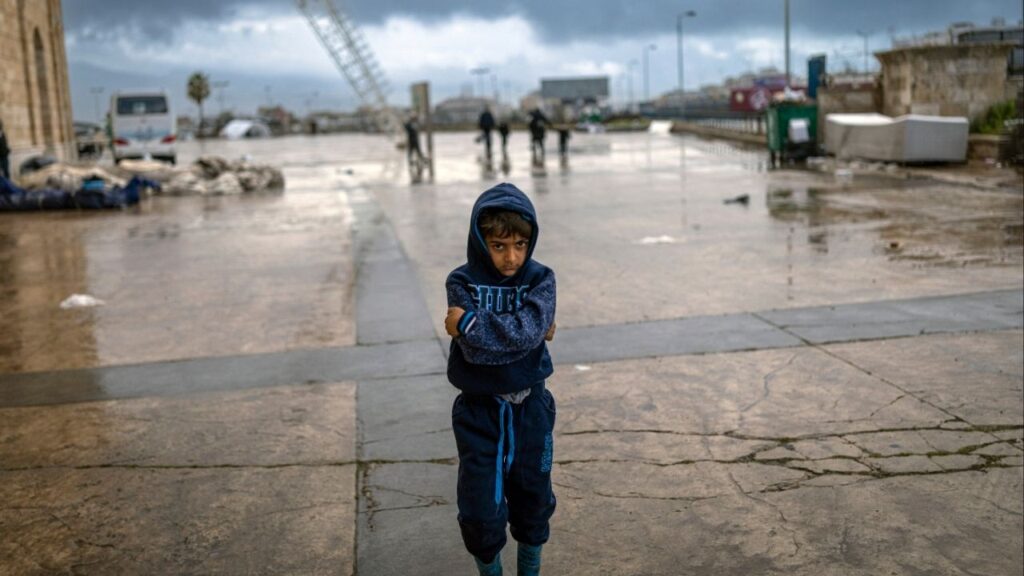
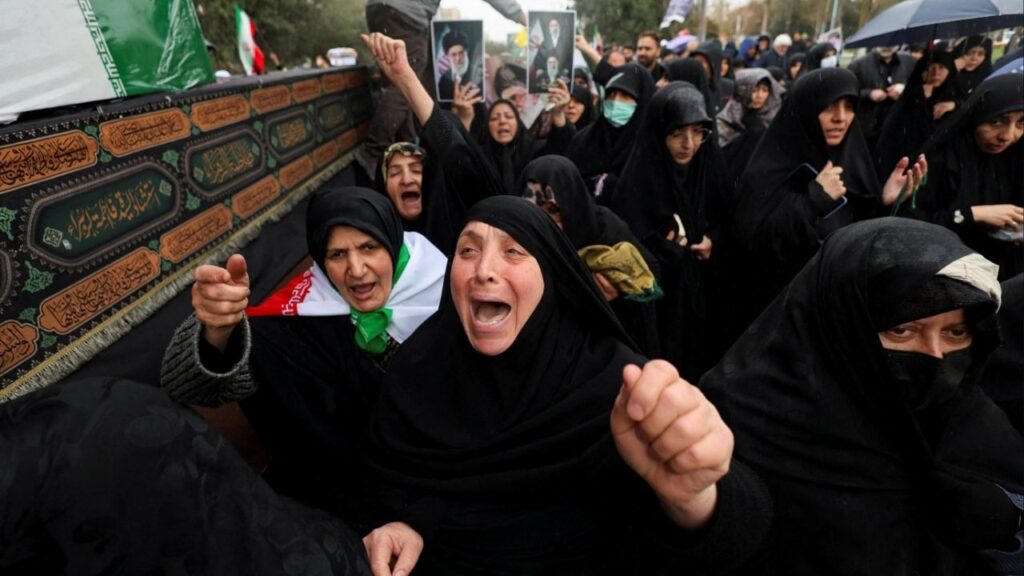
The war cast a pall over celebrations for Eid al-Fitr, a holiday marking the end of the Ramadan fasting month, and Nowruz, the Persian New Year. Iran fired more retaliatory strikes, with several U.S. allies saying they were responding to incoming drones and missiles.

The state-owned Kuwait Petroleum Corp. said a drone attack had caused fires at the Mina al-Ahmadi refinery, for the second consecutive day. Israel said it had launched targeted attacks on Tehran, the Iranian capital, after Iranian missile fire set off sirens in Jerusalem and northern Israel overnight.
The sustained and wide-ranging strikes on energy sites have prompted the Trump administration to scramble for solutions. Treasury Secretary Scott Bessent said Thursday that the United States was planning to lift sanctions on Iranian oil in an effort to shore up the global market, reversing years of U.S. measures to cripple Iran’s economy.
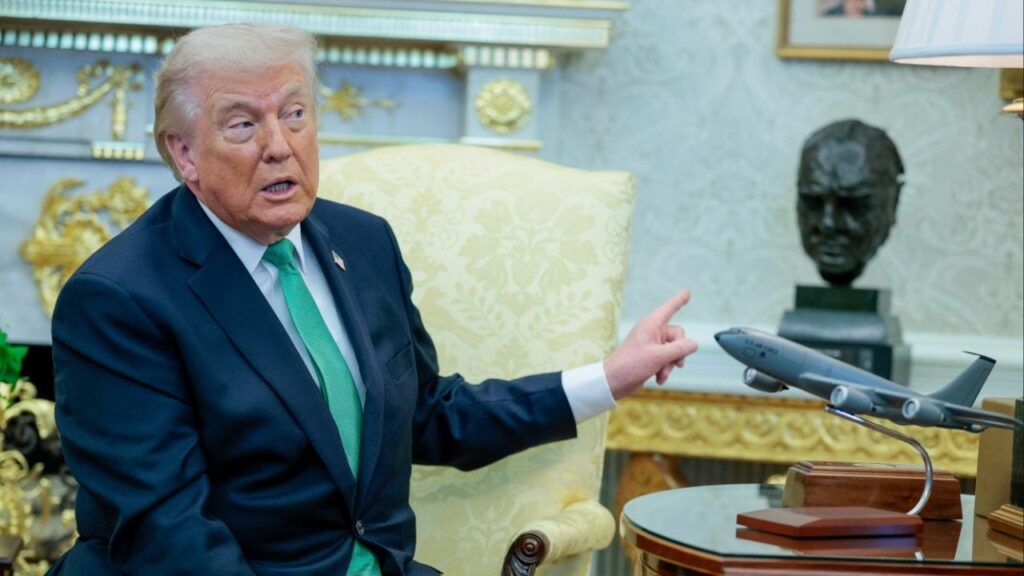
President Donald Trump said he had told Prime Minister Benjamin Netanyahu of Israel to stop attacking Iran’s energy fields. He also tried to reassure Americans on the economic impact of the war, saying Thursday, “It will be over soon,” without explaining.
The president lashed out once again at NATO allies for not joining in the fight against Iran, or heeding his call to send warships to escort shipping through the Strait of Hormuz. “COWARDS, and we will REMEMBER!” he wrote in a social media post.
Oil prices eased slightly Friday morning but remained high, with Brent crude, the international benchmark, still trading at more than $108 per barrel, up from roughly $72 per barrel before the war began. The S&P 500 was on course for a fourth straight week of losses for the first time since about a year ago, around the time that the Trump administration introduced its tariffs.
Here’s What Else We’re Covering:
— Israeli strike: The Israeli military said it had killed the spokesperson for Iran’s Revolutionary Guard, Ali Mohammed Naini, in a strike Friday. A statement from the Guard carried by Iranian state television confirmed he was killed, but did not offer details. The statement said the longtime general had led the force’s “cognitive war” against adversaries. The Israeli military described him as the group’s “main propagandist.”
— New attacks: Saudi Arabia, Kuwait, Bahrain and the United Arab Emirates said Friday they were intercepting drone and missile attacks, which UAE and Bahraini officials said were coming from Iran. The authorities in Bahrain said falling shrapnel had started a fire at a warehouse.
— War budget: Trump said he would seek an additional $200 billion from Congress to fund the war with Iran. The sum, which is nearly a quarter of the United States’ annual defense budget, has already encountered some resistance from Republican and Democratic lawmakers.
— Death tolls: Iran’s U.N. ambassador said last week that at least 1,348 civilians had been killed since the start of the war. On Wednesday, a Washington-based human rights group, the Human Rights Activists News Agency, reported that at least 1,369 civilians had been killed. The number of Lebanese killed rose to more than 1,000, Lebanon’s Health Ministry said Thursday. At least 14 people have been killed in Iranian attacks on Israel, officials have said. The American death toll stood at 13.
—
This article originally appeared in The New York Times.
By Adam Rasgon, Francesca Regalado and Ashley Ahn/Diego Ibarra Sánchez
c. 2026 The New York Times Company