

|
Getting your Trinity Audio player ready...
|
This commentary was originally published by CalMatters. Sign up for their newsletters.

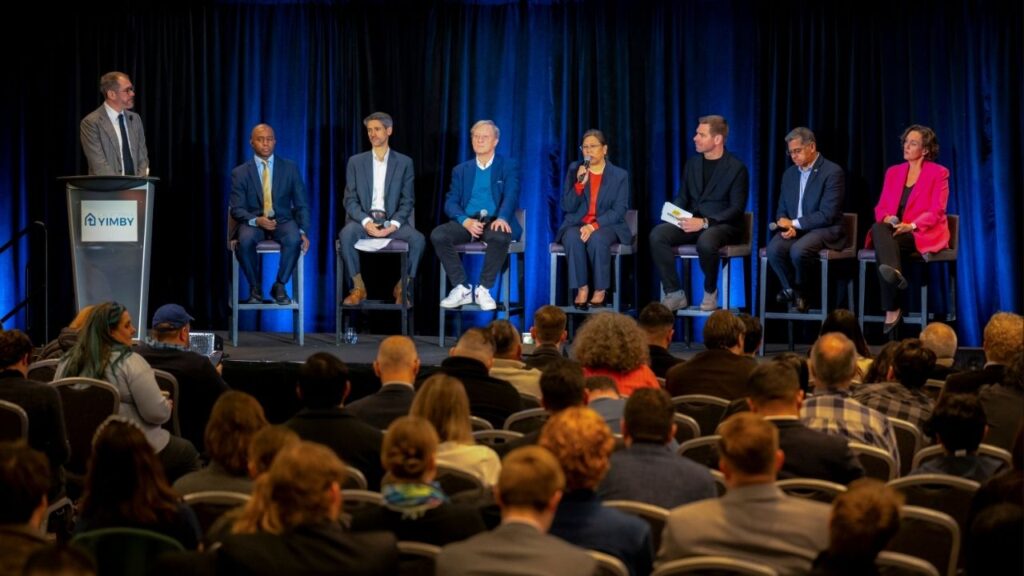
After months of potential governors playing coy, dropping in and dropping out, we finally have a field of eight Democrats and two Republicans, none of whom registers more than 14% in the latest poll.
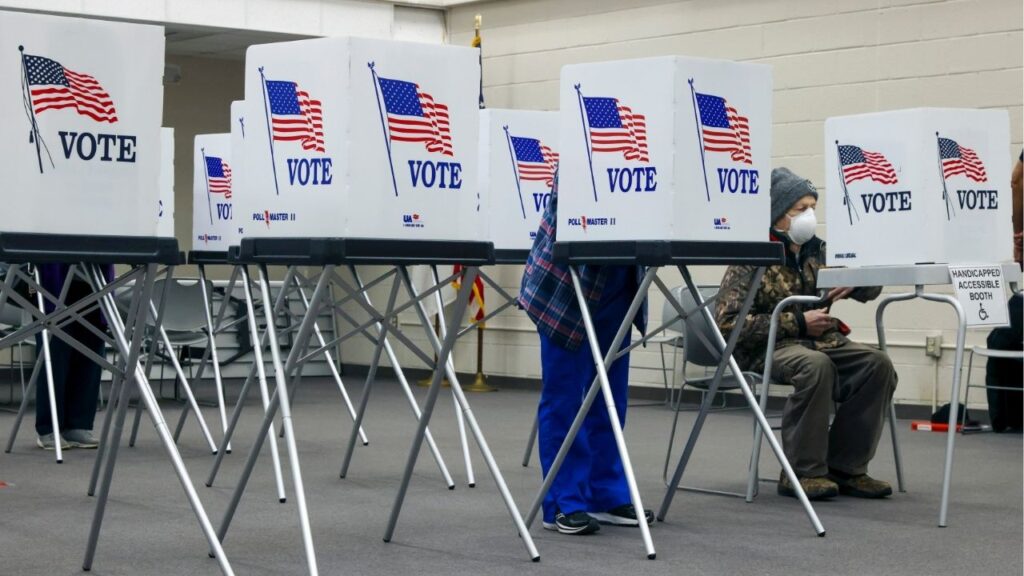
All will appear on the June 2 primary election ballot and under California’s primary system, those who finish 1-2, regardless of party, will face each other in the November 3 general election.

The lack of a clear frontrunner at this stage of the quadrennial game is not only an unusual phenomenon, but it creates a raft of potential scenarios as those in the dectet scramble for places in the November runoff.
“Every one of these Democrats is itching and clawing to get to that sweet 20% that would guarantee them a place in the runoff,” political data guru Paul Mitchell told Politico.
The Scenarios
Here are some scenarios:
The only real chance for a Republican governor is for the two GOP candidates, former television commentator Steve Hilton and Riverside County Sheriff Chad Bianco, to finish 1-2 in the primary. If just one qualifies for the November election, he would be a prohibitive underdog against any Democratic foe, given the huge gap in voter registration.
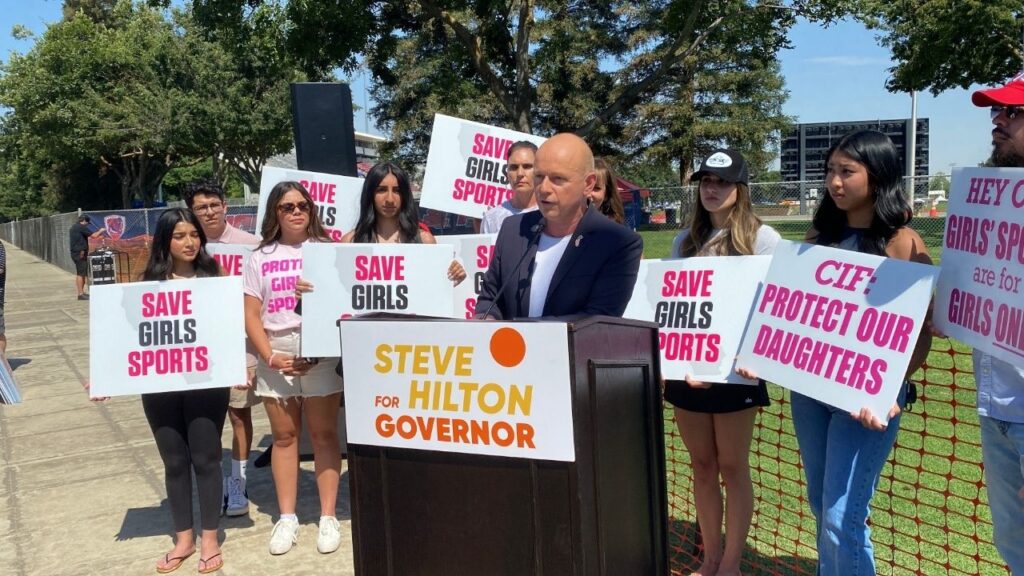
Democratic leaders have worried aloud about such a scenario were the eight Democratic candidates to divide the June vote more or less equally. They urged those trailing badly in the polls to drop out, but just one, Ian Calderon, exited.
If there is a leading Democrat as the June 2 primary nears, he or she will likely try to indirectly boost Hilton or Bianco into second place, probably by tying that GOP candidate to Donald Trump to enhance his standing among Republican voters. Lifting a Republican into second place would insulate the Democratic frontrunner from having to face another Democrat in November, thus ensuring a win.
That’s exactly what happened in the race for a U.S. Senate seat two years ago. Democrat Adam Schiff spent heavily to denounce (and publicize) Republican Steve Garvey as a threat, and Garvey’s second-place primary finish meant Schiff avoided a face-to-face duel with Democrat Katie Porter, who’s now running for governor.
In a sense, therefore, the jostling is not so much for first place on June 2 but for the No. 2 spot, since it will dictate the scope of the Nov. 3 election — a very unlikely Republican governorship, a cakewalk for a Democrat against a Republican who finished second in June, or a bruising battle between two Democrats.
Democrats Carefully Choose Their Targets
These scenarios are already influencing pre-primary campaigns, especially in how the eight Democrats are choosing their targets.
We see it, for instance, in the sniping between former Los Angeles Mayor Antonio Villaraigosa and former Attorney General Xavier Becerra, renewing a long-standing feud between the two.
We also see it in billionaire Tom Steyer’s potshots at Congressman Eric Swalwell for missing congressional votes. Both were also-ran candidates for president in 2020 and seemingly are rivals for the support of left-leaning activists this year.
Steyer vs. Mahan in Big Money Battle
Finally, it’s evident in Steyer’s portrayal of late-blooming rival Matt Mahan, the mayor of San Jose, as anti-union. While Steyer’s campaign is self-financed, Mahan’s heavy support from Silicon Valley could match Steyer dollar-for-dollar and, without an obvious frontrunner, money could be the decisive factor.
A November duel between the two would be a showdown between the Democratic Party’s two rival wings, whose outcome would affect how California addresses its many knotty issues into the next decade.
Steyer is promising to deliver single-payer health insurance, a breakup of utilities, and other items on the long-stalled progressive agenda for California, along with tax increases to finance them. Mahan promises his solutions to homelessness will be practical and budget-conscious.
This article was originally published on CalMatters and was republished under the Creative Commons Attribution-NonCommercial-NoDerivatives license.