
|
Getting your Trinity Audio player ready...
|
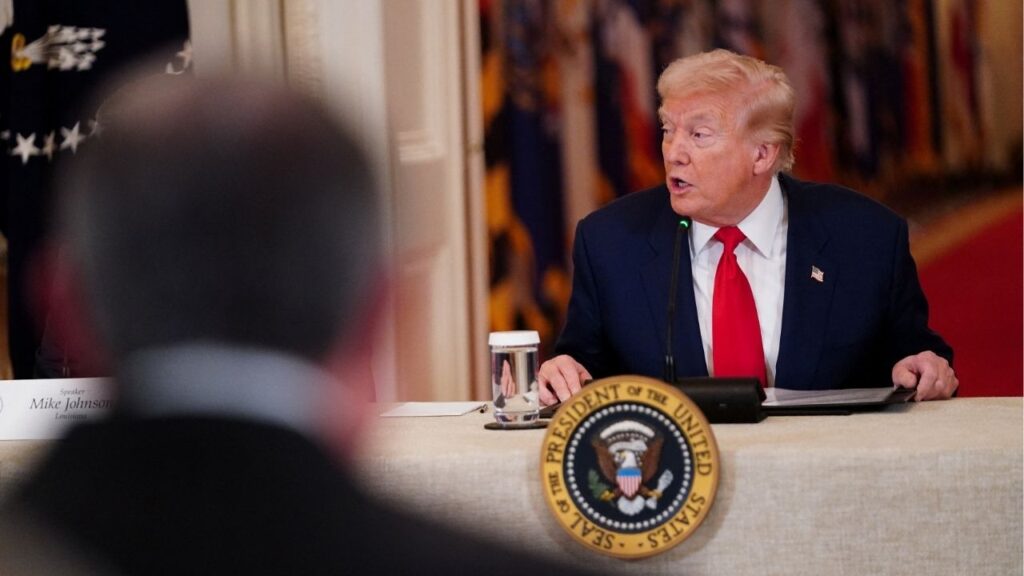
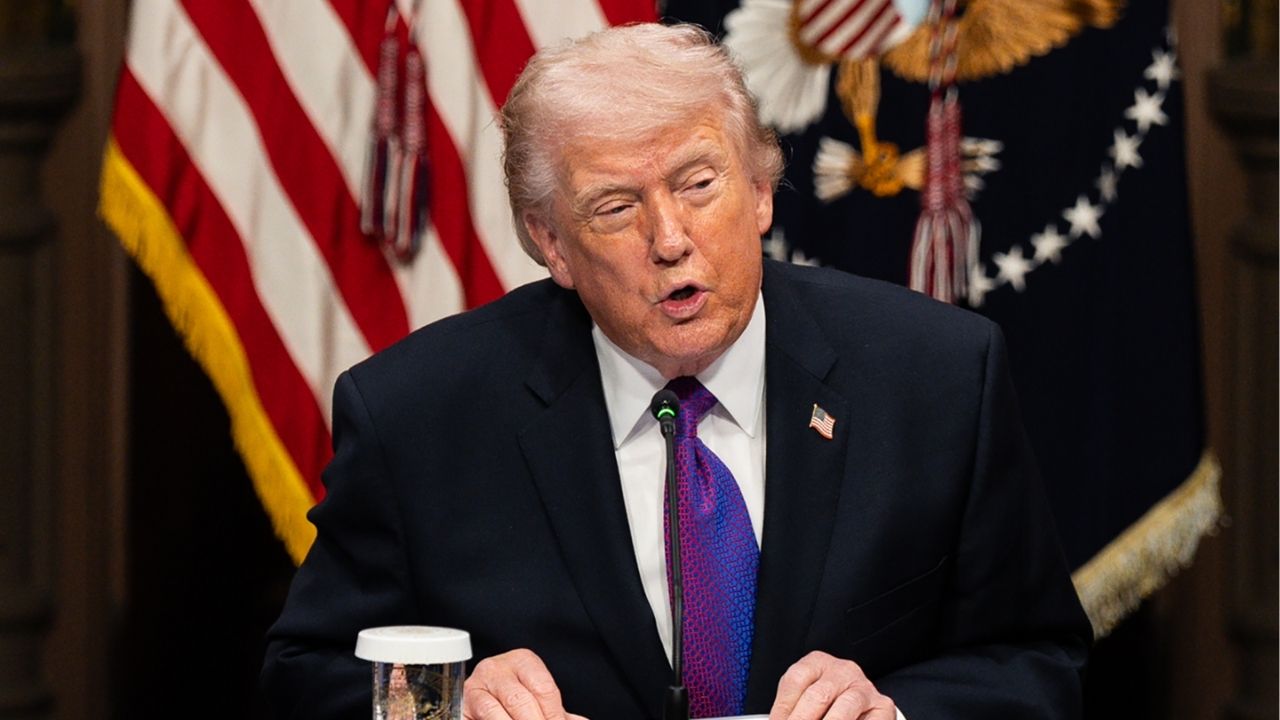
WASHINGTON — President Donald Trump declared on Friday that he would settle for nothing short of “unconditional surrender” by Iran, the latest and broadest expansion of his goals for the conflict, and one that could portend a much longer conflict if he persists in that aim.
Six days into the Israeli and American bombing campaign, Iran has shown no interest, at least publicly, in surrendering. Instead, it has done the opposite, expanding the war to Arab states that host U.S. bases, attacking them with missiles and drones, though in diminishing numbers in recent days.
Trump’s statement came in a social media post, in which he said that after the country’s surrender would come “the selection of a GREAT & ACCEPTABLE Leader(s),” and promised that the United States and its allies “will work tirelessly to bring Iran back from the brink of destruction.”

His statement was the latest in the shifting goals Trump has laid out for the war, leaving his aides, and congressional allies, struggling to keep up and at times contradicting the president.
Trump declared on Saturday, in the opening hours of the U.S. attack, that Iran’s people should rise up and overthrow their government.
But in the following days, both Secretary of State Marco Rubio and Defense Secretary Pete Hegseth pivoted away from the emphasis on regime change, saying that the United States was simply focused on assuring that Iran’s nuclear program was permanently destroyed, and that it no longer had the missile capability to attack Israel, its Arab neighbors, and perhaps someday America.
Hegseth went further on Wednesday, telling reporters there would be no “nation-building,” and spoke dismissively of the Bush administration’s efforts to build new governments in Afghanistan and Iraq.
But Trump keeps returning to exactly that goal. He has repeatedly cited the model of the American action in Venezuela, where U.S. forces removed Nicolás Maduro and sanctioned the ascension of his vice president, Delcy Rodríguez, saying she could run the country as long as she complied with American demands, particularly access to oil.
Trump has resisted suggestions that Iran — a country with 92 million people, nearly three times the size of Venezuela’s population, and a government run by clerics and Iran’s Revolutionary Guard — differs in every respect from Venezuela.
“It’s going to work very easily. It’s going to work like in Venezuela,” he told CNN in a brief telephone conversation Friday.
He said he was not concerned about whether there was a democratic government elected in Iran, saying he was willing to work with moderate Shia religious leaders.
“I don’t mind religious leaders,” he said. “I deal with a lot of religious leaders.”
As long as they were “fair” to Israel and to the United States, he said, he was willing to keep a clerical government.
Trump went on to say he expected Cuba to fall soon, which would give him a trifecta: a change in leadership in three countries that have been American adversaries.
—
This article originally appeared in The New York Times.
By David E. Sanger/Tierney L. Cross
c. 2026 The New York Times Company