
|
Getting your Trinity Audio player ready...
|
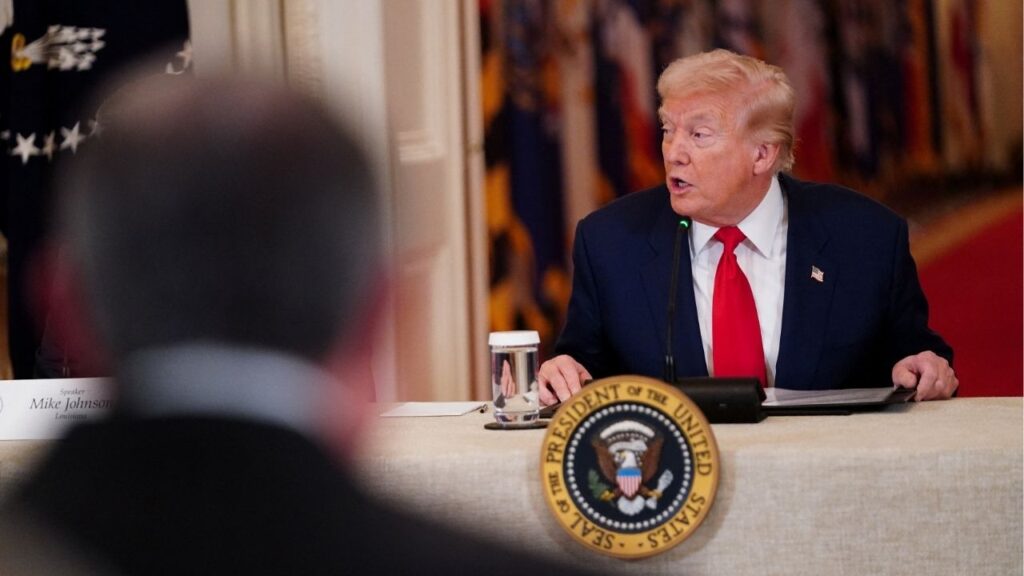
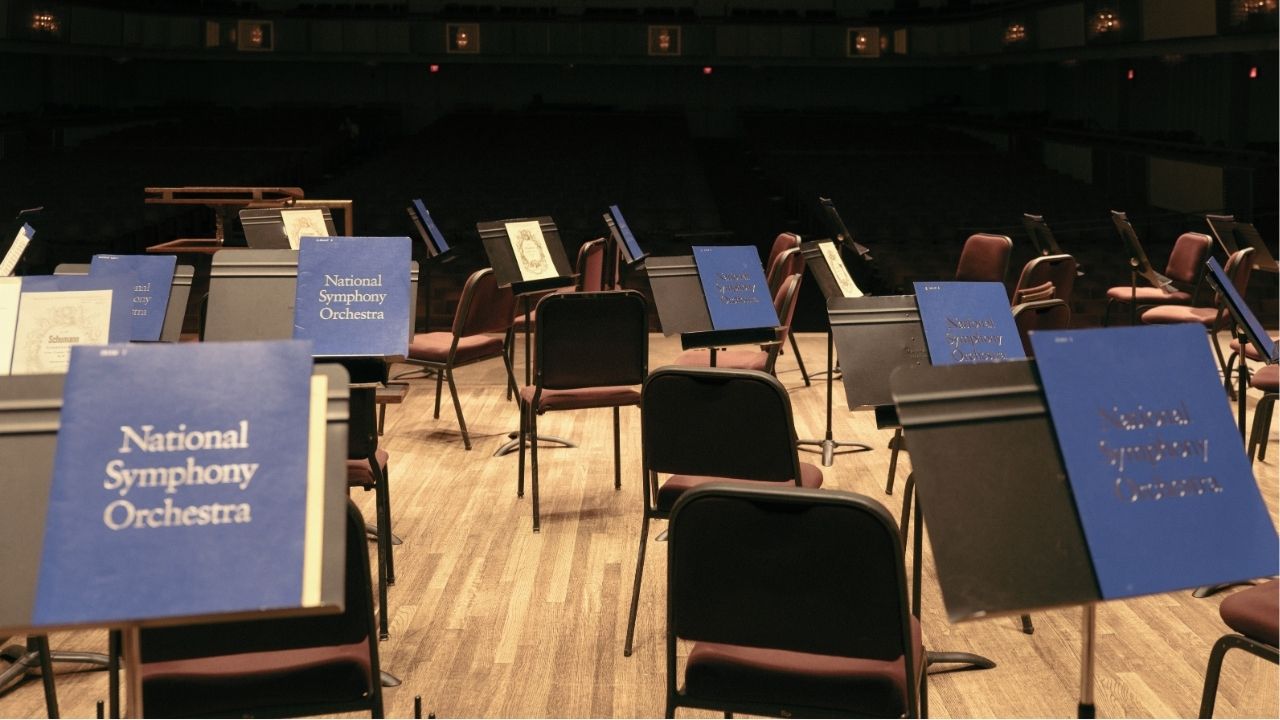
The executive director of the National Symphony Orchestra announced Friday that she was stepping down, the latest blow to the John F. Kennedy Center for the Performing Arts as it struggles with declining audiences, artist cancellations and the departure of its opera company in the wake of President Donald Trump’s effort to put his imprint on the center.
In an interview, executive director Jean Davidson said she had long wanted to run an arts center like the Wallis Annenberg Center for the Performing Arts in Beverly Hills, California, where she is headed in May. But she said that her decision to move less than three years after she took the Kennedy Center job reflected frustration at the turmoil that has engulfed the center since Trump named himself as chair; installed a loyalist, Richard Grenell, as its president; and renamed it the Trump-Kennedy Center.
“It’s no secret that this has been a really hard year,” she said. “So I started looking for a new opportunity several months ago.

“I had hoped to stay through the 100th anniversary of the NSO in 2031,” she added.
The orchestra has become increasingly isolated at the Kennedy Center. The moves by Trump — particularly his effort to place his name on an institution that was opened in 1971 in tribute to John F. Kennedy, the slain president — led to boycotts by audience members and cancellations by top artists. Composer Philip Glass withdrew his new symphony from a scheduled debut with the orchestra, and banjo player Béla Fleck pulled out of three performances with it. Attendance declined by as much as 50%.
The departure of the Washington National Opera in January left the orchestra as the only classical music anchor there. At the time, Davidson said, “This has been our home for 55 years. We are not leaving.”
As executive director, Davidson oversaw the orchestra’s administration, operations, audience development and fundraising. The orchestra has a $42 million annual budget.
But Davidson, in an interview discussing her departure, said that while she supported the orchestra’s decision to maintain its affiliation with the center, she found it increasingly difficult to stay in the job. For example, she said she had no advance notice of Trump’s announcement that he was shutting the center for two years for a reconstruction project. The president’s announcement came as he confronted a wave of artist cancellations and a sharp decline in attendance at the center.
Davidson said she understood the decision to close for repairs, noting that the center had become run-down over the years. But she said that the absence of notice had forced the orchestra to scramble to find new venues to play in while the center is closed; classical music schedules are typically set years in advance. The orchestra has about 100 members and performs about 180 times a year. Orchestra members will continue to be paid while the center is being rebuilt.
“There’s been a lot of change going on, and there’s not a lot of communication,” she said. “We are finding out things through the press — at the same time as everyone else. Like the center closing on July 4.”
“I didn’t see how I could be effective as a leader in the current climate,” said Davidson, who is from Los Angeles and is the former president of the Los Angeles Master Chorale at the Music Center.
On Friday, Rep. Joyce Beatty, D-Ohio, asked a federal court to block the president’s plan to close the center.
Davidson said she was confident that the orchestra, under its music director, Gianandrea Noseda, would survive — providing its patrons and donors stand by it.
“The orchestra has never sounded as great as it sounds now,” she said. “Gianandrea is very committed. Musicians still want to play with us. It’s a great orchestra.
“But we need Washington — donors, audiences — to support the orchestra for it to survive,” she said.
—
This article originally appeared in The New York Times.
By Adam Nagourney/Caroline Gutman
c. 2026 The New York Times Company