

|
Getting your Trinity Audio player ready...
|
WASHINGTON — Last spring, in the early months of Steve Feinberg’s tenure as deputy defense secretary, Pentagon staff members briefed him on plans to employ new high-energy laser weapons to take out drones being used by Mexican cartels to smuggle drugs across the southern U.S. border.
But their use was conditioned on getting a green light from aviation safety officials.
The law, the staff members at the Pentagon explained to him, required extensive coordination with the Federal Aviation Administration and the Transportation Department, which could slow the testing of the system. Transportation officials could even block the system’s use if they determined that it posed risks to aviation safety.

Two people with knowledge of the meeting, who spoke on the condition of anonymity because they were not authorized to discuss sensitive matters, said they recalled that Feinberg felt the Pentagon had the authority to proceed anyway. Sean Parnell, the chief Pentagon spokesperson, denied their account, saying it was “a total fabrication.”
The meeting took place at an especially sensitive time for those regulating air safety as well as for the Pentagon. Just months earlier, an Army helicopter collided with a passenger jet near Ronald Reagan National Airport above Washington, killing 67 people and putting the military’s safety protocols under intense scrutiny.
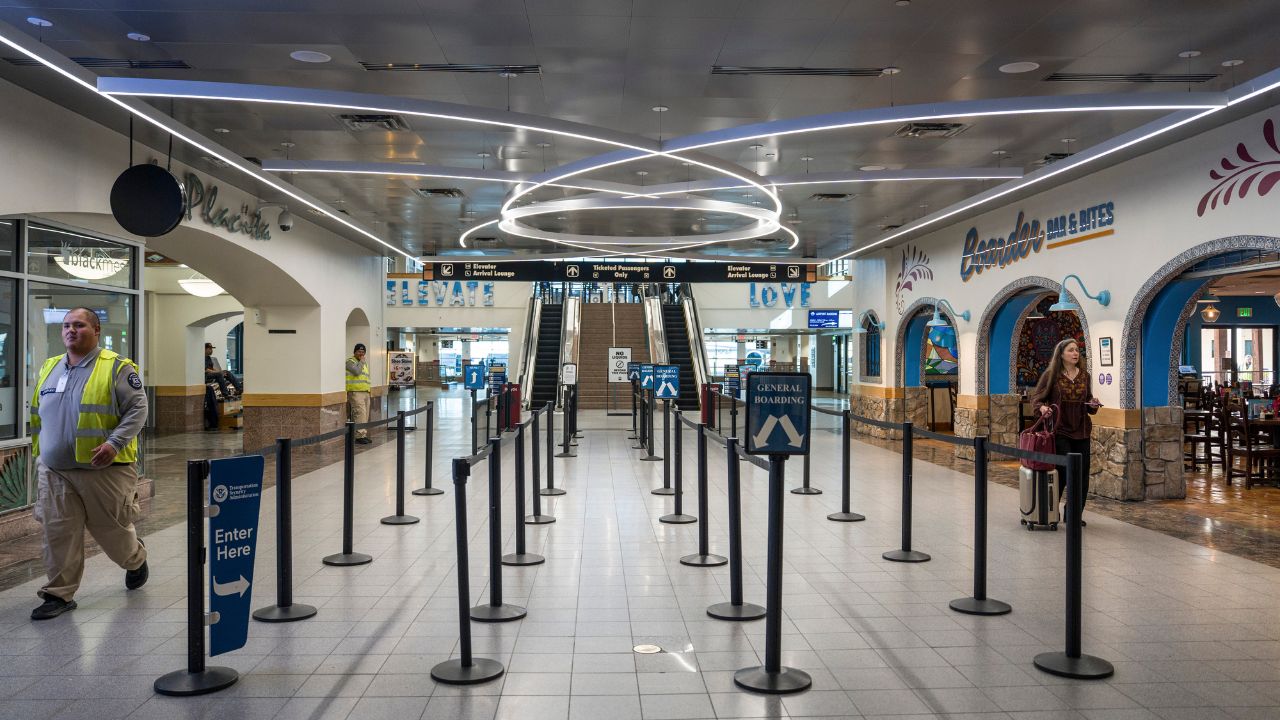
Now the question of whether the Pentagon and the Department of Homeland Security followed proper procedures and the law in deploying the laser weapon has become a flash point within the Trump administration. Working alongside military personnel, agents from Customs and Border Protection, which is part of the Department of Homeland Security, used the weapon this past week not far from El Paso International Airport in Texas, prompting fury inside the FAA and a brief shutdown of the airport and airspace in that region.
Late Tuesday, FAA Administrator Bryan Bedford, caught off guard that the system was being used without authorization and concerned for public safety, believed he had little choice but to close the airspace for 10 days, according to more than a half dozen people. It was an extraordinary decision that surprised the flying public and local officials.
Under pressure from the White House, Bedford rescinded the order Wednesday, setting off a bout of finger-pointing within the administration that continued throughout the week. Administration officials told reporters that the FAA did not warn the White House or the Pentagon that it was about to severely limit flights over a city of nearly 700,000 residents.
But internal government communications reviewed by The New York Times tell a very different story.
In one email, dated Feb. 6, the FAA’s top lawyer warned a Pentagon official that deploying the laser system without restricting flights created “a grave risk of fatalities or permanent injuries” to Americans traveling through that airspace.
Another email, dated Tuesday, shows that the lawyer gave official notification to 14 government employees — including senior officials in the Defense Department as well as staff members of the White House’s National Security Council — of the FAA’s intention to close the airspace above the Army base adjacent to El Paso because the laser technology had been used without its approval.
Publicly, the administration has yet to acknowledge that a departmental standoff over those weapons led to the airspace closure. Even the rationale for deploying the laser system is in dispute.
Senior administration officials described the incident as having been prompted by a drone crossing into the United States from Mexico, an explanation repeated by Transportation Secretary Sean Duffy this past week.
White House officials declined to comment Friday, and referred to a social media post from Duffy, published Wednesday, that said the administration “acted swiftly to address a cartel drone incursion.”
But that narrative was disputed by multiple people familiar with the situation who said the border protection unit ended up shooting down a party balloon, rather than a drone. Military service members were present during the incident, the people said.
For the better part of the last year, Duffy and FAA leaders have been locked in a war of wills with their national security counterparts over aviation safety.
The aftermath of the midair collision at National Airport exposed the fractious nature of the relationship between the FAA and the Defense Department, as Duffy scrambled to put safety restrictions in place and the military maneuvered to sidestep them.
For much of that same time frame, the FAA and the Pentagon were also engaged in discussions over the military’s plan to begin testing counter-drone lasers against cross-border threats from drug cartels. The Pentagon had insisted to the FAA that the lasers would not pose a risk to civilian aircraft, but the FAA, unconvinced, had asked for the military’s data and an opportunity to conduct its own tests, according to three people with knowledge of those discussions.
The requests were not satisfied.
In late January, Defense Secretary Pete Hegseth approved a request from the Department of Homeland Security to allow border protection agents to use the Pentagon’s new anti-drone laser technology.
It was around that same time that Mark Roosevelt Ditlevson, a principal deputy assistant defense secretary specializing in homeland defense, sent an email to the FAA’s chief counsel, William McKenna, informing aviation officials of the military’s desire to start using the technology.
“We have operationalized a stationary laser system” near El Paso, Ditlevson wrote, according to a Jan. 23 email reviewed by the Times.
The Pentagon knew that the FAA was still conducting an internal review of the weapons, he added, but national security and Homeland Security Council officials “are aware of this,” he added, “and agree that it makes sense” for the Defense Department “to do what we feel is necessary.”
On Feb. 6, McKenna wrote back, detailing the FAA’s concerns about the potential for death or injuries to passengers and offering to put up flight restrictions in the areas where the Defense Department “proposes to deploy” the lasers.
McKenna declined to comment for this article.
Then in the dark morning hours of Feb. 9, members of a CBP tactical unit, who had been trained how to use the counter-drone lasers by the Army, decided to deploy one, while members of the military looked on. They aimed the laser at what they thought was a drone flying near the Army’s Fort Bliss, though it turned out to be a metallic balloon.
It was the first known domestic use of the weapon by federal officials outside a controlled environment, according to two people with knowledge of the technology, and it was done without the FAA’s approval, in a possible violation of the law.
At 5:16 p.m. that same day, hours after the laser system had been used, Ditlevson responded to the FAA lawyer that the Pentagon was not changing its position on its use.
“While I can appreciate your concerns, we feel we have met the statutory requirement to coordinate with your organization,” he wrote to McKenna, copying senior Pentagon officials as well as staff members from the National Security Council.
He noted that he “looked forward” to an upcoming meeting to discuss the lasers.
Officials at the FAA were furious, according to multiple people familiar with the fallout.
Agency officials asked to move up a risk mitigation meeting that had been planned for Feb. 20, in which the FAA had hoped to gain information that would satisfy its remaining concerns.
It did not happen.
It is unclear precisely when or how the FAA learned about the shot-down balloon.
But at least by Tuesday afternoon, the agency’s top officials were clearly aware and had made up their minds: Concerned that the system could be used again without FAA clearance, they would close the airspace above El Paso for 10 days. The significance of that length of time is still unclear.
The agency notified Duffy, who was in favor of the plan, according to three people who were briefed on the matter.
McKenna then dispatched a written notification to Ditlevson that was copied to more than a dozen counterparts at the White House and the Defense Department, according to a document reviewed by the Times.
“I’ve discussed this with the FAA administrator,” McKenna wrote. Given that the Pentagon had now “operationalized” a high-energy laser, he wrote that he had directed the issuance of a temporary flight restriction “to ensure aviation safety in the area.”
In other words, by 6:30 p.m. Tuesday in Washington, the FAA had explicitly warned the Pentagon and the National Security Council that it would be shutting down the airspace above Fort Bliss until they could iron things out.
The restriction was to begin seven hours later.
But it is unclear whether those warnings ever made their way to Hegseth, President Donald Trump or his senior-most staff. The interagency process has atrophied under Trump, who has dramatically shrunk the size of the National Security Council during his second term, even as the portfolio of international crises has grown.
And when the FAA made its move, many in Washington were asleep.
It was 10:32 p.m. on the East Coast when the FAA issued orders that all flight traffic under 18,000 feet would be banned beginning at 11:30 p.m. El Paso time. The order covered not only the airspace for Fort Bliss, but also that pertaining to El Paso International Airport and a desolate area in New Mexico west of the Army base.
By Wednesday morning, Susie Wiles, Trump’s chief of staff, had ordered the FAA to reopen the airspace, and the blame game had already begun.
Despite the war of words, the FAA has already won at least one concession, according to two people briefed on the matter: The new lasers have been taken out of commission for the moment.
On Friday, when asked about Duffy, the president said he was “doing a great job.”
—
This article originally appeared in The New York Times.
By Karoun Demirjian, Kate Kelly, Eric Schmitt and Tyler Pager/Paul Ratje
c.2026 The New York Times Company