

|
Getting your Trinity Audio player ready...
|
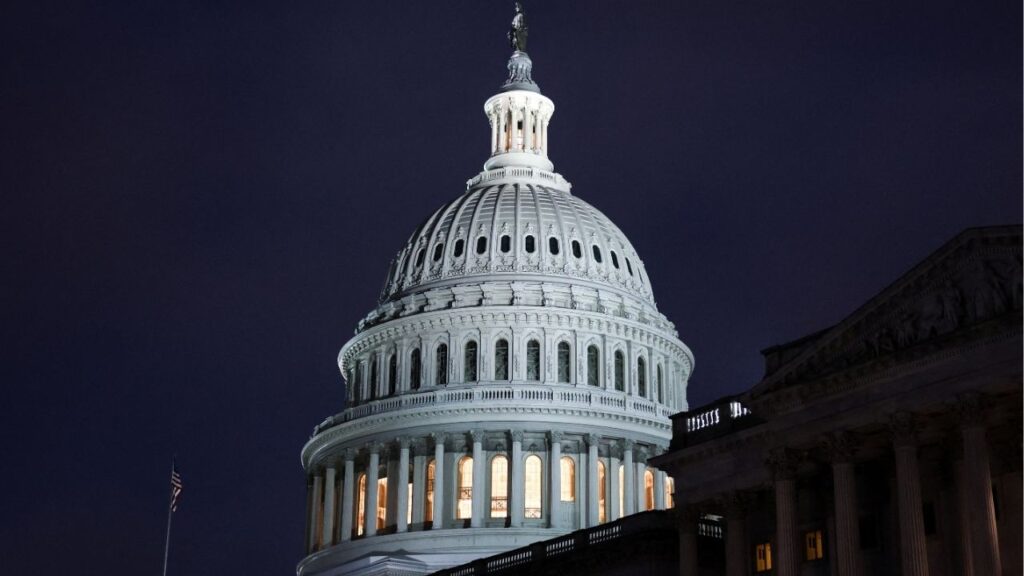
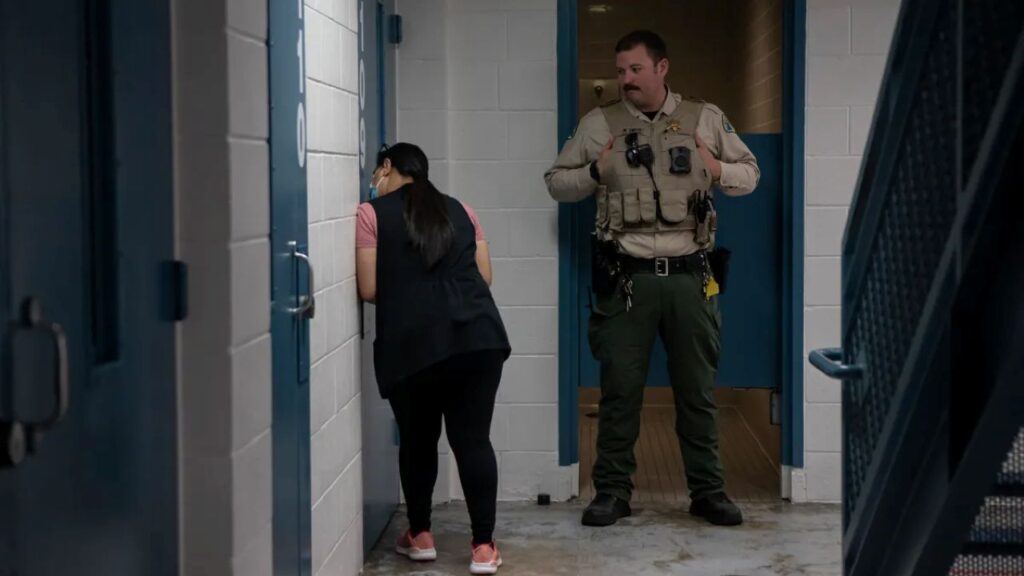
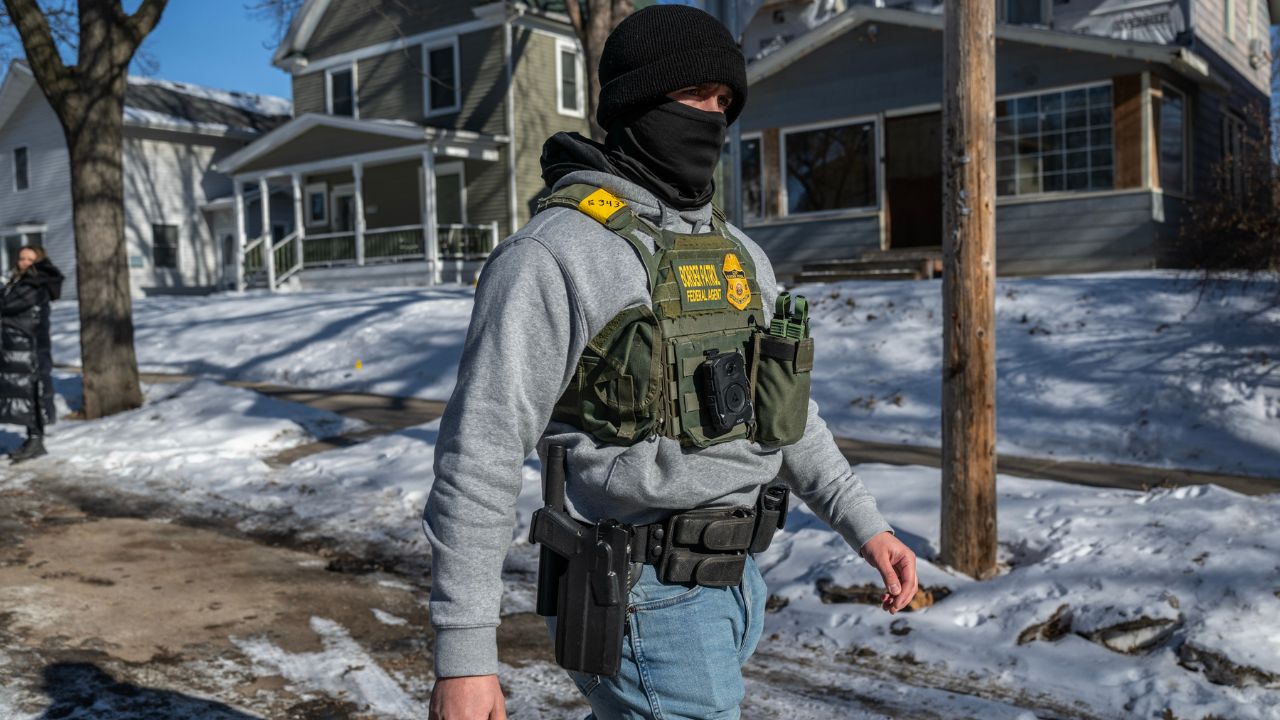
As the aggressive tactics of federal officers advancing President Donald Trump’s immigration crackdown have come under scrutiny, the use of body cameras has emerged as a rare point of bipartisan agreement in negotiations over a spending bill to keep the Department of Homeland Security running.
Democrats in Congress have said they will not support funding the department without certain guardrails on enforcement operations, including a requirement that immigration officers wear body cameras. Republicans and the White House have signaled receptiveness to the idea, but top immigration officials have suggested that a lack of funding is hampering a more widespread adoption.
“When body cameras got rolled out to CBP, the technical capability of the camera got rolled out,” Rodney S. Scott, the commissioner for Customs and Border Protection, said at a congressional hearing Tuesday. “But the funding for the personnel to support the programs and the data, that can drain basically all your other operations. So fund the entire program.”

Todd Lyons, the acting director of Immigration and Customs Enforcement, was more explicit. “We’re still in the process of deploying body cameras for all law enforcement officers,” he said in a Fox News interview in January. “Unfortunately, in the last administration, we didn’t have the funding.”
Their requests echo those of the Biden administration, which also argued that the funding was insufficient to deploy cameras nationwide. But it is worth noting that Trump has proposed drastic cuts to both programs.
Here’s an overview.
What has recent legislation said?
In recent years, Congress has directed ICE and CBP to study and test the use of body-worn cameras, and it has appropriated tens of millions of dollars for their body camera programs.
Under a 2017 congressional directive, CBP conducted a six-month trial to evaluate the efficacy of what it called its “Incident-Driven Video Recording System.” The trial began in 2018 and deployed body cameras and vehicle-mounted cameras at nine locations at the border and ports of entry.
Congress issued a similar order to ICE in 2020, asking it to devise a pilot program involving body cameras. The program began in December 2021 in three cities and ended in March 2023. (An independent assessment of the program found that the cameras had no significant effect on use of force or complaints, but it noted that the program was too small to properly ascertain the effectiveness of body cameras.)
For CBP, Congress specifically provided $14 million for the video recording system in legislation funding the government for the 2021 fiscal year, $20 million in the 2022 fiscal year and $21 million in the 2023 fiscal year. That included funding for body-worn cameras, public disclosure expenses and data storage.
For ICE, Congress allocated nearly $8.5 million to accelerate its pilot program in the 2021 fiscal year, $12 million in the 2022 fiscal year to expand nationwide use of body cameras based on the results of that pilot project and $12 million again in the 2023 fiscal year.
Budget documents from the Biden and Trump administrations show that funding remained level for the body camera programs in the 2024 and 2025 fiscal years.
Relatedly, the Department of Homeland Security received $190 billion over four years in funding under the Republicans’ tax and spending package, more than doubling the budgets of both ICE and CBP with no reporting requirements. That legislation does not specify funding for body cameras.
What were the policies under the Biden and Trump administrations?
Until recent events, the two administrations took different approaches.
The Biden administration promoted the use of body cameras by federal law enforcement in an executive order in 2022 and an agencywide policy in 2023 and an implementation plan by the Department of Homeland Security.
After taking office last year, Trump immediately rescinded the 2022 executive order, and CBP announced in February 2025 that its agents would stop wearing body cameras. ICE’s body camera policy remained largely unchanged, but agents equipped with cameras did not always turn them on.
Under Trump, both agencies sought to drastically decrease funding for the body camera programs. And the president’s budget for the 2026 fiscal year, released last year and typically a reflection of the commander in chief’s policy priorities, proposed eliminating all funding budget for CBP’s video system program and decreasing funding for ICE’s body camera program to $5 million from $20 million.
By contrast, President Joe Biden, in his budget for the 2024 fiscal year, requested an additional $3 million for ICE’s body camera program and $20 million more for CBP’s video system.
ICE noted in budget documents that the existing $12 million allowed the program to employ a staff of 19, but it requested more funding to buy additional cameras, software licenses and storage and office space. CBP’s request included funding for two support staff members to comply with public disclosure requirements, as well as money for more cameras and other infrastructure.
In March 2024, ICE announced the initial deployment of 1,600 body cameras in five cities, with a top ICE official noting that funding was insufficient to expand the program beyond those cities and calling on Congress to appropriate more money.
Biden’s budget for the 2025 fiscal year, released in April 2024, again requested more funding for both body camera programs: $30 million more in funding for CBP’s program to hire support staff and buy more equipment and $8.7 million more for ICE’s program.
—
This article originally appeared in The New York Times.
By Linda Qiu/ Victor J. Blue
c.2026 The New York Times Company