

|
Getting your Trinity Audio player ready...
|
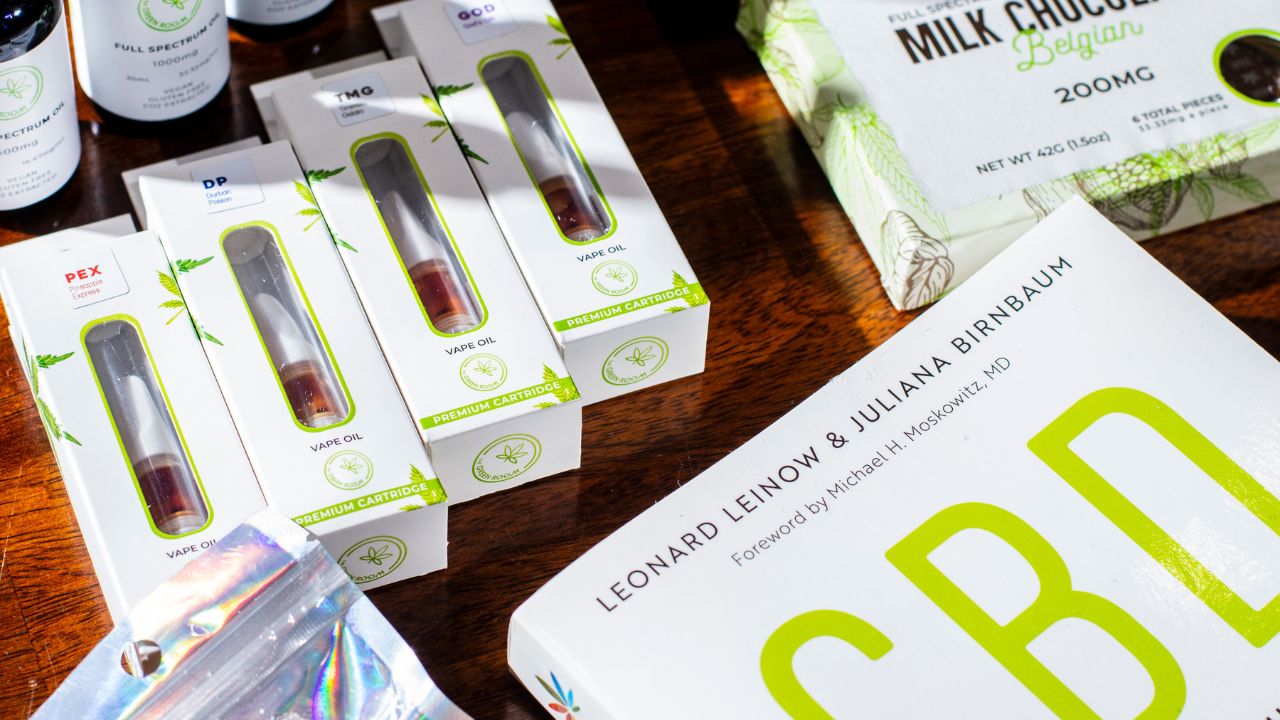
Millions of Americans who rely on the cannabis compound CBD to ease arthritis, anxiety, sleep problems or plain old boredom could soon be in for a shock. By November, many CBD creams, tinctures, gummies and beverages are to be swept from shelves nationwide, under a provision of the legislation that reopened the U.S. government last fall.
A Looming Crackdown on Hemp Products
Some states are already curtailing sales. New Jersey’s ban goes into effect in April.
The law is the latest contortion in a years-long effort by policymakers to figure out how to regulate an array of CBD products made from the hemp plant, a legal variety of cannabis. They are sold in gas stations, convenience stores and smoke shops, as well as in boutique pet food stores, spas, and, of course, online. Analysts have projected sales for wellness and recreational products with CBD, or cannabidiol, to range somewhere between $8.5 and $13 billion in 2026.

The pending restrictions have ignited a furious backlash by consumers, small business owners, manufacturers and growers, culminating in a flurry of bipartisan bills sponsored by some odd political bedfellows, attempting to scale back what many characterize as the law’s extreme overcorrection.
Under the new law, hemp-derived products must contain almost no detectable trace of THC, the best-known psychoactive compound in cannabis. Industry insiders predict that the requirement will extinguish much of the CBD market, because so many products include at least some THC.
In preparation, this month the Food and Drug Administration must list all synthetic and naturally occurring cannabis compounds with THC-like intoxicating effects, for potential inclusion under the ban.
The current conflict took root in 2018, when Congress legalized hemp, which is rich in CBD. Natural CBD is not psychoactive, but hemp does have traces of THC.
Closing the 2018 Loophole
(In contrast, marijuana, another variety of cannabis that is a federally controlled substance, has high amounts of THC and minimal CBD. That is why medical and recreational marijuana can often only be purchased legally at state-regulated dispensaries. But hemp-derived products, which are unregulated, can be readily bought over the counter.)
The new restrictions seek to close a loophole created by the 2018 law, which said that cannabis could be legally sold as hemp if the plant itself contained no more than 0.3% of a type of THC called Delta-9.
But Delta-9 is not the only type of THC in cannabis. Cannabis contains other THC cousins, including those that can be lab-manipulated to increase potency. The 2018 law also neglected to address how much THC overall would be permitted in the final CBD product. Products with other THC compounds, in vastly varying amounts that often swamped the CBD itself, quickly flooded the market.
Sen. Mitch McConnell, R-Ky., who championed the new federal legislation last fall, said that manufacturers had been exploiting the 2018 loophole “by taking legal amounts of THC from hemp and turning it into intoxicating substances and then marketing it to children in candy-like packages and selling it at easily accessible places like gas stations, convenience stores, all across our country.”
In recent years, visits to hospital emergency departments (including veterinary clinics) related to THC-infused products have exploded. Last year, about a quarter of the 28,980 cannabis exposure cases recorded by America’s Poison Centers nationwide involved THC commonly associated with the hemp-derived cannabis market, an increase of more than 300% in four years, said Kaitlyn Brown, the organization’s clinical managing director.
To monitor the adverse effects of the products, the FDA opened safety reporting portals last year for gummies, drinks and edibles; pet owners; and health care providers. Its forthcoming lists of cannabinoids is expected to draw from those cases.
Critics of the new law say it will render illegal many CBD items that don’t have enough THC to pose any risk of intoxication.
Health Concerns vs. Consumer Demand
For example: A serving of two of Charlotte’s Web’s bestselling raspberry lime Daily Care gummies, intended to “support calm, balance, and everyday stress management,” contains 25 milligrams of CBD and 0.6 milligrams of delta-9 THC from hemp, a ratio that some studies indicate is far below impairment level. A 30-day supply has 18 milligrams of THC.
But the new restrictions limit the amount of any permissible type of THC in an entire container to 0.4 milligrams. By those standards, the product will be illegal.
Veterans’ groups have been particularly outspoken in their resistance, arguing that hemp-derived beverages are considerably less toxic than alcohol. Nevertheless, untested, unregulated contaminants in hemp beverages, such as heavy metals, remain a health concern.
“There’s a lot of frustration, a lot of worry and a lot of confusion,” said Shanetha Marable-Lewis, an Iraq War veteran who runs a nonprofit, Veterans Initiative 22, that has fielded dozens of calls from vets about the pending restrictions.
Marable-Lewis says she relies on gummies to help her sleep through terrifying post-traumatic stress disorder nightmares. She also uses tinctures and creams to alleviate chronic pain from severe osteoarthritis.
Dr. Bonni Goldstein, a former emergency medicine pediatrician who specializes in cannabinoid therapy, said that high-quality, lab-tested CBD tinctures with THC have been remarkably successful in reducing the frequency of treatment-resistant seizures for many of her patients, who include young children. Research conducted in Israel, Canada and the United Kingdom support such results.
If the products are banned, “parents are not going to stop. They’ll somehow break the law,” Goldstein said. “There has to be a happy medium for regulation. Because, as we’ve learned, prohibition doesn’t really work, does it?”
CBD gummies are also increasingly popular among people age 65 and older, which worries Dr. Brent P. Forester, a geriatric psychiatrist and chief of psychiatry at Tufts Medical Center.
Cannabis has major interactions with 28 medications (and moderate ones with another 374), he said. His fragile patients already take numerous prescriptions for symptoms related to declining mental and physical health. Many additionally self-medicate with CBD products with THC, for sleep and anxiety. As a physician, he said, he cannot rely on the accuracy of a product’s label in order to advise his patients whether they can safely use it.
So he favors greater regulation, research and oversight. “I’ve certainly had patients who say it helps, but I’ve had other patients who say ‘I got a lot worse, and my sleep got worse, and I started getting panicky and agitated,’ ” Forester said.
As the November deadline approaches, Congress is being lobbied hard by numerous hemp-reliant constituencies, including farmers, whose planting season is rapidly approaching. Bills seeking to delay the restrictions have been proposed by both Democrats (including Sens. Ron Wyden of Oregon and Amy Klobuchar of Minnesota) and Republicans (including Sen. Rand Paul of Kentucky and Reps. Morgan Griffith of Virginia and Jim Baird of Indiana).
Regardless of the outcome, some states are likely to continue to take action. Even before the new law was passed, a handful had already limited the amount of THC allowed in CBD products, though most restrictions are still more permissive than the new federal rules.
New Jersey, whose law largely mirrors the federal restrictions, begins a wind-down phase on April 13 that will eventually wipe thousands of CBD products off the shelves.
New Jersey Senate majority leader M. Teresa Ruiz, who sponsored the state law, said it was impelled by increasing reports of children showing up for school intoxicated on corner-store gummies, and by the paucity of information and regulation regarding CBD products.
—
This article originally appeared in The New York Times.
By Jan Hoffman/ Bryan Anselm
c.2026 The New York Times Company