

|
Getting your Trinity Audio player ready...
|
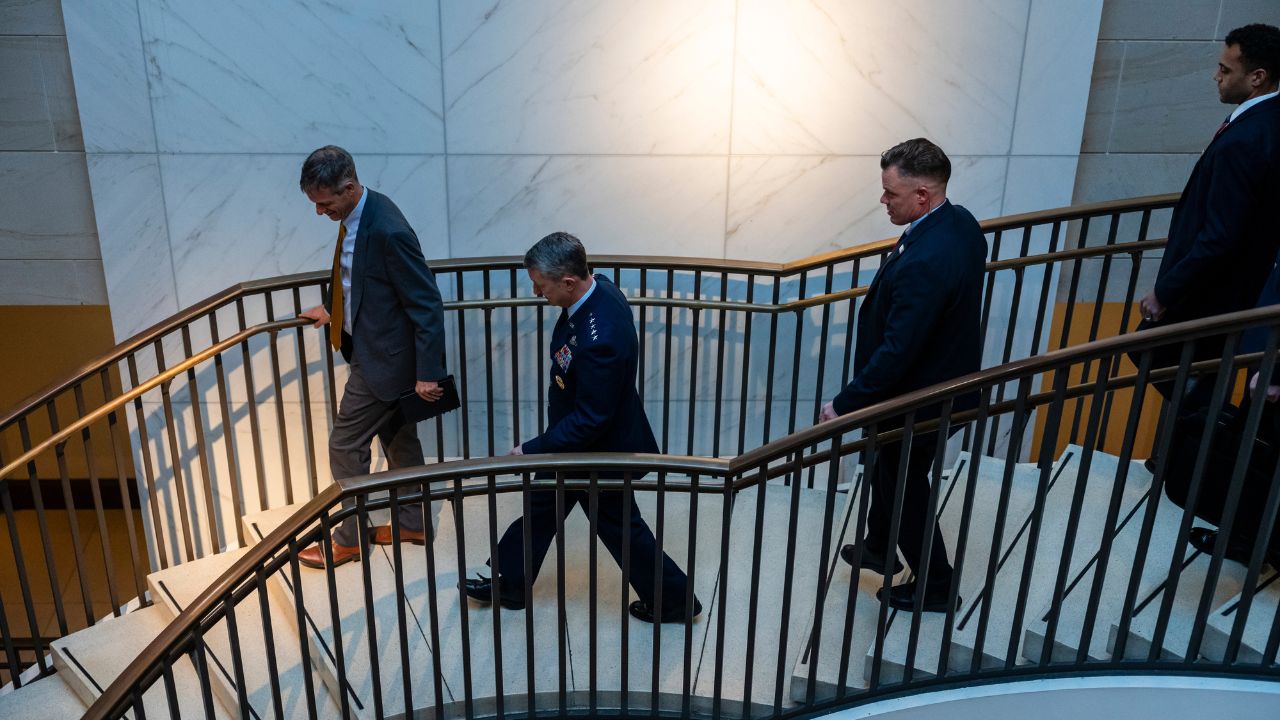
WASHINGTON — Dozens of military chiefs from the Western Hemisphere gathered Wednesday in Washington for the first time to discuss a wide range of security issues that the Trump administration says are paramount to safeguarding the United States.
A Strategic Pivot to the Americas
The rare meeting to strengthen regional cooperation was convened by Gen. Dan Caine, the chair of the Joint Chiefs of Staff. It brought together top military leaders from 34 countries, Pentagon officials said on social media. Officials said earlier that the participants would include military chiefs from nations such as Denmark, Britain and France that have territories in the area.
During the daylong event at a Washington hotel, Caine was expected to lead a discussion on the administration’s new national security and defense strategies, which prioritize the Western Hemisphere over Asia and the Middle East, according to officials briefed on the conference.

Gen. Francis L. Donovan, the new head of the military’s Southern Command, which oversees operations in Latin America and the Caribbean, planned to press for further coordination to fight drug-trafficking and transnational criminal groups in the region, said the officials, who spoke on condition of anonymity to discuss conference details.
Gen. Gregory M. Guillot, the head of U.S. Northern Command, which oversees homeland defense and Greenland, was expected to talk about border controls and how advanced sensors — in space, on land, in the air and at sea — can help nations monitor their borders, the officials said.
Countering Crime and Securing Borders
Defense Secretary Pete Hegseth addressed the gathering as it opened. Joseph M. Humire, the acting assistant defense secretary for homeland defense and the Americas, posted pieces of Hegseth’s remarks on social media in which the defense secretary said the United States was “on offense” against “narco-terrorists” in “our hemisphere.”
“We must work together to prevent any adversary or criminal actor from exploiting your territory or using your infrastructure to threaten what a great former American president, Teddy Roosevelt, once called ‘permanent peace in this hemisphere,’” Hegseth said, according to Humire’s post.
Between sessions, dozens of officers and enlisted service members from the armies, navies and air forces of a wide array of nations milled about in the hotel lobby, chatting and checking their cellphones.
President Donald Trump and his top national security advisers were also scheduled to meet Wednesday in Washington with Israeli Prime Minister Benjamin Netanyahu.
Caine, a former F-16 fighter pilot and Pentagon liaison to the CIA, has limited experience in Latin America. In late November, he visited Trinidad and Tobago, a tiny nation in the Caribbean that was a training area for Marines before the U.S. raid last month in which President Nicolás Maduro of Venezuela was captured. Trinidadian leaders are seeking to broaden military ties with the Pentagon.
In his first year as Joint Chiefs chair, Caine has won the trust and confidence of the White House and Hegseth, overseeing successful U.S. military operations to bomb three Iranian nuclear sites in June and the Maduro raid. Now his civilian bosses have assigned him the first major steps in enhancing military cooperation in the Americas.
The gathering underscores the potential military implications of the administration’s “Donroe Doctrine,” a Trumpian rebooting of the Monroe Doctrine of 1823, which staked U.S. claims over the Western Hemisphere, as well as new security strategies that prioritize the hemispheric region.
Aides to Caine and other U.S. military officials cast the meeting Wednesday in terms of strengthening security cooperation among regional partners, but it comes at a fraught time for Washington’s relations with its immediate neighbors as well as allies in Europe.
Geopolitical Tensions Cloud Cooperation
Tensions have flared over the U.S. commando raid in Venezuela and the recent contentious debate between Trump and European allies over the future of Greenland.
Prime Minister Mark Carney of Canada delivered a stark speech in Davos, Switzerland, last month describing the end of the era underpinned by U.S. hegemony. He called the current phase “a rupture.”
The United States is intensifying pressure on Mexico to allow American military forces or CIA officers to conduct joint operations to dismantle fentanyl labs inside the country, according to U.S. officials. The push comes as Trump presses the Mexican government to grant the United States a larger role in the battle against drug cartels that produce fentanyl and smuggle it into the United States.
Last month also saw the fight over Greenland escalate and then cool off. Trump has said the United States needs Greenland for national security.
After threatening to seize the island by force, he signaled that he was open to compromise. Indeed, NATO military leaders are expected to discuss a possible Arctic mission later this week.
—
This article originally appeared in The New York Times.
By Eric Schmitt and John Ismay/