
|
Getting your Trinity Audio player ready...
|
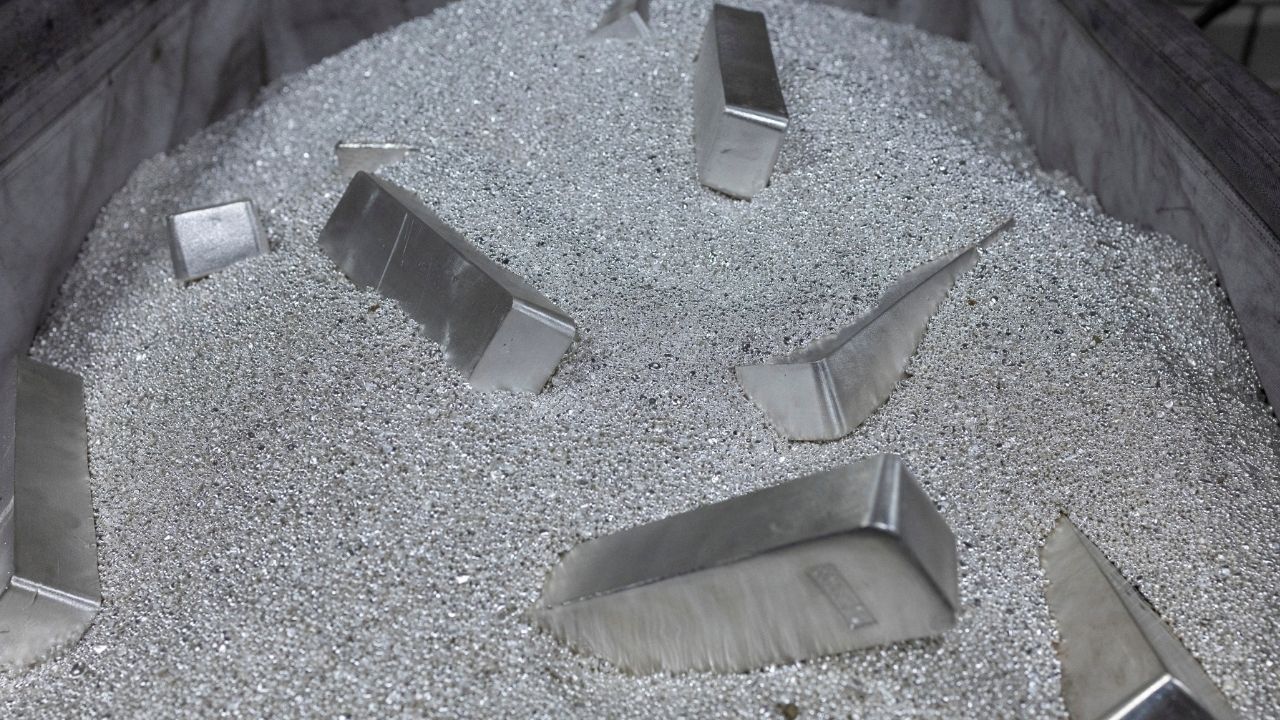
Silver prices vaulted above $100 an ounce on Friday, extending a remarkable 2025 surge into the new year as retail investor and momentum-driven buying added to a prolonged spell of tightness in physical markets for the precious and industrial metal.
Hopping onto the coat-tails of far more expensive gold, technical analysts who study charts of past price moves to predict future movement said the rapid nature of silver’s gains had positioned it for a major correction.
“Silver is in the midst of a self-propelled frenzy and with plenty of geopolitical risk to give gold added buoyancy, silver is benefiting, even now, from its lower unit price,” said StoneX analyst Rhona O’Connell.

“Everyone, it seems, wants to be involved but it is also flashing amber wealth warnings,” she added. “As and when cracks start to appear they could easily become chasms. Buckle up.”
Spot prices for silver, used in jewelery, electronics, solar panels, as well as an investment, were last up 5.1% at $101 per troy ounce on Friday.
The price has gained 40% since the beginning of 2026 after rallying by 147% in 2025. Gold hit a record high of $4,988 per ounce on Friday.
BofA strategist Michael Widmer estimates that a fundamentally justified silver price is around $60 with demand from solar panel producers probably having peaked in 2025 and overall industrial demand under pressure from record-high prices.
For the first time in 14 years, it will take just 50 ounces of silver to buy one ounce of gold as of Friday, down from 105 ounces in April.
This ratio, which traders and analysts use as a gauge for future direction, means that silver’s outperformance over gold has become stretched.
Investment Demand
Silver’s gain in 2025 was the largest yearly growth in LSEG data going back to 1983.
The market’s performance in 2025 was underpinned by robust investment demand for all precious metals and an extended period of thin liquidity in the benchmark London silver market as worries about U.S. tariffs prompted massive inflows to U.S. stocks.
Several waves of active retail buying through purchases of small bars and coins as well as inflows into physically backed silver exchange-traded funds have added to buying since October, according to analysts.
Almost 20% of a total 1.0-billion-ounce silver supply comes annually from the recycling sector, with activity heightened due to record prices.
However, inventories have not been rebuilding quickly with a shortage of high-grade refining capacity limiting the speed at which silver scrap material can be returned to the market, leading precious metals consultancy Metals Focus said.
The availability of the stocks in the market and secondary supply have become more crucial after five consecutive years of structural deficit, set to persist in 2026.
These deficits, outflows to the U.S. and inflows to the ETFs saw the amount of metal which can be quickly mobilized in periods of high demand in London commercial vaults dwindle to a record low of 136 million ounces by end-September, Metals Focus estimates.
By end-2025, stocks had recovered to nearly 200 million ounces helping to drive down lease rates in London from their October spike, but remained far below the roughly 360 million ounces available in London in the peak of the Reddit-driven rally in early 2021.
What Now?
Analysts expect outflows from U.S. stocks to speed up and boost liquidity in the traditional markets as Washington refrained from imposing any tariffs when announcing the results of its critical metals review in mid-January.
After peaking at 532 million ounces on October 3, COMEX inventories have fallen by 114 million ounces to 418 million ounces, their lowest level since March, as the metal worth about $11 billion left the inventories.
To reach pre-Trump-election levels, COMEX stocks would need to see further outflows of about 113 million ounces, equal to about 11% of total annual silver supply.
“Profit taking following the frenzied nature of the investor-driven rally since late November is likely sooner rather than later, particularly in view of ongoing physical market easing,” said BNP Paribas senior commodities strategist David Wilson.
—
(Reporting by Polina Devitt; Editing by Veronica Brown and Sharon Singleton)