
|
Getting your Trinity Audio player ready...
|
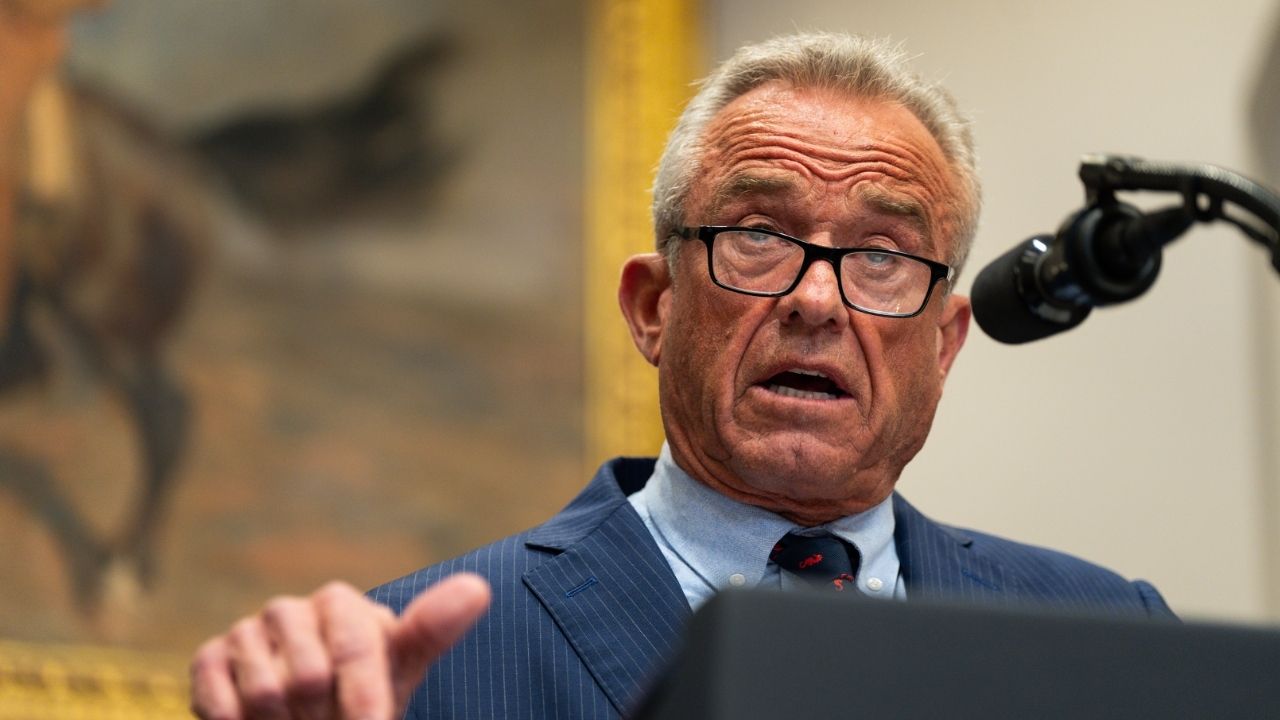
HARRISBURG, Pa. — Health Secretary Robert F. Kennedy Jr. began a national “Take Back Your Health” tour with a rally Wednesday at the Pennsylvania State Capitol, where he said his new dietary guidelines were “not perfect” and addressed supporters, who cheered when he was asked if he was considering running for president.
‘Not Running’
Kennedy dismissed the idea. “I’m not running for president,” he said.
Despite that, the appearance in the rotunda of the Capitol building in Harrisburg, Pennsylvania, had all the trappings of a political event, heading into a midterm election season in a critical swing state. The crowd was dotted with red “Make America Great Again” ball caps, including one worn by a Trump impersonator in a blond wig and a T-shirt that said “ULTRA MAGA.”

On the Capitol steps, members of a local chapter of Indivisible, a progressive grassroots group, waved anti-Kennedy signs in the freezing cold. Inside the building, Kennedy was surrounded by Republican lawmakers who had warmly embraced his agenda. Nearby was a poster of his new upside-down food pyramid, emblazoned with the message he has said he wants all Americans to hear: “Eat real food.”
Kennedy used the occasion to praise President Donald Trump for working to lower drug prices, among other things. He lauded legislatures in red states that have enacted his platform, which includes reforming school lunches to include whole milk and barring low-income people from using their federal Supplemental Nutrition Assistance Program, or SNAP, benefits to buy sugary sodas and candy.
“This ‘Take Back Your Health’ tour is about telling the truth and recognizing the extraordinary leadership of legislatures who are driving MAHA agendas state by state,” Kennedy said, referring to his “Make America Healthy Again” movement.
So far, 18 states have obtained waivers from the federal government allowing them to impose restrictions on how SNAP recipients can use their benefits. Pennsylvania — where Republicans control the Senate and where Gov. Josh Shapiro, a Democrat, is running for reelection — is not among them.
But Pennsylvania Republicans have introduced a raft of bills they call the “Healthy PA Package,” which includes measures that would ban certain food dyes in school lunches and require food manufacturers to disclose when they add certain chemicals — those not approved by the Food and Drug Administration but permitted under a legal loophole — to the products they sell in the state. Kennedy has championed both issues.
Kennedy Travels After Releasing Dietary Guidelines
Kennedy’s visit to Harrisburg came two weeks after he released the new dietary guidelines, which he has billed as a “common-sense” return to basics. The secretary has long said Americans should eat more red meat and full-fat dairy products, and has promoted cooking with beef tallow, contradicting nearly half a century of government dietary advice.
The new guidelines reflect Kennedy’s vision, which has been embraced by Trump. They urge Americans to prioritize protein, embrace so-called healthy fats, and avoid the sugary, processed foods that the secretary has said are poisoning America. The graphic that accompanies them flips the previous food pyramid on its head, putting steak, whole milk and cheese at the top and low-fat whole grains at the bottom.
The Department of Health and Human Services posted a happy birthday message to Kennedy on the social platform X over the weekend, along with a photo of him cutting into a steak speared with birthday candles. After Trump signed legislation this month ensuring school lunch programs could serve whole milk, the White House posted, “Whole milk is back.”
But a somewhat different message is contained in the written guidelines, which maintain the long-standing recommendation that saturated fat should make up no more than 10% of an individual’s caloric intake.
There is consensus among nutritionists that high levels of saturated fats, which are found in full-fat dairy products like butter and fatty cuts of red meat, contribute to heart disease and other ailments.
But Kennedy said the scientists he picked to craft the new guidelines “struggled a lot” when trying to determine the appropriate level of daily fat intake. While the new guidelines were “not perfect,” he said, they were “much, much better” than the previous guidelines.
“I think they were hobbled when it came to saturated fats by a lack of really precise science about what that level should be,” he said, referring to the scientists. “They chose a conservative level, which was not over 10%.”
—
This article originally appeared in The New York Times.
By Sheryl Gay Stolberg/Tierney L. Cross
c. 2026 The New York Times Company