

|
Getting your Trinity Audio player ready...
|
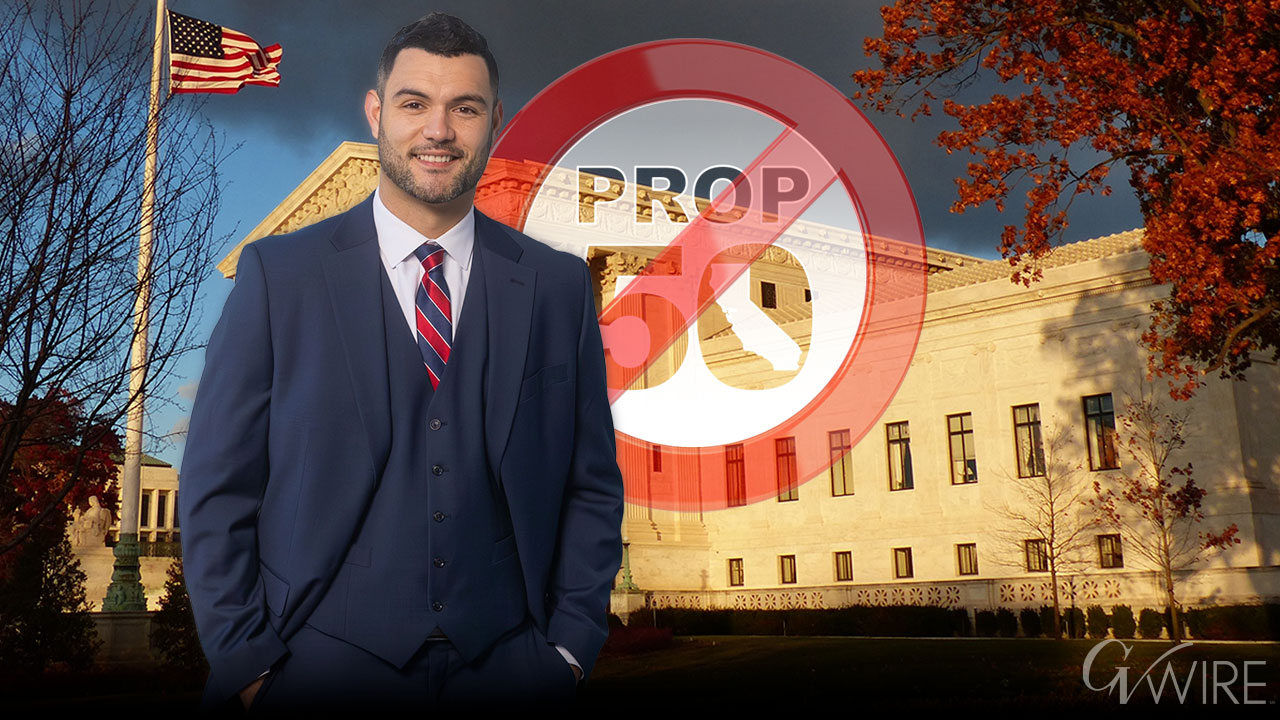
The California Republican Party on Tuesday filed an emergency application to the U.S. Supreme Court, asking justices to block the state’s gerrymandered voter maps by February.
The appeal comes as the state’s June 2 primary election fast approaches. The filing asks for the court to act by Feb. 9, saying the state of California’s candidate filing period is coming and that voters will be affected if the lines remain.
“California cannot create districts by race, and the state should not be allowed to lock in districts that break federal law,” said California Republican Party Chairwoman Corrin Rankin. “Our emergency application asks the Supreme Court to put the brakes on Prop. 50 now, before the Democrats try to run out the clock and force candidates and voters to live with unconstitutional congressional districts. Californians deserve fair districts and clean elections, not a backroom redraw that picks winners and losers based on race.”

Latino Voters at Center of Dispute
Last week, the Ninth Circuit denied an injunction brought by the California GOP to overturn Prop. 50. While plaintiffs — led by California Assemblymember David Tangipa, R-Clovis — argued that the state divided congressional districts by race, a majority of the three-judge panel said that throughout the campaign, it was clear the division was by political party.
Dissenting justice Kenneth Lee, however, agreed with plaintiffs that party divisions were created by race, primarily Latino communities.
Lee said the “smoking gun” came from mapmaker Paul Mitchell who did not offer testimony to the court.
“Before this lawsuit was filed, he publicly boasted to his political allies that he drew the map to ‘ensure that the Latino districts … are bolstered in order to make them most effective,’ ” Lee wrote in his dissent.
Other social media posts say that the “proposed Proposition 50 map will further increase Latino voting power.”
“The Supreme Court has been clear for decades that states cannot sort voters by race unless they can meet strict scrutiny,” said plaintiffs’ attorney Michael Columbo. “This filing explains why the record includes direct admissions and supporting evidence that race predominated in key line-drawing decisions, and why immediate, temporary relief is warranted to prevent candidates and voters from being forced to operate under unconstitutional districts while the appeal is pending.”
More Democrat Votes Means Better Latino Representation: Staton
The majority, however, interpreted Mitchell’s statements to mean that Democrat victories would bolster the Latino voters in Rep. Adam Gray’s, D-Merced, District 13.
“Mitchell was referring to bolstering the political effectiveness of District 13, where Adam Gray is the incumbent Democrat,” wrote Justice Josephine Staton.