
|
Getting your Trinity Audio player ready...
|
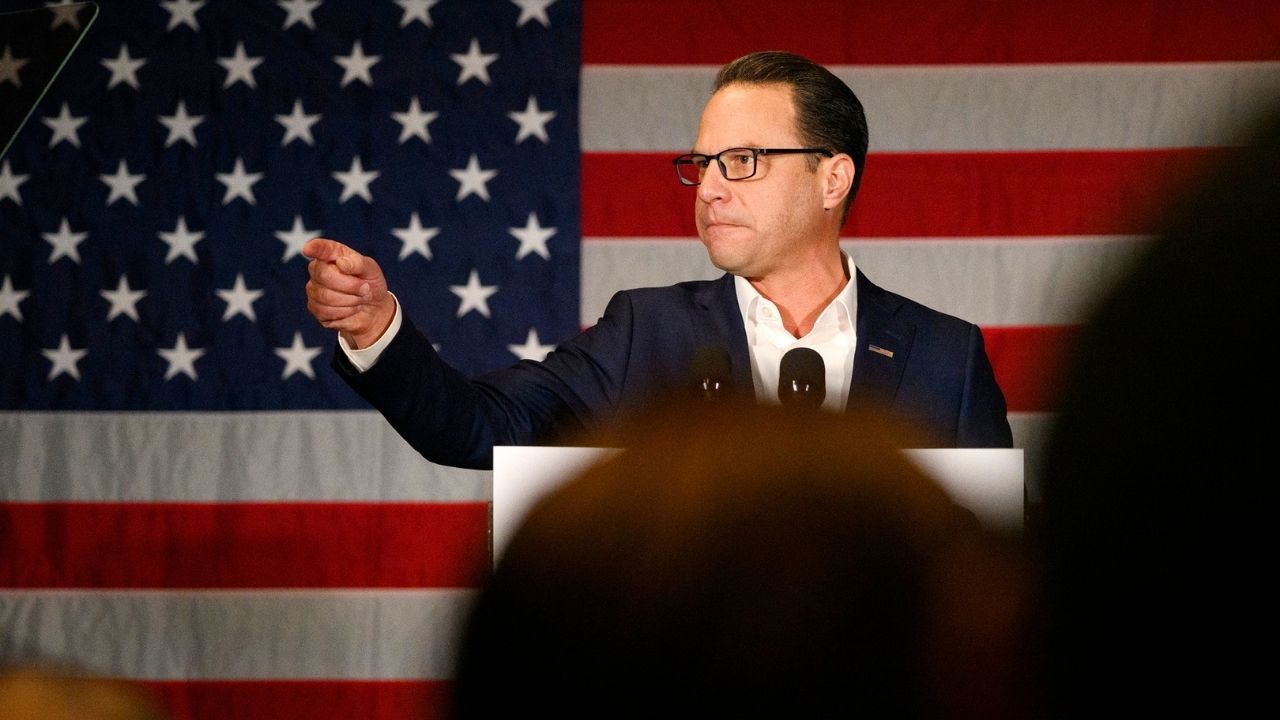
Gov. Josh Shapiro of Pennsylvania, a prominent Democrat who was a top contender to serve as former Vice President Kamala Harris’ running mate in 2024, offered his most detailed accounting to date of the vice presidential search process in his new memoir, which was obtained by The New York Times.
In short: He suggests that it was far uglier than is commonly known.
In Shapiro’s book, “Where We Keep the Light,” the governor is measured in describing his interactions with Harris herself. But Shapiro, who is Jewish, details a contentious vetting process in which Harris’ team focused intensely on his views on Israel — so much so that at one point, he wrote, he was asked if he had ever been an agent of the Israeli government.

“Had I been a double agent for Israel?” wrote Shapiro, describing his incredulous response to a last-minute question from the vetting team. He responded that the question was offensive, he wrote, and was told, “Well, we have to ask.”
“Have you ever communicated with an undercover agent of Israel?” the questioner, Dana Remus, a former White House counsel, continued, according to Shapiro, who recounted, “If they were undercover, I responded, how the hell would I know?”
Shapiro wrote that he understood that Remus was “just doing her job.” But the fact that he was asked such questions, he wrote, “said a lot about some of the people around the VP.”
Remus and a representative for Harris did not respond to requests for comment Sunday night.
The vetting process unfolded as emotional debates over the war in the Gaza Strip convulsed the Democratic Party, threatening to tear it apart.
Shapiro, an outspoken critic of what he saw as antisemitism on college campuses amid the Israel-Hamas war, wrote that he faced skepticism of that record during vetting. When Harris asked if he “would be willing to apologize for the statements I had made, particularly over what I saw happening at the University of Pennsylvania,” he replied that he would not, he wrote.
“I believe in free speech, and I’ll defend it with all I’ve got,” he wrote. “Most of the speech on campus, even that which I disagreed with, was peaceful and constitutionally protected. But some wasn’t peaceful.”
At another point, he wrote of the vetting process, “I wondered whether these questions were being posed to just me — the only Jewish guy in the running — or if everyone who had not held a federal office was being grilled about Israel in the same way.”
During the search for a running mate, Shapiro drew scrutiny over his past remarks on Israel and his ties to the country, including the time he spent there as a high school student. He also faced antisemitic vitriol online.
Shapiro Blends Faith, Fatherhood, and Marriage in Book
In his book, Shapiro, a potential 2028 presidential candidate who is running for reelection this year, blends reflections on faith, fatherhood and marriage with political talk and accounts of dramatic recent events, including the arson attack on the Pennsylvania governor’s residence last Passover.
His recounting of the final stages of the 2024 campaign is especially revealing. Shapiro was frank with former President Joe Biden about his challenges in Pennsylvania, he writes, and acknowledges wondering, after Biden dropped out, “Maybe there would be a process the party would engage in to replace him? Did I want to be part of that?”
His wife, Lori Shapiro, was traveling and hard to reach — but when she got in touch, she made her views clear.
“I am in a Canadian Walmart right now. Maybe not the ideal time for this conversation,” she said. “I don’t think we are ready to do this. It’s not the right time for our family. And it’s not on our terms.”
As he tells it, he also had reservations about the vice presidential search process from the start, and says that he ultimately decided to withdraw himself, after meeting with Harris at the end of the process. He asked to be connected with Harris to share the decision, he wrote, but says he was told “the VP would not handle bad news well and that I shouldn’t push.”
During the vetting, he wrote that he was pressed on areas of disagreement with Harris, including “energy, cutting taxes, supporting law enforcement,” and how the coronavirus pandemic had been handled.
Shapiro, a relative moderate with a record of appealing to crossover voters, suggested that Harris’ team was out of touch with the politics of the most crucial battleground state on the map.
Vetting teams, of course, are responsible for scrutinizing every personal detail of candidates, looking to get ahead of embarrassing storylines and other surprises.
“These sessions were completely professional and businesslike,” Shapiro wrote. “But I just had a knot in my stomach through all of it.”
In her own memoir last year, “107 Days,” Harris alludes to “the attacks he’d confronted on Gaza and what effect it might have on the enthusiasm we were trying to build.”
In her book, Harris also noted Shapiro’s sharp criticism of Prime Minister Benjamin Netanyahu of Israel.
But she focused on describing “a nagging concern that he would be unable to settle for a role as number two and that it would wear on our partnership.” She ultimately chose Gov. Tim Walz of Minnesota.
She also suggested that Shapiro had been getting ahead of himself, already thinking about decorating the vice president’s residence with the work of Pennsylvania artists, and wrote that he had mused about wanting to be in the room for every decision.
“Her accounts are just blatant lies,” Shapiro told The Atlantic last year.
In his book, he acknowledged — more diplomatically — that he and Harris saw the role differently.
“If we had door A and door B as options, and she was for door A and I was for door B, I just wanted to make sure that I could make the case for door B, and if I didn’t convince her, then I’d run right through a brick wall to support her decision,” he wrote. “She was crystal clear that that was not what she was looking for.”
—
This article originally appeared in The New York Times.
By Katie Glueck/Jeff Swensen
c. 2026 The New York Times Company