

|
Getting your Trinity Audio player ready...
|
A panel of federal judges, in a 2-1 decision on Wednesday, upheld voter maps created by Gov. Gavin Newsom-backed Proposition 50. Opponents say the quick decision leaves them time to decide their next move, though plaintiff Assemblymember David Tangipa, R-Clovis, fully expects the suit to go before the U.S. Supreme Court.
“Republicans’ weak attempt to silence voters failed,” Newsom said in a statement. “California voters overwhelmingly supported Prop. 50 — to respond to (President Donald Trump’s) rigging in Texas — and that is exactly what this court concluded.”
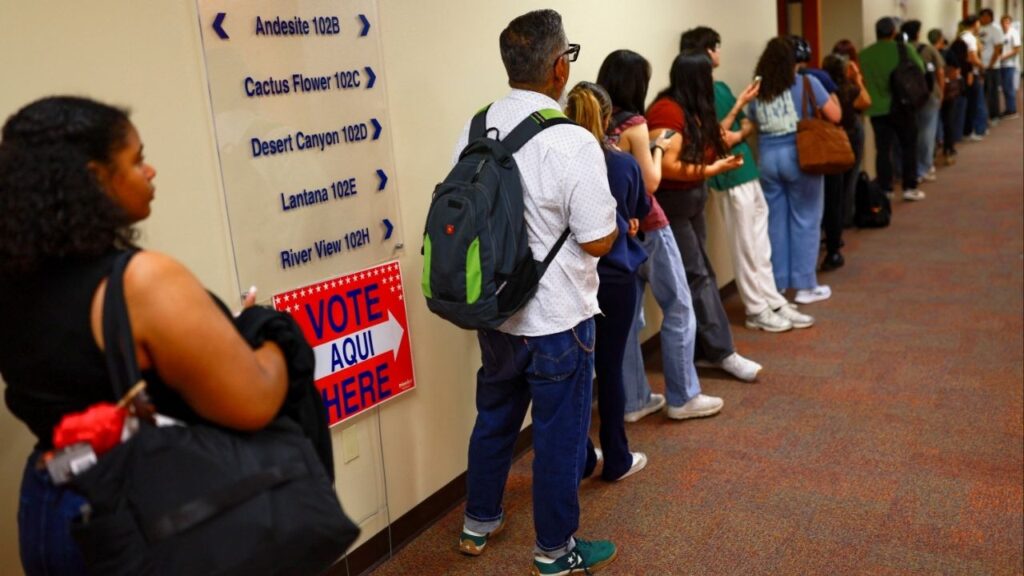
Voters approved Prop. 50 by a 64.4% to 35.6% margin. The map, drawn to favor Democratic voters, made five Republican congressional seats far more likely to turn blue in the 2026 midterm elections.

Those include Rocklin Rep. Kevin Kiley, recently deceased Chico Rep. Doug LaMalfa, Corona Rep. Ken Calvert, Hanford Rep. David Valadao, and Escondido Rep. Darrel Issa.
While two of the judges disagreed with Tangipa’s claims that the redistricting favored Latino voters, he said the dissenting opinion shows the merit of their lawsuit. He said the group behind the Prop. 50 lawsuit is deciding their next steps.
“If anybody looks at the dissent and sees a lot of what they put out, I agree with the dissenting opinion on this,” Tangipa said. “And this is something that we are exploring, as this report just came out today.”
Mapmaker’s Social Media Posts Bragged About Latino-Favored Prop. 50 Maps: Lee
U.S. District Judge Josephine Staton agreed with Newsom’s statements that Prop. 50 was designed to counter Texas’ attempt to gain more Republican representation in the House of Representatives.
“The evidence presented reflects that Proposition 50 was exactly what it was billed as: a political gerrymander designed to flip five Republican-held seats to the Democrats,” Staton wrote in the majority opinion.
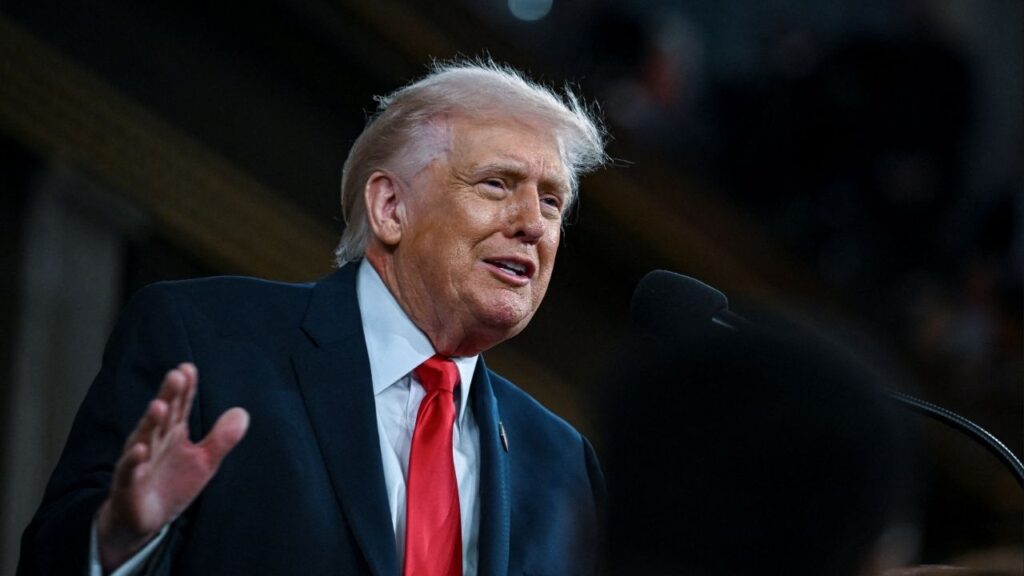
Throughout the Prop. 50 campaign — which became one of the most expensive ballot measures ever, with supporters pouring $120 million into the effort, according to CalMatters — Newsom said the strategy would counter Trump’s request to Gov. Greg Abbott to find him more Republican representation.
In doing so, however, plaintiffs argued the strategy became one favoring Latino voters. The Constitution doesn’t ban gerrymandering in general, but it does ban race-based gerrymandering.
Dissenting Judge Kenneth Lee brought up that mapmaker Paul Mitchell’s refusal to appear in court. Lee mentioned social media posts from Mitchell saying he drew the map to “ensure that the Latino districts … are bolstered in order to make them most effective, particularly in the Central Valley.” Lee said other maps existed favoring Democrats but not using race as a boundary.
He said Democrats chose the Latino-favored map on purpose.
“In fact, their political potency is likely the reason California’s Democratic state legislature created a racially gerrymandered district — as part of a racial spoils system to award a key constituency that may be drifting away from the Democratic Party,” Lee wrote.
Look at Legislature’s Intent, Not the Mapmaker’s: Staton
Staton and Judge Wesley Hsu, however, dismissed Lee’s arguments, saying he did not take into account the role of the voters, fixating instead on Mitchell’s intent.
“The dissent focuses on the mapmaker’s intent as the most relevant, if not the sole, inquiry, pondering, ‘who else but the author of the map is the best source of the motivation behind the map?’” Staton wrote. “But we are not directed to look at the motivation behind a map, we are directed to look at the motivation of the enacting legislature.”
Tangipa, however, thanked judges for the quick ruling, saying it gives the opposition time to figure out their next move.
“These judges, again, were able to just provide us a decision so that way we could weigh all options,” Tangipa said. “And they did so in an expedited fashion with a case as monumental as this one.”