
|
Getting your Trinity Audio player ready...
|
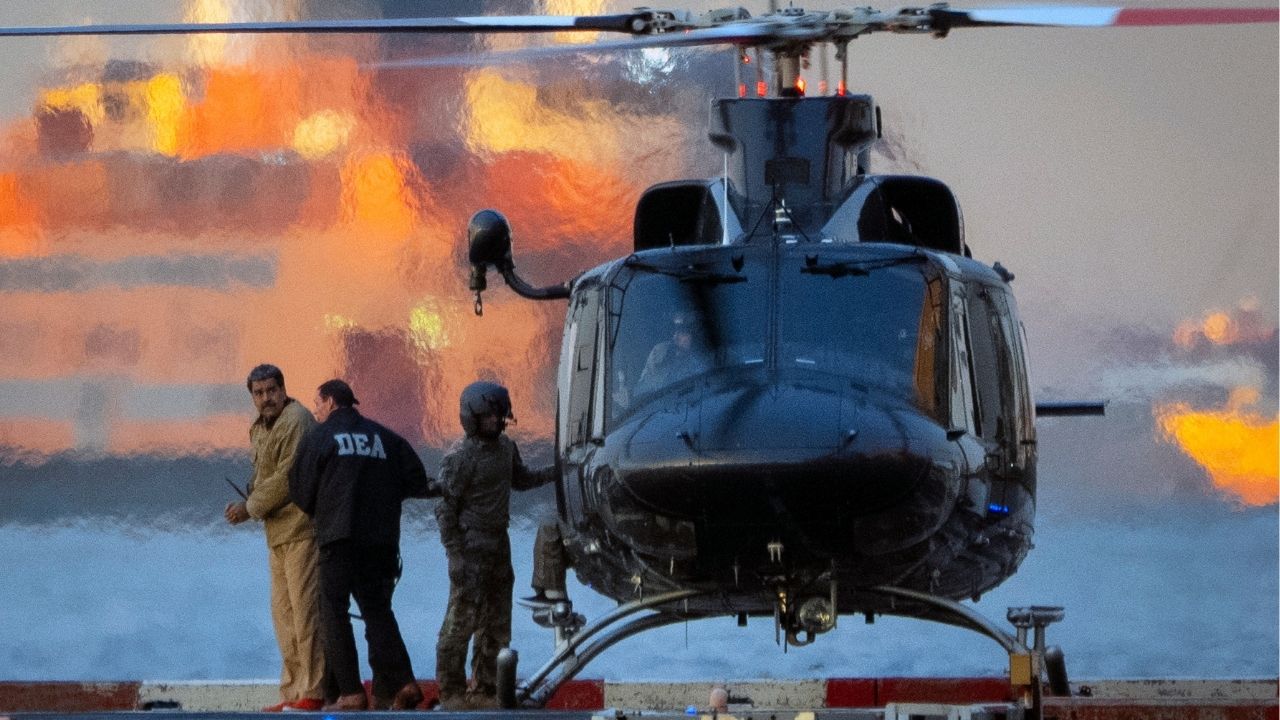
NEW YORK — In the final leg of his journey to the United States, one that spanned thousands of miles from Caracas to New York City, Nicolás Maduro, the ousted president of Venezuela, flew in a helicopter past the Statute of Liberty to a federal detention center in Brooklyn.
It was a stunning moment captured on camera with America’s most powerful symbol of freedom as a backdrop — and it raised questions about the logistics of taking a head of state to and from Manhattan federal court, where Maduro faces drug trafficking and narco-terrorism charges.
Maduro’s Arrest
His arrest last week amid a display of U.S. military might set off a wave of demonstrations throughout the world, including in New York City, further complicating an already delicate security situation for what promises to be months or years of court sessions.

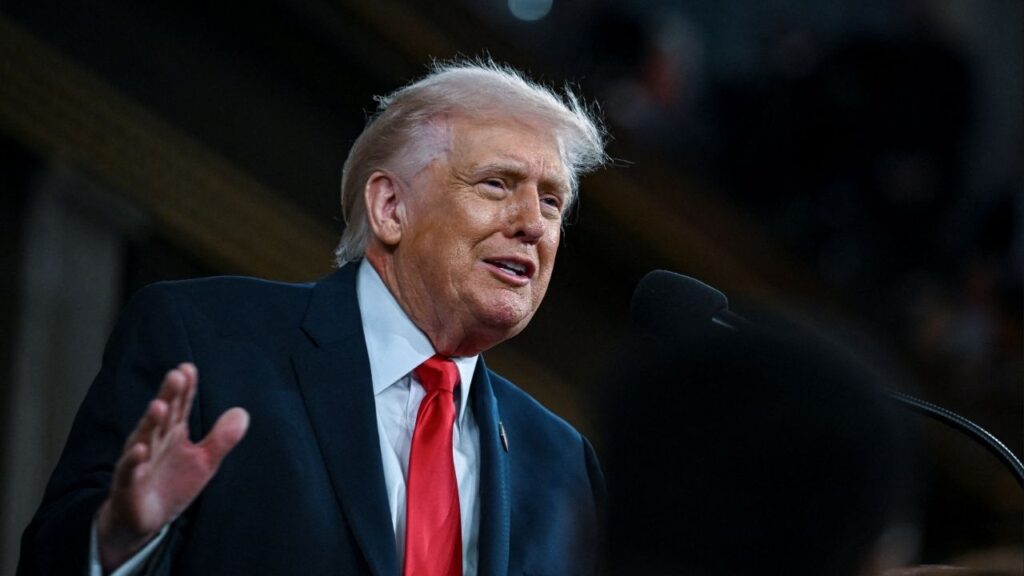
And it follows several episodes of political violence in the United States that have shocked the nation. In the past year and a half, a gunman shot at President Donald Trump during a campaign rally in Pennsylvania; two Minnesota legislators, both Democrats, and their spouses were shot, two fatally; and Charlie Kirk, a prominent right-wing activist, was fatally shot while speaking at a university in Utah.
Maduro, a strongman ruler abhorred by many Venezuelans at home and abroad, had lived under close protection even before his capture. The U.S. authorities took pains Saturday to safely transport him and his wife, Cilia Flores, who also faces federal charges. Their movements were a choreographed handoff among federal and local agencies that zigzagged across continents, then New York state and the city.
After Army Delta Force commandos captured the couple in Caracas, the Venezuelan capital, before dawn Saturday, they were taken to an American warship in the Caribbean and then transferred to a U.S. Navy base in Guantánamo Bay.
By late afternoon, they had flown by plane from Guantánamo Bay to Stewart Air National Guard Base in Newburgh, New York. They then traveled by helicopter to the West Side of Manhattan.
It was a dramatic moment for Trump, whose political career was enabled by reality television. But there was no stage management at work: Maduro and Flores traveled in a standard flight path approved by the Federal Aviation Administration.
When Maduro arrived at the West 30th Street Heliport, police officers had already secured the surrounding streets. A motorcade of federal law enforcement vehicles then brought the couple to the local headquarters of the U.S. Drug Enforcement Administration before returning them to the heliport, where they boarded a Justice Department helicopter and flew to the Metropolitan Detention Center in Brooklyn.
“There’s a lot of energy placed in high-profile movements like this upcoming case, but on some level, it’s kind of like clockwork for us, because that’s what we do,” said Dave Grogan, a retired supervisory deputy U.S. marshal, who spent 25 years with the agency.
Grogan said agents were accustomed to working in New York City, where they are frequently deployed from across the country to assist on important prosecutions. Providing security for a trial like Maduro’s requires months of planning, as well as coordination with a slew of agencies, including the Police Department and those involved in federal law enforcement, he said.
“Moving him around, it’s not too much different than moving the president around,” Grogan said, referring to Maduro.
How Will Authorities Protect Maduro?
The question of how local, state and federal authorities will transport the couple for court appearances, and how their movements might scramble the city’s day-to-day functioning, remains unclear.
During the trial of Joaquín Guzmán Loera, the Mexican drug lord known as El Chapo, Guzmán was taken from a high-security jail in Manhattan to the U.S. courthouse in Brooklyn. Each time he appeared, the police closed the entire Brooklyn Bridge, stranding vehicles and causing nightmarish gridlock.
Maduro and Flores, however, were flown by helicopter from the Brooklyn detention center to a Wall Street heliport Monday, then driven to federal court, a process overseen by the U.S. Marshals Service, according to a security official briefed on the matter.
Craig Caine, a former inspector with the Marshals Service in New York and New Jersey, said he did not expect the agencies to continue to shuttle Maduro by helicopter for the duration of his trial unless they determined that other methods would put him in danger. Flying by helicopter carries its own risks, Caine said, because the aircraft is easily identifiable.
Transferring Maduro from the Wall Street heliport to a vehicle could also pose challenges, with the defendant temporarily exposed to the Franklin D. Roosevelt Drive on one side and a ferry terminal and hotel on another.
“Its all going to come down to a threat assessment,” Caine said.
Authorities are expected to meet within the next two weeks to discuss their plans for moving Maduro, according to a law enforcement official familiar with security protocol in New York City but not permitted to speak publicly.
While the particulars might change, there is a long-established framework for ferrying celebrities and prominent world leaders around the city, including to and from federal detention.
Those defendants are often taken by federal marshals from the detention center to the courthouse before an appearance, according to the law enforcement official, who is familiar with the logistics of transporting dignitaries. Motorcades often include highway patrol vehicles and tactical trucks — better known as BearCats — while a Police Department helicopter follows overhead and officials at police headquarters in Manhattan monitor their every movement.
In the coming months, authorities could relocate the couple to another detention facility outside New York City.
For the moment, Maduro and Flores are being held at the Metropolitan Detention Center, a notorious federal jail in Brooklyn with a long history of housing high-profile defendants. The detention center, a hulking concrete complex in the Sunset Park neighborhood, has hosted some of the country’s most infamous accused criminals as they await trial, including R. Kelly, Ghislaine Maxwell and Luigi Mangione.
MDC, as the center is known, has been plagued for years with scandals, including rampant violence, complaints of mold and vermin and accusations of mismanagement. It is the only federal jail in New York City, following the closing of the Metropolitan Correctional Center in Manhattan in 2021.
—
This article originally appeared in The New York Times.
By Chelsia Rose Marcius and Maia Coleman/Vincent Alban
c. 2026 The New York Times Company