
|
Getting your Trinity Audio player ready...
|
Energy Secretary Chris Wright said Wednesday that the United States intended to maintain significant control over Venezuela’s oil industry, including by overseeing the sale of the country’s production “indefinitely.”
“Going forward we will sell the production that comes out of Venezuela into the marketplace,” Wright said at a Goldman Sachs energy conference near Miami.
Wright’s remarks came after President Donald Trump said late Tuesday that Venezuela would soon hand over tens of millions of barrels of oil to the United States.

Venezuela Would Send Millions of Barrels
Venezuela would send 30 million to 50 million barrels of oil, or up to two months’ worth of daily production, to the United States, Trump said in a social media post, adding that he would control the profits from those sales.
“We need to have that leverage and that control of those oil sales to drive the changes that simply must happen in Venezuela,” said Wright, a former oil industry executive. He added that the money “can flow back into Venezuela to benefit the Venezuelan people.”
If implemented, the Trump administration’s plans would amount to a sharp reversal in U.S. policy on Venezuela. The nation’s oil production and exports have been severely restricted since 2019, when Trump imposed tough sanctions on the country, including Venezuela’s state-owned oil company.
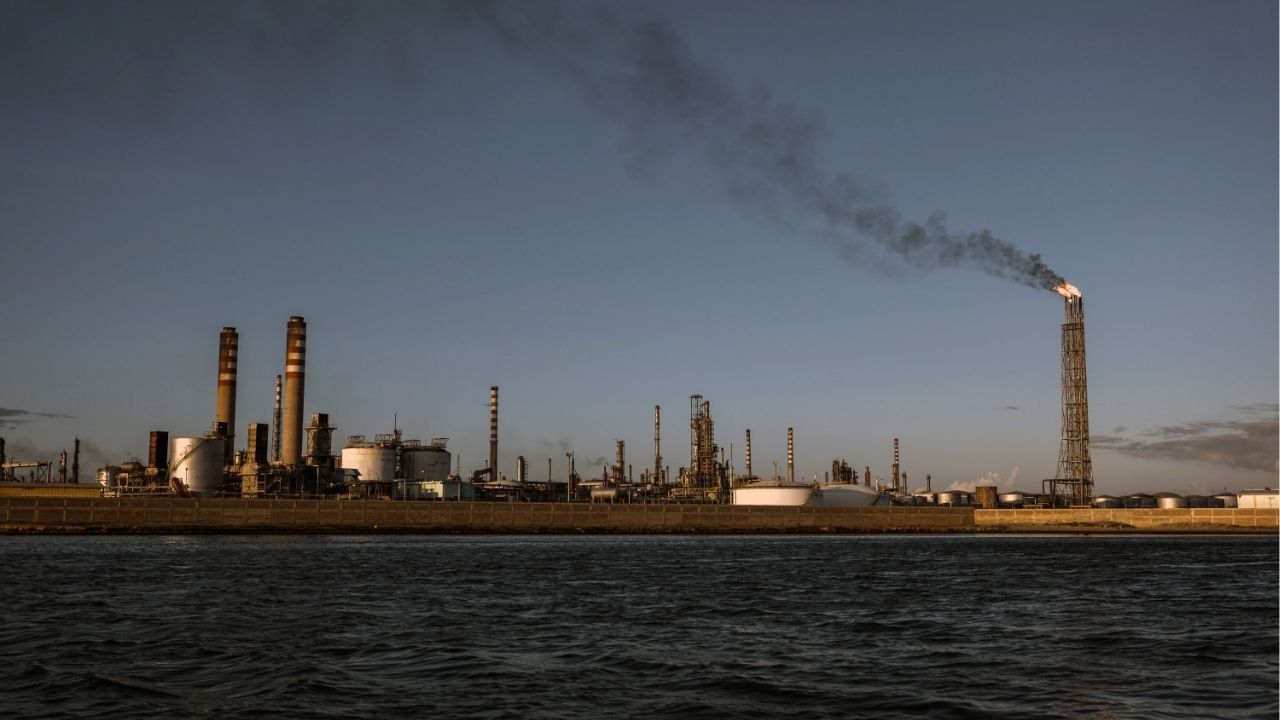
More recently, the United States has imposed a partial blockade designed to prevent many tankers from leaving Venezuela with oil. That has choked a vital source of revenue for the country’s government and forced it to keep oil in storage tanks and ships floating off the coast.
It was not clear what legal authority the Trump administration would operate under to oversee Venezuela’s sales of oil. As of Wednesday morning, leaders in Caracas, the Venezuelan capital, had not commented publicly on the U.S. government’s plans, and the White House did not immediately respond to a request for comment.
Wright said the Trump administration was in “active dialogue” with Venezuela’s leadership as well as U.S. oil giants that have operated in the country. Executives from some of the largest Western oil producers are expecting to meet Trump at the White House on Friday afternoon, according to people familiar with the plans.
Oil prices were down around 1% Wednesday morning after Wright’s remarks.
Wright echoed outside estimates forecasting that Venezuela could potentially boost oil production by several hundred thousand barrels per day relatively quickly. But more substantial increases above current output levels of around 1 million barrels per day would take much longer, even if international oil companies were ready to invest more money in the country.
“To get back to the historical production numbers, that takes tens of billions of dollars and significant time,” Wright said. “But why not?”
—
This article originally appeared in The New York Times.
By Rebecca F. Elliott/Adriana Loureiro Fernandez
c. 2026 The New York Times Company