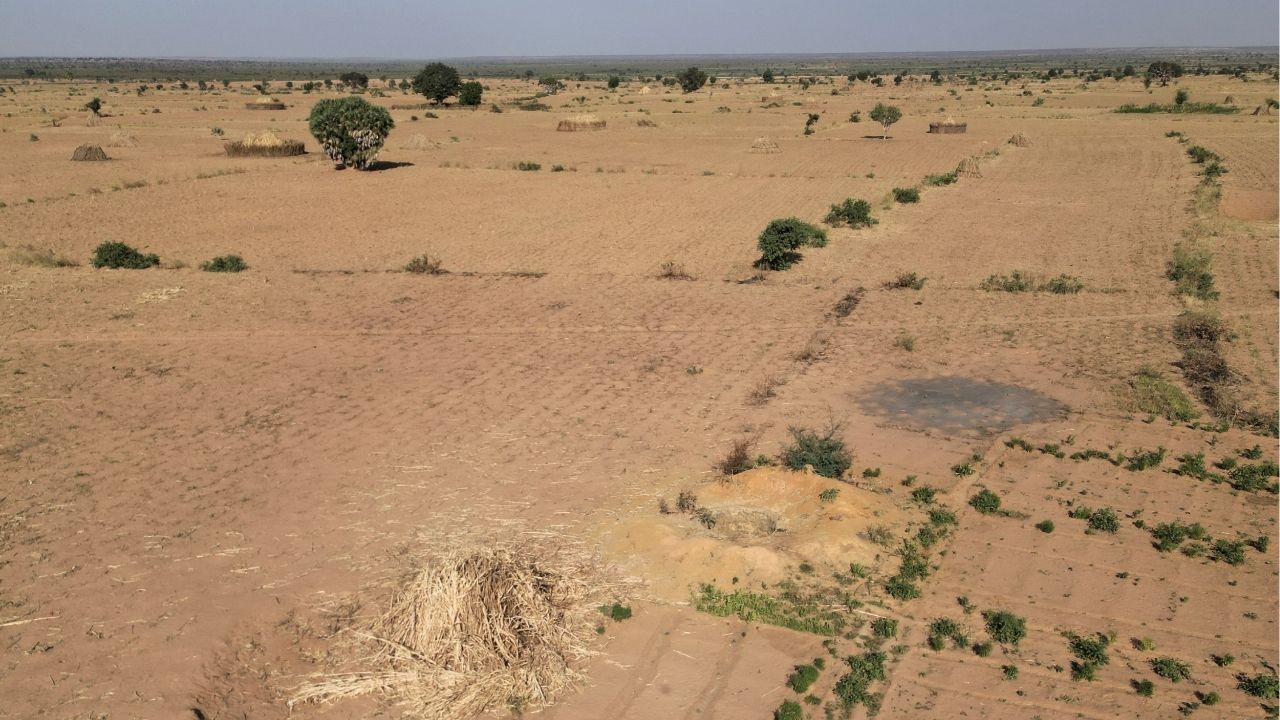

JABO, Nigeria — The three herders stood at the lip of the crescent-shaped crater in the middle of a cornfield in Jabo, northwest Nigeria, and peered down.
Curiosity had led them here, to a quiet farming town in Sokoto state, after nearly a week of discussing why President Donald Trump would order a missile strike in the area, during onion harvest season, no less.
The men, who had traveled 167 miles to see the site, walked the lip of the shallow crater where parts of a Tomahawk missile struck on Christmas night before bouncing about 30 feet away and exploding, one of several strikes ordered by Trump to fight what he has called a “Christian genocide” led by Islamist terrorists in Nigeria, one of West Africa’s top economies.
Sokoto state, like numerous other parts of the country, has been troubled by violence. Bands of thugs steal cows and carry out kidnappings for ransom. A group called the Lakurawa, which some analysts and residents believe has ties to Islamic State affiliates, terrorizes residents.
Over the weekend, police said that dozens of people were killed and several abducted after gunmen attacked two neighboring villages that had been under siege for days in Niger state, elsewhere in northwest Nigeria.
But Jabo, a town of tidy tin-roofed homes set amid a smattering of baobab and acacia trees, has been a safe haven for people fleeing violence elsewhere in the region, according to the three men and local residents.
Nigerian officials have said debris from missiles used in the Christmas-night attack fell in Jabo accidentally. But that message hasn’t fully reached residents, where word travels slowly. Residents described a ball of fire hurdling across the sky. A large cylinder from a Tomahawk landed intact in a field in Jabo. Another chunk set ablaze a carefully tied stack of cornstalks used for cooking fires and cattle feed, leaving a circular, charred stain on the ground.
“I’m hopeful and pray to God this doesn’t happen again,” said Mohammed Abubakar, one of three herders who traveled to Jabo from Zamfara state to witness the damage. “There’s nothing here,” he added, referring to terrorists.
In the days since the U.S. missile strikes, families in this rural area have combed the countryside to survey the damage. Maybe the terrorists were vaporized in the blasts, some said. Otherwise, they say they haven’t seen or heard evidence of any deaths.
Trump has said the targets were Islamic State terrorists who have been accused of killing innocent Christians. Nigeria’s information minister, Mohammed Idris, has said two major Islamic State terrorist enclaves were hit in the strikes. The U.S. military reported that the missiles hit targets in the Tangaza forest and said Friday that “assessments of the strike are ongoing.”
But residents said some of the missiles landed on farmland, with debris damaging only a handful of unoccupied buildings. They said one exploded in an abandoned encampment that dozens of Lakurawa members had fled in the days before the strikes, having heard what farmers in the area assumed were military surveillance flights overhead, according to two residents.
Amid the fear and the unknowns, a troubling narrative has emerged in Sokoto: Trump is targeting all Muslims in Nigeria. With all the might and intelligence of the U.S. military, why else would he bomb farming communities instead of terrorists?
“Some of us think this is part of his agenda to protect Christians,” said Abubakar Mohammed Jabo, whose home is not far from the strike site in Jabo.
White House officials did not respond to questions about the targeting of Muslims.
Two U.S. officials who spoke on the condition of anonymity said the Sokoto state strikes were a one-time event that would allow Trump to say that he was avenging Christian deaths. The Navy destroyer that launched the missiles has moved out of the Gulf of Guinea. Both U.S. and Nigerian officials have said the United States will continue to cooperate on intelligence-sharing that could lead to further strikes by the Nigerian military.
Several residents of the choppy terrain on the outskirts of Sokoto, where communities are almost entirely Muslim, said violence terrorizes Christians and Muslims alike in the country.
Abdullahi Bako, a Muslim farmer and herder from Tangaza, said that when the Lakurawa moved in about a year ago, the group reined in thugs who had been stealing cattle and causing mayhem. The Lakurawa imposed a strict form of Islam, banning cigarettes and music, as well as socializing between men and women. They even beat barbers and their clients for shaving beards.
The Lakurawa offered to mediate spats between farmers and herders when livestock eat farmers’ crops. Bako said he had paid the Lakurawa 3 million naira (about $2,000) for damage done by his own 35 cows. But instead of giving the money to farmers, the group kept it for itself, he said.
Fearing their return, Bako has moved his small herd closer to a nearby town where the grazing is scant.
“If they come back,” he said, “they’re going to be deadlier.”
—
This article originally appeared in The New York Times.
By Dionne Searcey and Eric Schmitt/Taibat Ajiboye
c. 2025 The New York Times Company