
Tomahawk missiles are coveted by militaries around the world because they can hit a target 1,000 miles away. That accuracy is possible because their fins use powerful magnets made of samarium — a rare-earth metal that can tolerate high heat.
When China put restrictions on some rare-earth exports this year, it cut off the supply of samarium to U.S. defense contractors that sell to Raytheon, the maker of Tomahawk missiles. Samarium is processed almost exclusively in China, where more than 85% of the world’s rare-earth magnets are made.
A carefully orchestrated deal involving two European companies gave U.S. defense contractors access to a new source of samarium, allowing production to continue for now. But that supply — made from material that had been sitting in a factory in France since the 1970s — is limited. Now the Trump administration is racing to develop a new source before the European stockpile runs out.

China Now Requires Export Licenses
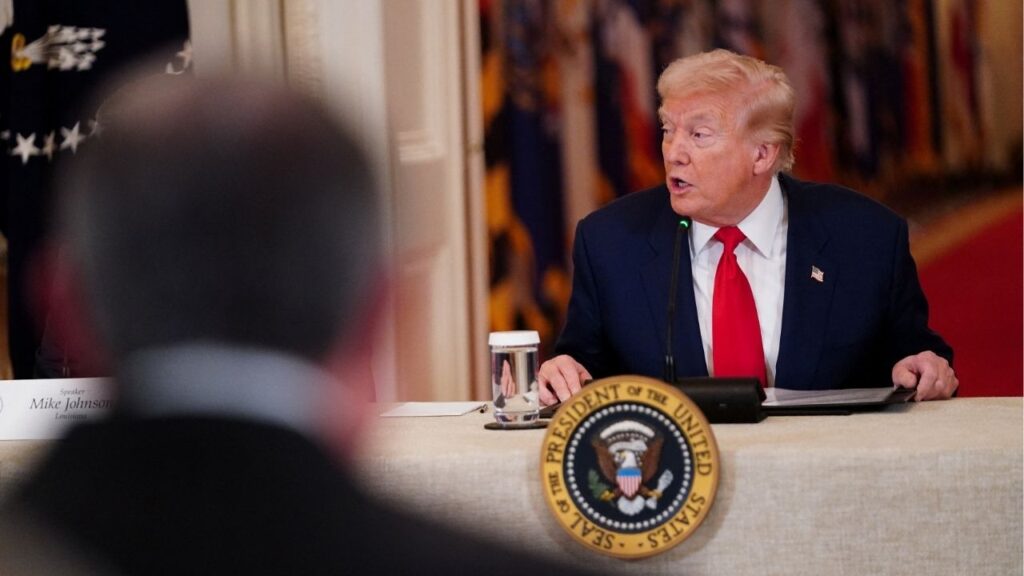
China began requiring export licenses for samarium and six other rare-earth metals in April after President Donald Trump rolled out tariffs against China and several other nations. A spokesperson at the Chinese Embassy in Washington said in an email that the export controls had been instituted to “defend world peace.” Foreign companies that use samarium for military purposes are no longer allowed to buy it.
“No defense contractor will be able to use the same path to buy samarium metal that we’ve used in the past,” said an executive for one of Raytheon’s suppliers, who asked for anonymity because of the sensitivity of the subject. “You’re on the naughty list. You’re not getting that material.”
Most rare-earth magnets are made of neodymium, which is used in everyday applications such as cellphones, auto parts and electronics. But the defense industry requires samarium-cobalt magnets, which can withstand extreme heat.
The stakes for finding alternatives are enormous. Unless new sources of samarium or a substitute material can be found, American manufacturers won’t be able to build fighter jets or precision-guided missiles. They may be forced to sacrifice precision if they can’t get the right magnets, said Aisha Haynes, a former Defense Department official responsible for supply chain issues.
New systems in development — such as hypersonic missiles — also depend on securing non-Chinese sources of samarium.
“You never want to give any one nation that much power,” said Haynes, who retired in April. “They can turn that source on and off whenever they want.”
The situation would be more dire if not for the foresight of people experienced in magnet making. Arnold Magnetic Technologies, a Rochester, New York-based manufacturer of samarium-cobalt magnets with factories in Switzerland, Thailand and China, had more than a year’s supply of the metal on hand when China announced its export controls on April 4, said Aaron Williams, the company’s chief commercial officer.
As the summer wore on, Arnold’s customers began to worry about what would happen when that inventory ran out. Arnold turned to Grant Smith, the chair of Less Common Metals near Liverpool, England, one of the last remaining manufacturers of rare-earth metals in the Western world.
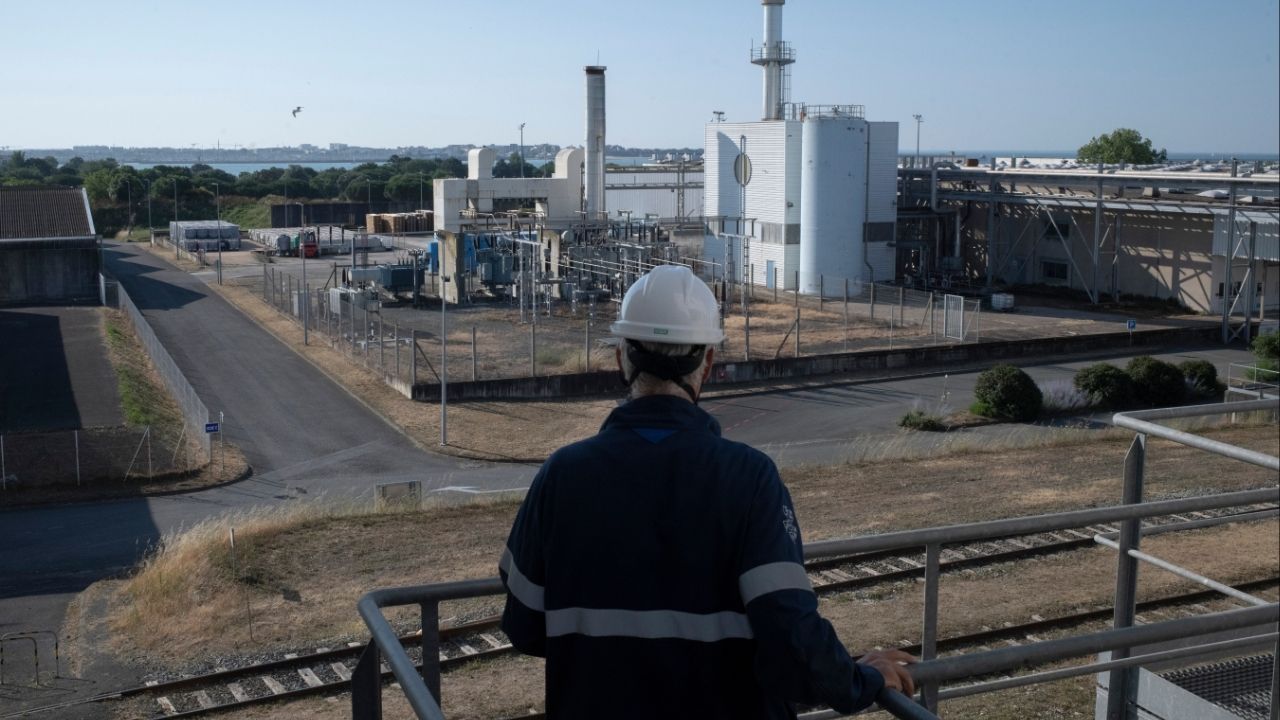
Smith had already spent years hunting for alternatives to Chinese samarium. He found one: a decades-old cache of samarium nitrate in a factory in France. The material was owned by Solvay, a Belgian chemical company with a factory in France that was once one of the world’s largest producers of rare-earth oxides.
Turning Rock Into Magnets
Turning rock into magnets requires separating the 17 rare-earth elements from one another using massive vats of solvents, a process Solvay helped pioneer. Solvay had stopped separating rare-earth elements in France two decades ago, according to a spokesperson, who said it had become “uneconomical.” Samarium processed outside China is five to eight times as expensive, Williams said.
But Solvay kept its stock of semifinished materials and still had the know-how and equipment to refine it into a form that Smith could use. And Less Common Metals happened to have an old furnace that could handle the job.
Smith lined up customers, including Arnold and Permag, which owns Electron Energy Corp., another American manufacturer of samarium-cobalt magnets that has supplied the U.S. defense industry for decades. That created a kind of buyers’ club, enabling Smith to offer Solvay an attractive price to refine the entire stash, roughly 200 tons.
Smith brought Solvay’s samarium to Britain, where his company is turning it into metal that will be melted into alloys. His customers will press the material into blocks that factories in the United States will cut into magnets. Those magnets can go into motor systems of devices called fin actuators, which adjust the trajectory of a missile by positioning the fins on its body.
Smith’s deal was just coming together when China announced its restrictions. Since then, his phone has not stopped ringing as desperate aerospace and defense companies search for samarium.
“When they rang up, I was able to put my hand on my heart and say: ‘You do not need to panic. We have you covered,’” said Smith, whose company previously struggled to make a profit. “From April 4, I’ve had two days off. I’m not joking. It’s been crazy.”
Smith estimated that Solvay’s stash would last his U.S. defense industry customers more than a year.
“The issue with rare earths is that it has to be economical to process — you need volume,” Williams of Arnold said. “Grant made a short-to-medium-term bridge, and it was extremely important.”
Demand for Samarium Small
The demand for samarium is relatively small. The U.S. defense industry requires less than 200 tons per year, according to estimates by Jack Lifton, co-chair of the Critical Minerals Institute, an organization that advises the industry.
Smith expressed confidence that other sources would be up and running before the Solvay stash ran out, but it is far from clear where the next batch will come from.
The Trump administration has given MP Materials, the owner of a California rare-earth mine, a $150 million loan to expand its processing facility to handle samarium, as part of a larger, multibillion-dollar deal with the company. But that project could take years to come to fruition.
The Trump administration has also extended a $80 million loan to ReElement Technologies, an Indiana firm that is using a new technology to process samarium. A third company, Ucore Rare Metals, from Canada, has received $22.4 million in grant funding from the U.S. military to build a facility dedicated to producing samarium and gadolinium in Louisiana, also using a new technology.
But government support is no guarantee of success. In 2023, Lynas Rare Earths, an Australian mining company, received a Defense Department contract to build a rare-earth processing plant in Seadrift, Texas. The project wasn’t completed. Now Lynas is expanding a plant in Malaysia where it aims to separate samarium and other metals by April.
Skeptics say the Trump administration is giving money to companies that have never made magnets before. They add that much of the funding is going into producing neodymium-iron-boron magnets, not the samarium-cobalt magnets that the defense industry needs most.
The administration’s efforts to boost the industry have prompted a flurry of ambitious announcements. For instance, USA Rare Earth, a company formed in 2019, recently announced plans to build a processing facility in Stillwater, Oklahoma. Last month, it cleared the final hurdle to buy another company: Smith’s Less Common Metals.
—
This article originally appeared in The New York Times.
By Farah Stockman/Dmitry Kostyukov
c. 2025 The New York Times Company