|
Getting your Trinity Audio player ready...
|
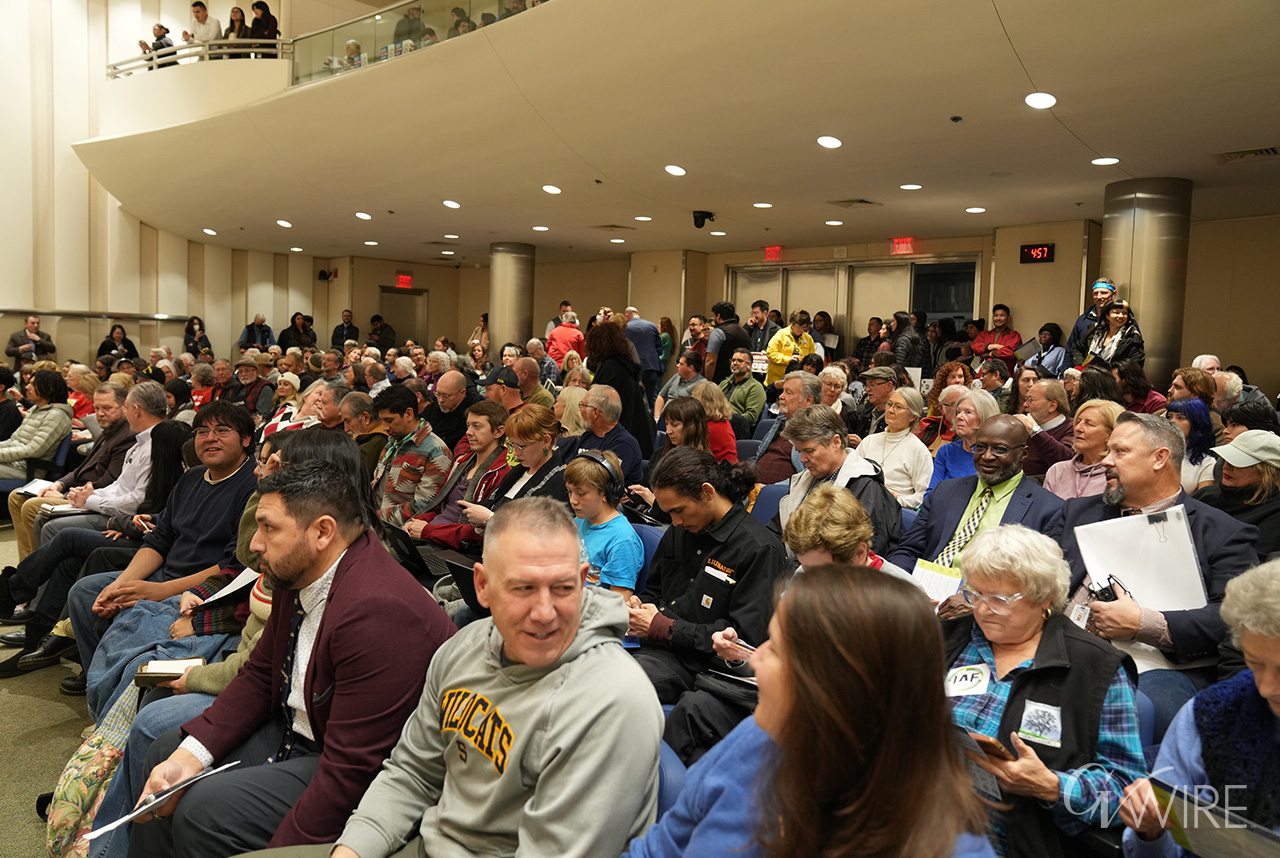
A roomful of community groups, property owners, labor organizers, and educators showed up to protest what many thought would be the approval of Fresno’s plan to expand the southeast part of the city.

“They’re going to go the long route to the ultimate death of SEDA rather than doing it all in one fell swoop.” — Patience Milrod, lawyer/community activist/Greenfield Coalition
The Fresno City Council at Thursday’s meeting even ordered chairs be brought to the lobby to seat people standing in the wings after the Fresno Fire Marshal told City Manager Georgeanne White occupancy had reached unsafe levels.
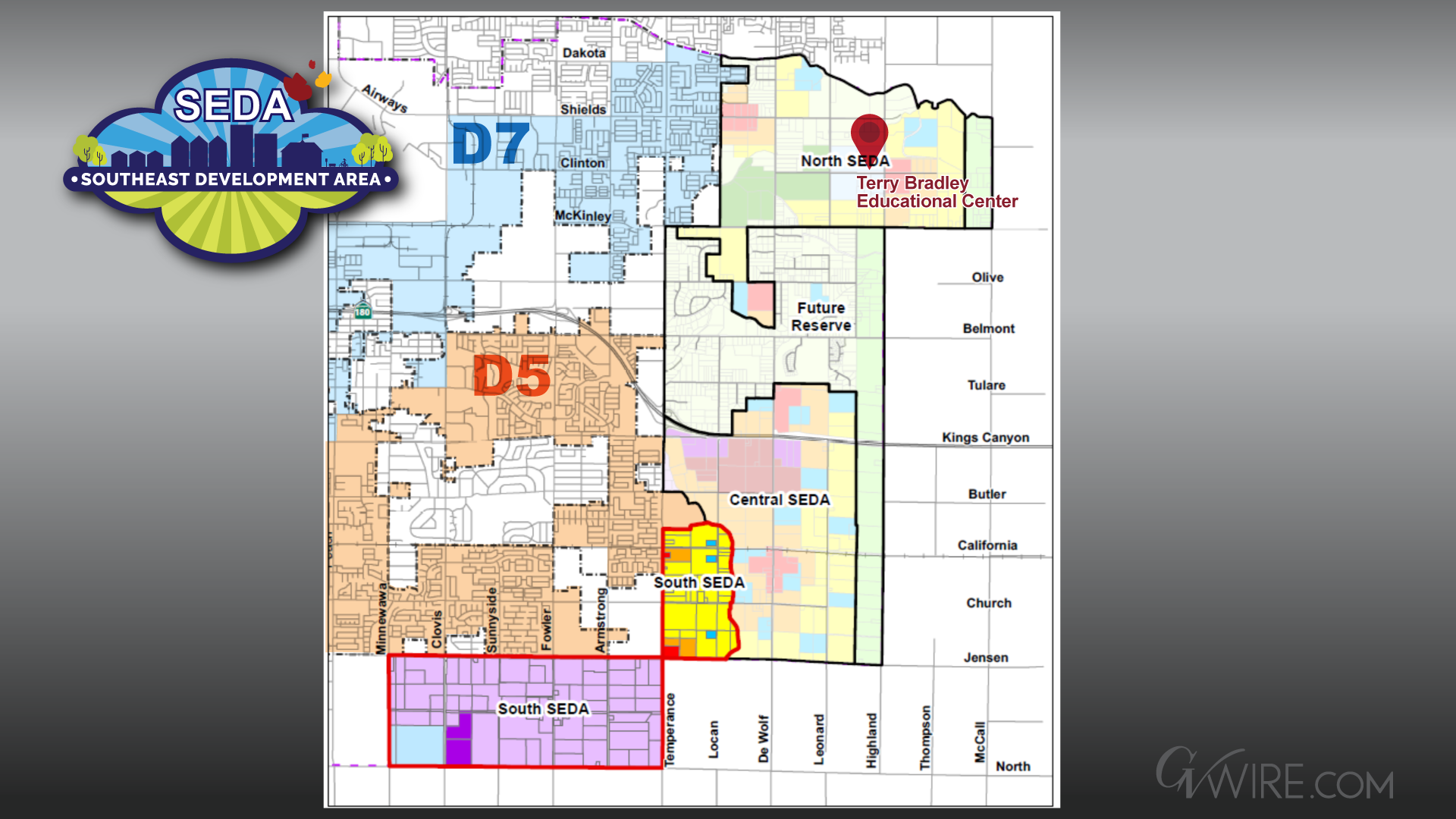
After hours of public and councilmember comments that pushed the decision to only a few minutes before midnight, the council approved a feasibility study on a 5-2 vote. The study will analyze the cost of the southern portion of the Southeast Development Area, splitting 1,500 acres of proposed industrial land from an adjacent residential area meant to feed South SEDA.

Councilmembers Mike Karbassi, Nelson Esparza, Tyler Maxwell, Annalisa Perea, and Nick Richardson approved the study. Councilmembers Brandon Vang and Miguel Arias opposed it.
Patience Milrod, whose Greenfield Coalition spearheaded SEDA opposition with the Central Labor Council and most recently the Fresno Teachers Association, told GV Wire that councilmembers and the mayor were “smart” not to adopt the whole thing.
“We had 355 people here. That’s a head count, not an estimate. The balcony was full, there was overflow into the lobby,” Milrod said. “They listened to people carefully and realized it was probably a no-go. They’re going to go the long route to the ultimate death of SEDA rather than doing it all in one fell swoop.”
Dyer Says South SEDA Key to Job and Housing Growth
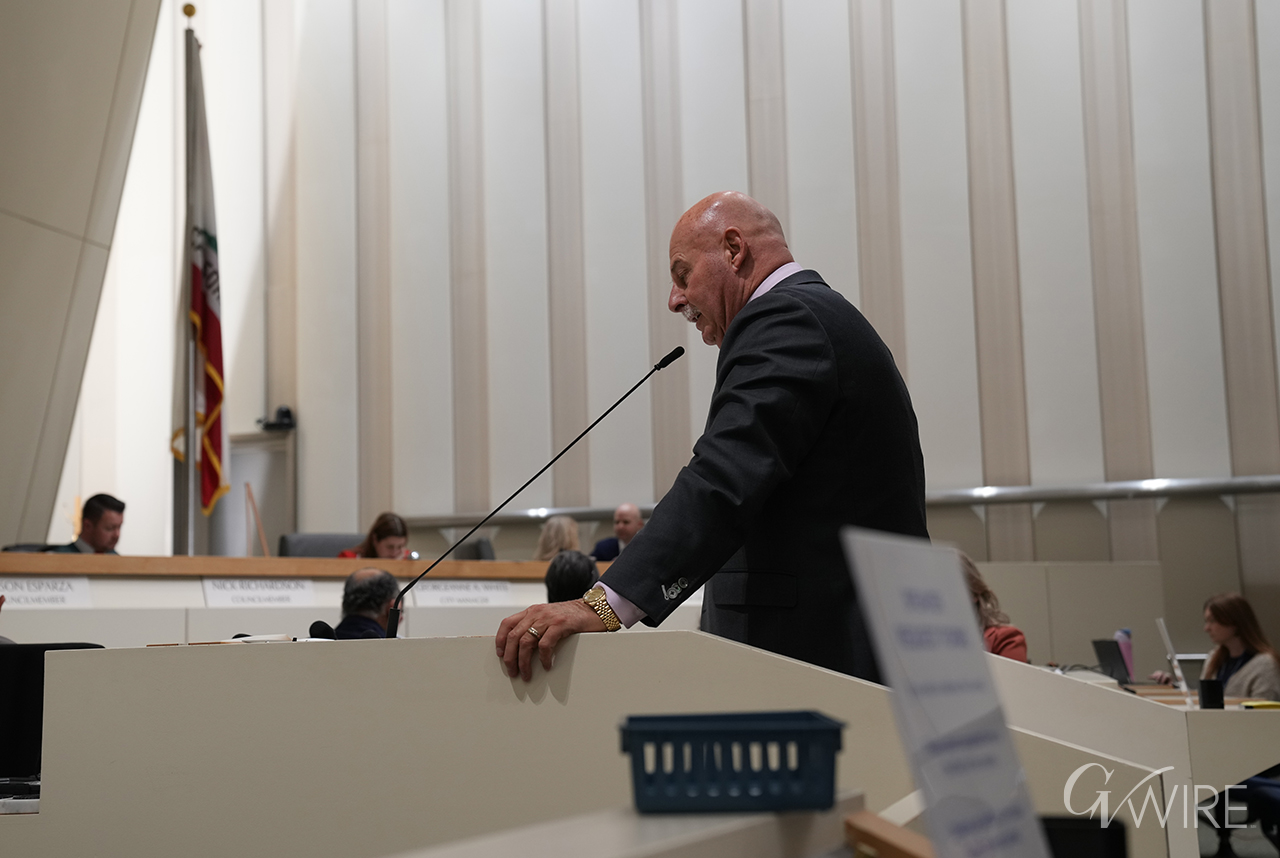
Fresno Mayor Jerry Dyer took the podium first to introduce SEDA, saying that his administration did not want the controversial plan and environmental study passed yet. He said that the industrial land would bring jobs and make Fresno competitive against areas such as Visalia, Clovis, and Madera.
Earlier this week he met with Fresno Unified officials to quell worries that SEDA would shut down schools. A handful of teachers came out to oppose the plan as did Fresno Teachers Association President Manuel Bonilla and Fresno Unified Trustee Veva Islas.
“There has never been any intent by me or this administration to open up all 9,000 acres of development all at once…” Dyer said. “I do not support sprawl or leapfrog development. We’ve seen that in our history in Fresno, but I do support smart growth and incremental development. Growth that will allow Fresno to remain competitive in housing and employment market.”
Dyer’s compromise, however, wasn’t enough to quell the crowds who came out to say that the plan would drain resources from the city’s interior and reduce enrollments at Fresno Unified. Many said passing a plan for only the southern portion of SEDA would be a “Trojan horse” to bring the plan through in its entirety.
Property owners appeared satisfied that councilmembers did not approve the plan.
Study Vote Almost Dies Without a Second
The feasibility study will break down exactly how the SEDA area could potentially pay for itself — a requirement dating to the 2014 General Plan. During the meeting, Dyer casually guessed at a “seven-or-eight month” process timeline.
An estimate from the city said necessary water and sewer costs in south SEDA could cost $61 million. Possibilities to pay for this include tax areas called community-facility districts and developer fees, although the city would likely have to bond to pay for upfront costs, said White, the city manager.
Dyer said he favored the south SEDA portion because it requires the least infrastructure investment.
Council President Karbassi said the city needs to consider its future competitiveness and the property taxes SEDA would provide.
His motion to approve the study, however, very nearly died after he could not immediately get a second. After several moments of silence, Esparza spoke up and after a long speech, added several conditions and asks for the feasibility study.
He called for the following: Studies on financials for industrial and residential separately, a new tax assessment called an Enhanced Infrastructure Financing District to fund Blackstone Avenue and downtown, a demand that no city funds go to residential areas, ministerial approval for industrial projects, and a farmland conservation overlay.
Arias questioned if “no city funds” went so far as to mean any general fund payments or Measure P parks funds.
Despite saying that he did not want SEDA expanded, Esparza also wanted the administration to study whether property tax revenue in the southern area could fund infrastructure investment in future portions.
Richardson, Perea, and Arias all had a litany of study demands restricting SEDA that were not officially added. Dyer, however, assured them his administration would look at whatever councilmembers wanted.
Arias said a new environmental review should be studied if the plan is reduced to only the southern portion. He also asked about a voter referendum to approve SEDA. Richardson called for several guarantees on ag preservation and water availability.
Southeast Development Without SEDA? Not Practical: County
Developing in SEDA without a plan may be “theoretical,” but not practical, said Bernard Jimenez, deputy director of Fresno County Public Works & Planning.
The city’s general plan does allow for some urban uses within SEDA, but conditions of approval set by the Local Agency Formation Commission require a specific plan be approved before any annexation take place.
That means development would have to fall on the county.
Even being in the city’s sphere of influence, the county has oversight over the land, Jimenez told GV Wire. Potential uses for the land still have to abide by county zoning, however, which calls for agricultural and rural residential uses.
“Anything that’s within that world, the county could approve today without any type of public hearing or any large process,” Jimenez said. “But if you’re asking if the county wanted to approve it based on the density and the intensity that the city is contemplating, that would require the county to go through a similar process.”
Developers seeking to do any one-off, leapfrog development — the type described by the city as possibly happening without a master plan — would face the same obstacles the city has to overcome.
Water and sewer lines would need to be installed and for a parcel of development, most projects would not pencil out considering the costs homeowners would pay on top of housing prices, Jimenez said.
The memorandum of understanding between the city and county approved earlier this year also requires that the county defer to the city on any commercial projects. And Jimenez said the board looks down on approving independent water and sewer districts.
“I will tell you that our board does not like these independent water and sewer districts,” Jimenez said.
Could Clovis or Sanger Take SEDA? Not Easy, but Not Impossible
Even if SEDA were to not get approved, Esparza said the decade-old plan could come back for future approval.
The possibility of Clovis or Sanger petitioning LAFCo for dominion of the land also arose. Back in 2016, a LAFCo commission pressured the city to get it to show intent to build out SEDA, said Brian Spaunhurst, executive officer for the agency, looking back at official records.
Commissioners wanted the city to show that services could be brought to the area, but the city said LAFCo’s demands required too much planning work in too short a time.
“I think the idea was to encourage the city as much as possible to show LAFCo that SEDA was more than just a ‘land bank,'” Spaunhurst told GV Wire.
Back then, the commission considered removing SEDA — then called the Southeast Growth Area — from the city’s sphere of influence, records show.
This commission led Esparza to speculate that either Clovis or Sanger could take the land and propose new uses.
To do that, though, Spaunhurst said either Clovis or Sanger would have to do a municipal review process to bring the land into their sphere of influence. Fresno would likewise have to do a municipal review to reduce their sphere of influence.