
|
Getting your Trinity Audio player ready...
|
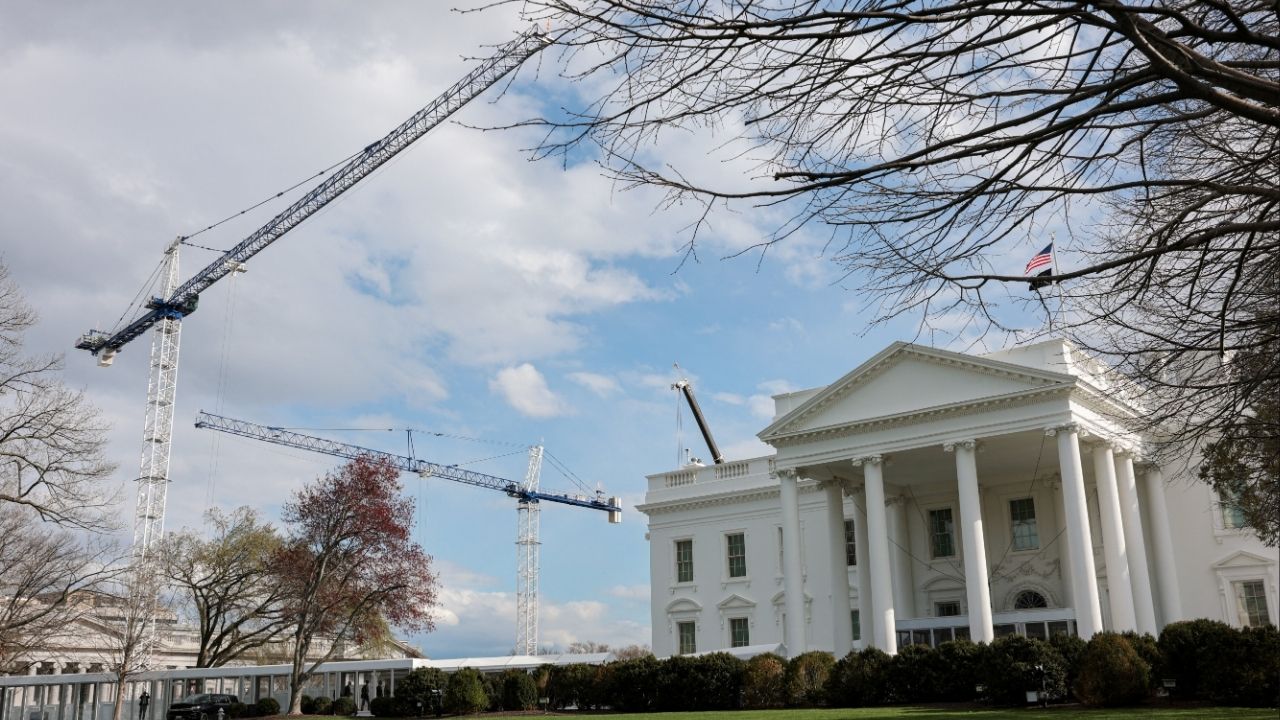
A judge blocked President Donald Trump on Tuesday from proceeding with construction of a $400 million ballroom on the site of the White House’s demolished East Wing, halting for now one of the Republican president’s most visible efforts to reshape the seat of American power.
U.S. District Judge Richard Leon granted a request for a preliminary injunction by the National Trust for Historic Preservation, a nonprofit organization that brought a lawsuit alleging Trump exceeded his authority when he razed the historic East Wing and launched construction without approval from Congress.
The decision by Leon, an appointee of Republican former President George W. Bush, keeps the 90,000-square-foot ballroom project on hold while the lawsuit continues.

“Where does this leave us? Unfortunately for Defendants, unless and until Congress blesses this project through statutory authorization, construction has to stop!” Leon wrote in his order.
The judge said he was pausing his order for 14 days to allow the Trump administration to appeal. Leon said the order does not affect “construction necessary to ensure the safety and security of the White House.”
The White House did not immediately respond to a request for comment.
Trump has championed the ballroom as a defining addition to the White House and a lasting symbol of his presidency.
Leon’s ruling marks a sharp setback for Trump’s Justice Department, which opposed the injunction and has defended the ballroom as an allowable alteration that modernizes the White House grounds.
The National Trust sued Trump and several federal agencies in December after the administration demolished the East Wing – originally constructed in 1902 and expanded four decades later during Franklin Roosevelt’s presidency – to make way for what Trump has vowed will be the “finest” ballroom in the country.
The group argues that neither the president nor the National Park Service, which manages the White House grounds, had authority to tear down the historic structure or erect a major new facility without explicit congressional approval.
At a March 17 hearing, Leon pressed administration lawyers on the Justice Department’s shifting explanations for the president’s authority, calling the White House grounds a “special place” and an “iconic symbol” of the nation.
The administration has said the ballroom will modernize infrastructure, bolster security and ease strain on the Executive Mansion, which often relies on temporary outdoor structures to host large events.
Officials emphasize the project is funded entirely by private donors – a point Trump has highlighted.
A panel of the U.S. Commission of Fine Arts, composed entirely of Trump appointees, voted 6-0 in February to approve the design.
The ballroom is part of Trump’s broader push to reshape Washington’s monumental core, which also includes plans for a 250-foot (76-meter) arch and changes at the Kennedy Center, a cultural landmark and performance center.
—
(Reporting by Mike Scarcella. Additional reporting from Trevor Hunnicutt in Washington; Editing by David Bario, Will Dunham and Nia Williams)