
|
Getting your Trinity Audio player ready...
|
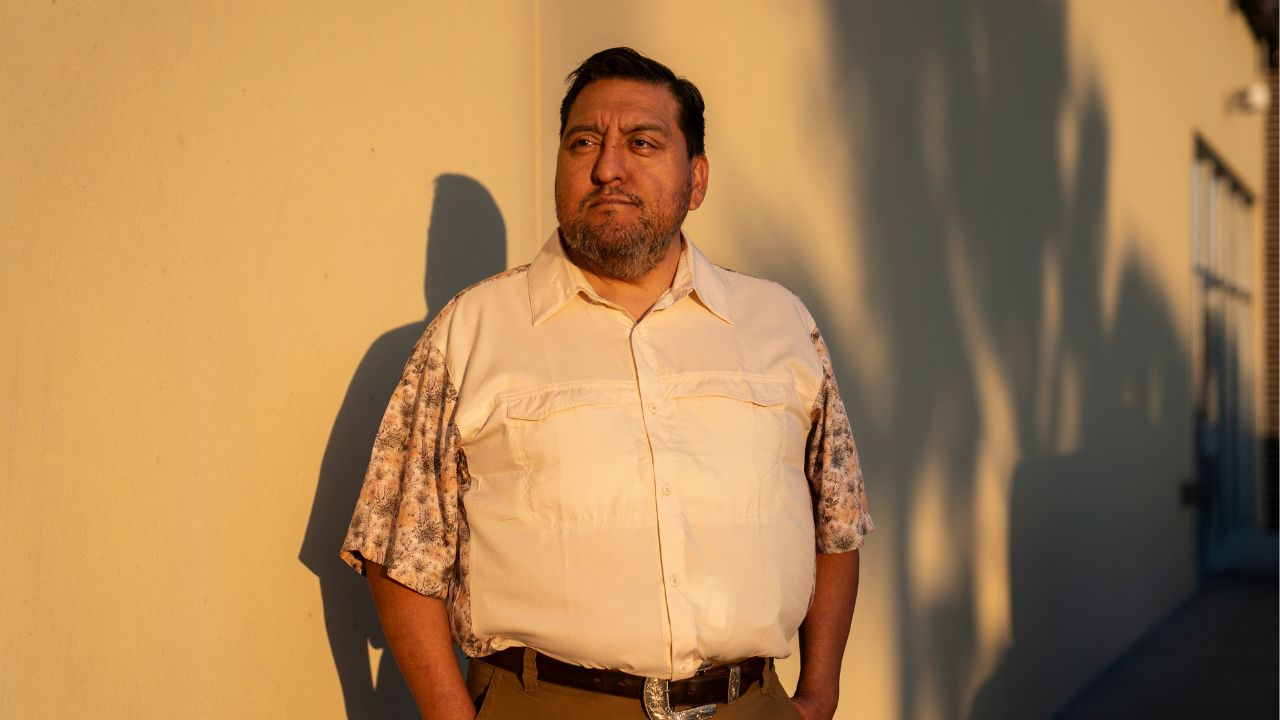
Outside a cafe in South Texas, Samuel Garza, an actor on break with his Mexican cinema troupe, was bracing for one of the most consequential immigration decisions in a century: Whether the Supreme Court would preserve automatic citizenship for anyone born on U.S. soil.
Garza, 62, voted for President Donald Trump three times, he said, because he believed his administration would be a boon for the economy.
But he became dismayed when Trump signed an executive order last year seeking to restrict automatic citizenship for babies born in the United States to parents who are not citizens or legal permanent residents. For more than a century, birthright citizenship was considered settled law, guaranteed by the 14th Amendment. It had also made Garza, an American born to Mexican parents in McAllen, Texas, a citizen by birth.

“It is saddening,” Garza said, as the Supreme Court takes up a case Wednesday that will decide the fate of the right. If the precedent is overturned, he said, “it would hurt so many families who come here to contribute and make lives here.”
In interviews with more than two dozen Latino Republicans, almost all of them supported the right of citizenship upon birth on U.S. soil, which many saw as a fundamental tenet of the American dream. Some expressed concerns about potential abuse, including by immigrants in the country illegally, but did not necessarily support eliminating the right all together.
Historically, Latino Republicans have been more supportive of birthright citizenship than non-Hispanic white Republicans, according to polling. That right has been central to questions of identity and belonging along the southern border, where the line defining who is American has shifted — figuratively and physically — over time.
As the birthright debate has heated up, some Latino Republicans in the region said the Trump administration’s efforts to restrict the right added to their wider frustrations over how the president has carried out his immigrant detention and deportation campaign.
Near the Rex Cafe and Bakery in downtown McAllen, Garza said he was not sure whether his parents, a carpenter and a housewife, had crossed into the United States legally when they came in the 1960s in search of a better life.
He said he had not opposed Trump’s promises to round up criminals who had unlawfully entered the country.
But he began rethinking his political affiliation in recent months as he watched federal agents detain hardworking families and kill people. Limiting birthright citizenship seemed like it would only cause more immigration problems, rather than solve them, Garza said.
“I don’t think I can vote Republican anymore,” he said.
Farther north, in the city of Edinburg, Santiago Manrrique, 59, a retired police officer who ran unsuccessfully for sheriff three times and goes by the nickname Jimmy, said he went from being a Democrat to a Republican years ago and did not plan to switch back. But he added that he did not believe the administration or the Supreme Court should revisit the birthright issue at all.
Manrrique’s maternal relatives in South Texas had become American when the border was redrawn in 1848 after Mexico lost more than half its territory in the Mexican-American War. His paternal grandparents migrated from Mexico to the United States illegally sometime in the 1910s. His father was born in the U.S., making him a birthright citizen.
“If you are born in the United States, you are a citizen — it’s pretty clear in the 14th Amendment,” he said.
Nationwide, Hispanic voters shifted right in 2024, citing the economy and the southern border as top concerns. As the president’s aggressive immigration enforcement operations have continued, recent polls exposed cracks in his base.
Birthright citizenship, in particular, has been a sticking point for Hispanic Republicans. One Pew study released last summer found the group was far more likely than other Republicans to support birthright citizenship, with 55% saying people born to immigrants who are in the country illegally should be U.S. citizens.
In South Texas, some Latino Republicans recalled how opposition to birthright citizenship was driven by concerns over Mexican mothers crossing into the U.S. to have “anchor babies,” an offensive slur used to denote the children of noncitizens. But Latino Republicans argued that the United States benefited more from the extension of birthright citizenship to all people than it lost through potential fraud.
“The concerns are exaggerated,” Manrrique said.
One recent push to root out fraud in birth citizen cases struck a particular nerve in the region. In the 1980s and 1990s, federal authorities uncovered a widespread scheme in South Texas in which midwives created fraudulent U.S. birth certificates for some children born in Mexico. The exact figures vary, but one investigation put the number of children in possession of illicit records at more than 1,500.
Decades later, federal immigration agencies began denying U.S. passports to all South Texans born with the help of any of the 75 convicted midwives from 1960 to 2008. One of those Texans was Robert Hinojosa, 51, an American plunged into a bureaucratic nightmare when he applied for his passport more than a decade ago.
At their home, Hinojosa, the son of a farmworker and a housewife, laid out the packet of documents he and his wife Erica, 49, had to chase down as they sought to prove he had indeed been born in the United States. The packet included his parents’ tattered birth records from their respective Mexican towns and his own birth and baptism records, as well as immunization cards and school transcripts.
The couple worried that many families would face similar challenges should the Supreme Court side with the Trump administration. Hinojosa feared that an emboldened administration could enable federal authorities to strip citizenship from Mexican Americans retroactively.
“It would be a mess,” she said.
This article originally appeared in The New York Times.
By Jazmine Ulloa/ Gabriel V. Cárdenas
c. 2026 The New York Times Company