
|
Getting your Trinity Audio player ready...
|
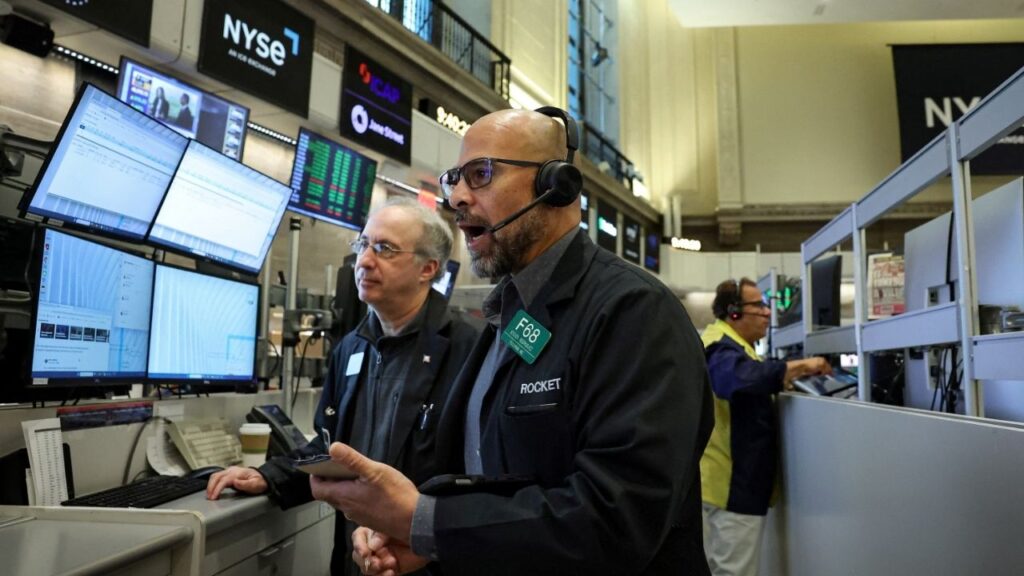
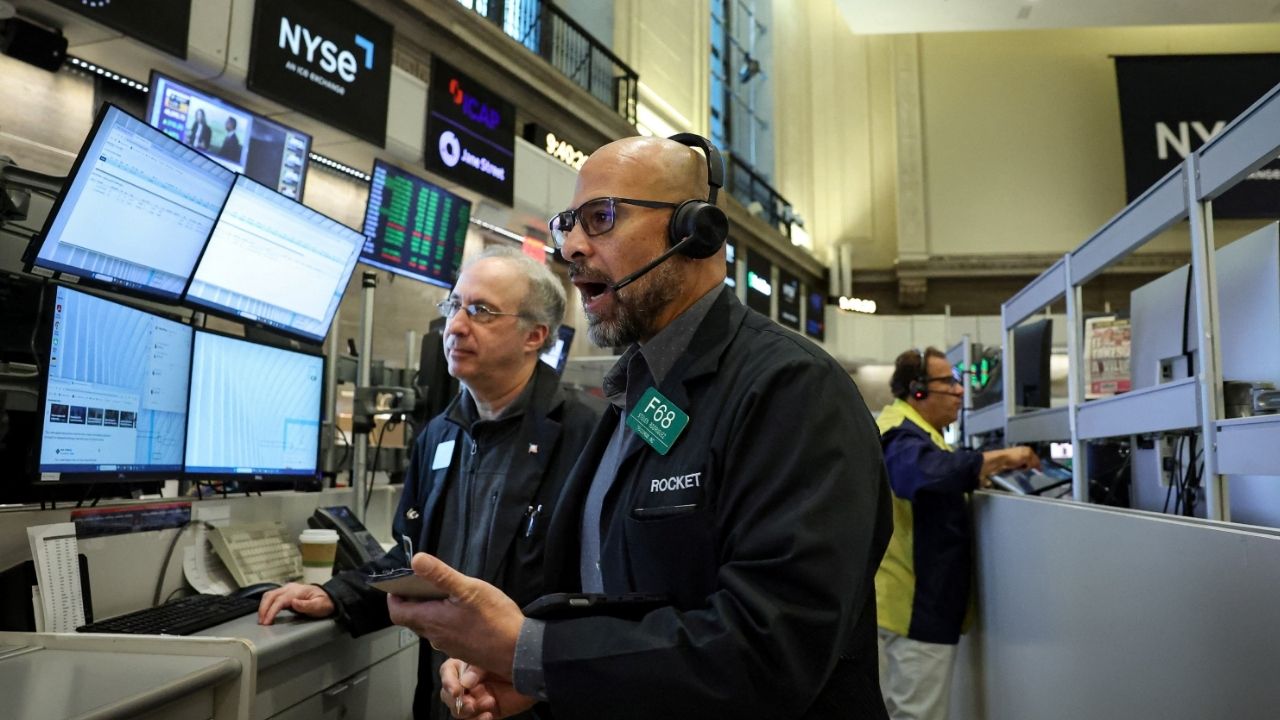
Wall Street ended sharply lower on Friday, with the S&P 500 closing at its lowest in six months, as the U.S.-Israeli war against Iran entered its fourth week, deepening worries about inflation and the potential for higher interest rates.
The conflict in the Middle East showed no signs of easing. The U.S. military was deploying an amphibious assault ship with thousands of additional Marines and sailors to the Middle East, while Iran’s new supreme leader hailed Iran’s “unity” and “resistance.”
“The market is finally settling into the idea that this may go on longer than initially expected, and I think that’s why markets are selling off. This conflict may go on not for just a few weeks, but maybe beyond several months,” said Jake Dollarhide, CEO of Longbow Asset Management in Tulsa, Oklahoma.

Magnificent Seven Companies Fall
Wall Street’s most valuable companies dropped, with Nvidia and Tesla losing over 3% each. Alphabet, Meta Platforms and Microsoft were all down about 2%.
U.S. Treasuries fell for a third session, in step with a broader selloff in UK and European government bonds, as the Middle East conflict kept oil prices elevated and reinforced inflation worries.
U.S. rate futures show the Fed is more likely to raise interest rates than cut them by the end of 2026, according to CME’s FedWatch tool.
“We just have a classic environment that is pushing rates up and it’s driven by higher inflation expectations, which relate back to the oil price. And the fact that we’re heading into the fourth week of the war suggests that that stress is not going away anytime soon,” said Padhraic Garvey, head of global rates and debt strategy at ING in New York.
The S&P 500 declined 1.51% to end the session at 6,506.48 points, its lowest since September.
The Nasdaq slumped 2.01% to 21,647.61 points, leaving it down almost 10% from its record high close on October 29.
The Dow Jones Industrial Average declined 0.96% to 45,577.47 points.
The Russell 2000 index of smaller companies dropped 2.26%, leaving it down 10% from its record high close on January 22.
Nine of the 11 S&P 500 sector indexes declined, led lower by utilities, down 4.11%, followed by a 3.15% loss in real estate.
The S&P 500 energy sector index was near flat for the day, but it logged its 13th straight weekly gain. That week-over-week rally was its longest since at least the late 1980s, according to LSEG data, as geopolitical events in Venezuela and the Middle East dominated much of the first quarter.
Friday marked the once-in-a-quarter simultaneous expiry of derivatives contracts tied to stocks, index options and futures, also known as “triple witching,” and volume on U.S. exchanges was heavy, with 27.5 billion shares traded, compared to an average of 20.1 billion shares over the previous 20 sessions.
Major Markets Down
For the week, the S&P 500 lost 1.9%, while the Nasdaq and Dow lost just over 2%.
Since the war in Iran began on February 28, the S&P 500 has lost 5.4%, the Nasdaq has declined 4.5% and the Dow is down nearly 7%. All three major indexes are below their 200-day moving averages, underscoring the recent deterioration of sentiment on Wall Street.
Super Micro Computer tumbled 33% after three people associated with the artificial intelligence server maker were charged with smuggling at least $2.5 billion of AI technology to China. Rival Dell advanced.
FedEx, often seen as a barometer of business activity, issued upbeat forecasts and said global demand was holding steady despite geopolitical tensions, sending its shares up almost 1%.
Declining stocks outnumbered rising ones within the S&P 500 by a 3.4-to-one ratio.
The S&P 500 posted 11 new highs and 36 new lows; the Nasdaq recorded 43 new highs and 274 new lows.
—
(Reporting by Johann M Cherian, Utkarsh Tushar Hathi in Bengaluru, and by Noel Randewich in San Francisco; additional reporting by Gertrude Chavez-Dreyfuss in New York; Editing by Saumyadeb Chakrabarty, Maju Samuel, Rod Nickel)