

|
Getting your Trinity Audio player ready...
|
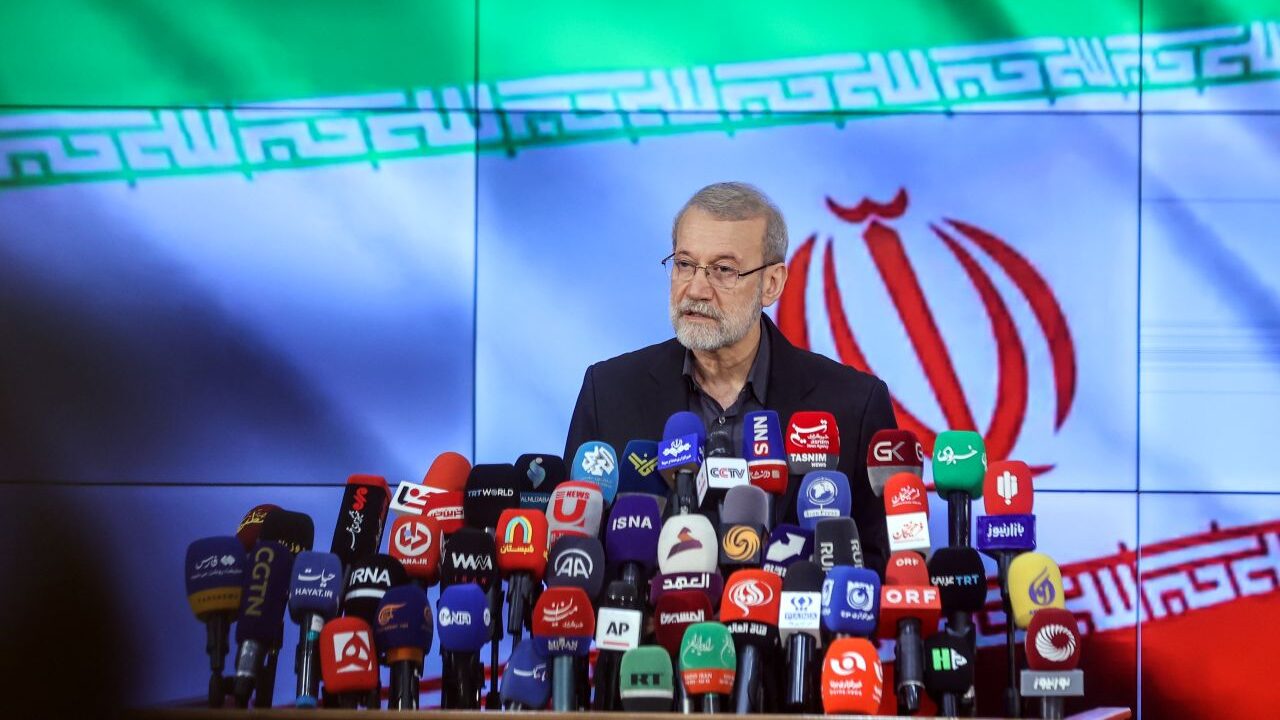
The Israeli military said Tuesday that it had killed one of Iran’s highest-ranking leaders, Ali Larijani, in an overnight airstrike near Tehran, dealing another severe blow to a power structure already decimated by three weeks of U.S.-Israeli strikes.
The killing of Larijani — who became Iran’s de facto leader after U.S.-Israeli airstrikes killed the upper echelons of Iran’s government and military — removes one of Iran’s most prominent voices of defiance. But Larijani was also an influential pragmatist who was seen as having the clout to negotiate with the United States, and his death could embolden Iranian hard-liners who believe that the Islamic republic can only survive by doubling down.
The Israeli military also said Tuesday that it had killed Gholamreza Soleimani, the head of the Basij, Iran’s powerful plainclothes militia.

Iranian authorities and state media did not comment on the Israeli announcements. But two Iranian officials, who spoke on condition of anonymity to discuss the sensitive matter, said they believed Larijani and Soleimani had been killed.
About Larijani
Larijani, the head of Iran’s Supreme National Security Council, was a close confidant of supreme leader Ayatollah Ali Khamenei, who was killed in an Israeli airstrike at the start of the war Feb. 28. Larijani in effect ran Iran behind the scenes even before Khamenei’s death, leading the brutal crackdown early this year on protests against Islamic rule.
He took on a more prominent role in key decision-making during the war, including after the appointment of Mojtaba Khamenei as supreme leader. Larijani had opposed that choice, lobbying for a more moderate option.
Larijani’s killing Tuesday shows that Israel is not slowing down in its effort to eliminate top leaders of a regime it considers an existential threat. But it also renews serious questions about President Donald Trump’s endgame for the war: He has not clearly articulated his goals or how the assault on Iran might end, and he has acknowledged that many of the Iranian officials that the United States might have negotiated with have been killed.
“We don’t even know their leaders,” Trump said Monday. “We have people wanting to negotiate,” he added. “We have no idea who they are.”
Here’s what else we are covering:
— Powerful militia: Soleimani had led the Basij since 2019 and was under U.S. and European sanctions for his role in the violent suppression of protests. The Basij, estimated to number at about 1 million, are affiliated with Iran’s most powerful military force, the Revolutionary Guard, and have played a central role in repressing dissent.
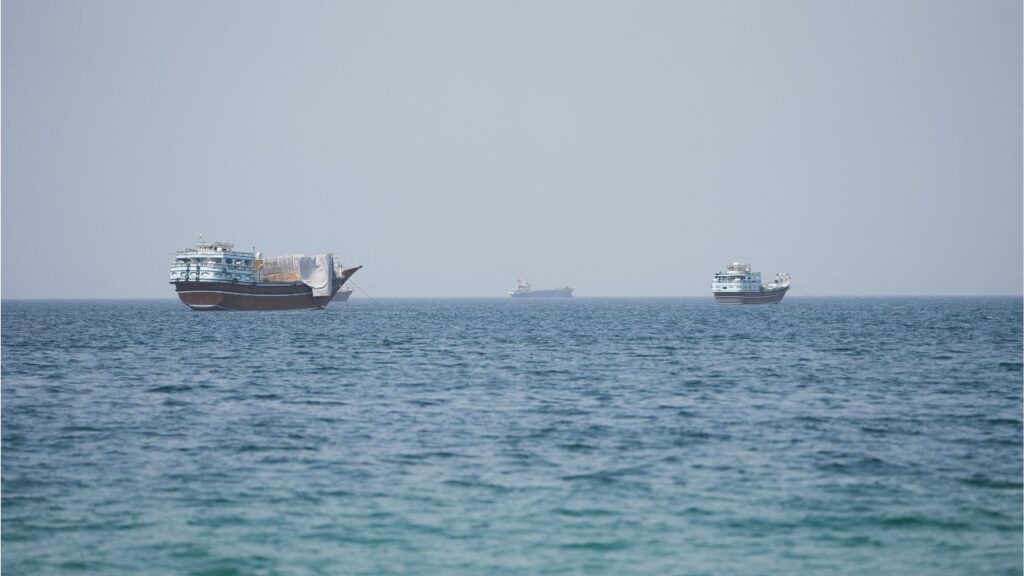
— Tanker attack: A tanker anchored near a port in the United Arab Emirates sustained minor damage when it was hit by a projectile early Tuesday, the first strike on a ship in and around the Strait of Hormuz in five days, according to United Kingdom Maritime Trade Operations, a monitoring agency. At least 17 vessels have been attacked in the region since the U.S.-Israeli war on Iran began.
— U.S.-China relations: China’s Foreign Ministry said Tuesday that Beijing was “maintaining communication” with Washington about Trump’s visit to China, after he requested a postponement. On Sunday, Trump threatened to delay the meeting if China did not send its navy to help protect oil tankers in the Gulf.
— Lebanon evacuations: The Israeli military again urged residents of southern Lebanon to evacuate north of the Zahrani River, saying it was attacking Iran-backed Hezbollah militants in that region. A day earlier, Israel’s defense minister had announced a “ground maneuver” in southern Lebanon, defying concerns over the consequences for civilians. More than a million people have fled their homes, according to Lebanon’s health ministry.
— Death toll: At least 1,348 civilians in Iran have been killed since the start of the war, Iran’s U.N. representative told the Security Council on Wednesday, the latest figure the country has provided. In Lebanon, officials said that 886 people had been killed. In Israel, at least 12 people have been killed, according to authorities. The Pentagon has said that 13 American service members have died since the start of the war.
This article originally appeared in The New York Times.
By Aaron Boxerman, Ronen Bergman, Farnaz Fassihi and Aurelien Breeden/Arash Khamooshi
c.2026 The New York Times Company