
|
Getting your Trinity Audio player ready...
|
The board of the John F. Kennedy Center for the Performing Arts voted Monday to shutter the institution for a two-year renovation project after President Donald Trump warned them that the building was in “very bad shape” and had been on “the verge of collapse” before he took over.
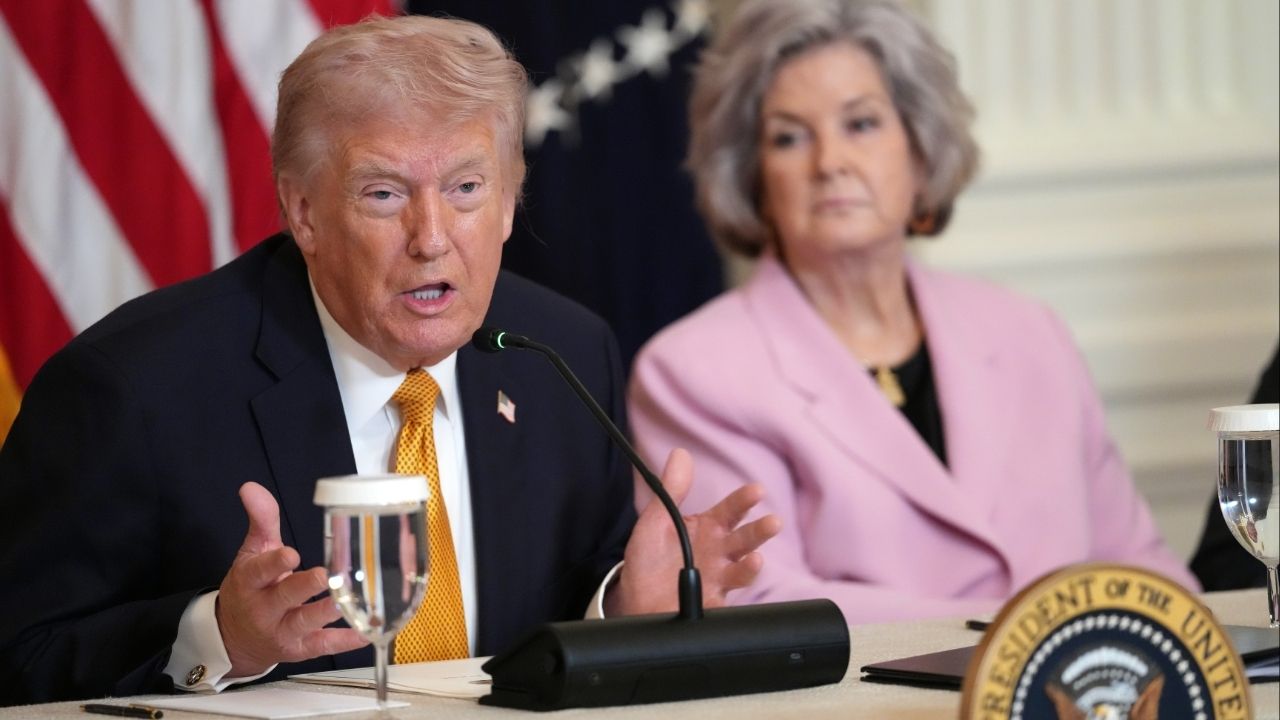
Shortly before the vote, Trump had assembled the board members — a vast majority of them allies whom he appointed — at the White House, where he urged them to approve his plan.
“What I know best in the world is construction,” Trump, the board’s chair, said in his public remarks. “The best way to do it is close it, do it properly and reopen it, have a grand reopening. And when it’s finished it’s going to be far better than it was when it was originally built.”

A news release from the center, which will close in July, said the vote was unanimous.
The full scope of the renovations is not entirely clear. But Trump has said that both structural and internal work was needed, noting on Monday that the building’s heating system would be “ripped out in its entirety,” and that new theater seating and new marble would be installed.
“You can’t have people walking over the marble every night, as it’s drying and setting, and going to a play,” Trump said during his remarks, which veered from criticisms of the center’s unions to commentary on the personal wealth of the board’s members.
After keeping Washington’s preeminent arts institution at a distance during his first term, Trump has made the center a fixation of his second. He replaced the board’s leadership with allies and personally hosted its marquee event, likening himself to Johnny Carson. Late last year, the center added the president’s name to the center’s facade, prompting a new wave of cancellations from artists and boycotts from some patrons.
The announcement of the plans to close last month prompted an uproar from Democrats, who have suggested that the decision was actually motivated by financial problems that have stemmed from declining ticket sales and cancellations from artists over the past year.
Rep. Joyce Beatty of Ohio, a Democrat and an ex officio member of the board, has filed a lawsuit that challenges the board’s authority to close the center, citing her fears that Trump would demolish the center without warning, as he did with the East Wing of the White House last year. (Trump has said he does not plan to tear down the center.)
Beatty told reporters on Monday that before the voice vote by the board, she shared her strong opposition to closing the building without consulting Congress, which established the center in 1958 and later designated it as a living memorial to President John F. Kennedy.
“I was very clear in advising them that while I’m not against renovations if they need to be done,” Beatty said at a news conference Monday, “I am totally against the process, it being unlawful, them not checking with the Congress.”
She noted that Trump, who presided over the meeting, did not cut her off, although “we had a few stares.”
A federal judge ruled over the weekend that Beatty had to receive details about the renovation plans and be allowed to participate in the meeting, but he expressed some doubt as to whether she was entitled to vote. She did not cast a vote Monday, but her lawyers said they were seeking to convince the judge of her right to do so.
As the Kennedy Center readies itself for renovations, it is also undergoing a change in leadership. Trump announced last week that his handpicked leader, Richard Grenell, would be leaving his position. At Monday’s news conference, Trump eulogized Grenell’s time in the post by praising him, while also seeming to acknowledge the adversarial tone Grenell often took with artists who canceled their scheduled appearances at the center.
“The artistes, they took a pounding from Ric,” Trump said.
In a statement following the board’s vote, Grenell said that “what comes next will be worth the wait.”
Matt Floca, vice president for facilities operations, will be taking over, underscoring the institution’s shift in focus from presenting music, theater and dance to what is effectively a construction site. Floca, whom the board voted in on Monday as the center’s chief operating officer and executive director, will have a vast budget after Trump secured $257 million from Congress for the center.
The center’s board includes Attorney General Pam Bondi; Sergio Gor, the U.S. ambassador to India; news personalities Maria Bartiromo and Laura Ingraham; and Dana Kraft, the wife of Robert Kraft, the New England Patriots owner and friend of the president.
Kennedy Center officials have said the planned renovations will include work on the building’s exterior, as well as on its plumbing, electrical, fire protection and technical stage systems. According to a copy of the minutes for a meeting this month of the center’s building and grounds committee, center officials proposed that the first year of repairs focus on structural work, among other things, while the second year would address “venue modernization.”
Employees at the center have been bracing for layoffs since Trump first announced the closure. The meeting minutes said the closure was expected to affect “approximately 75 to 175 of the center’s roughly 300 employees.” The document also noted that a newer portion of the center’s campus that opened in 2019 may remain active, including possibly for rehearsals for the National Symphony Orchestra, which has been scrambling to find new venues.
—
This article originally appeared in The New York Times.
By Julia Jacobs/Doug Mills
c. 2026 The New York Times Company