

|
Getting your Trinity Audio player ready...
|
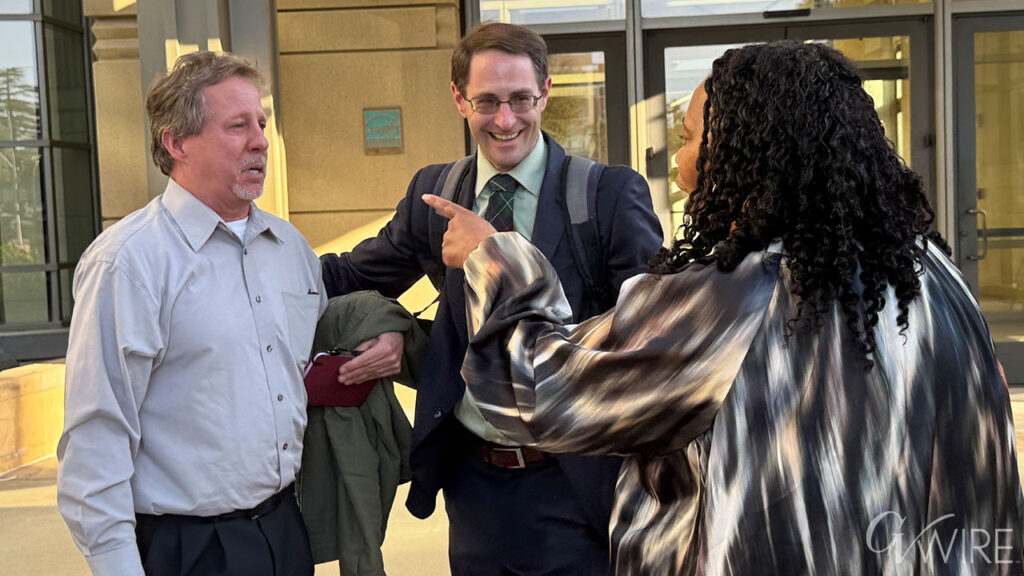
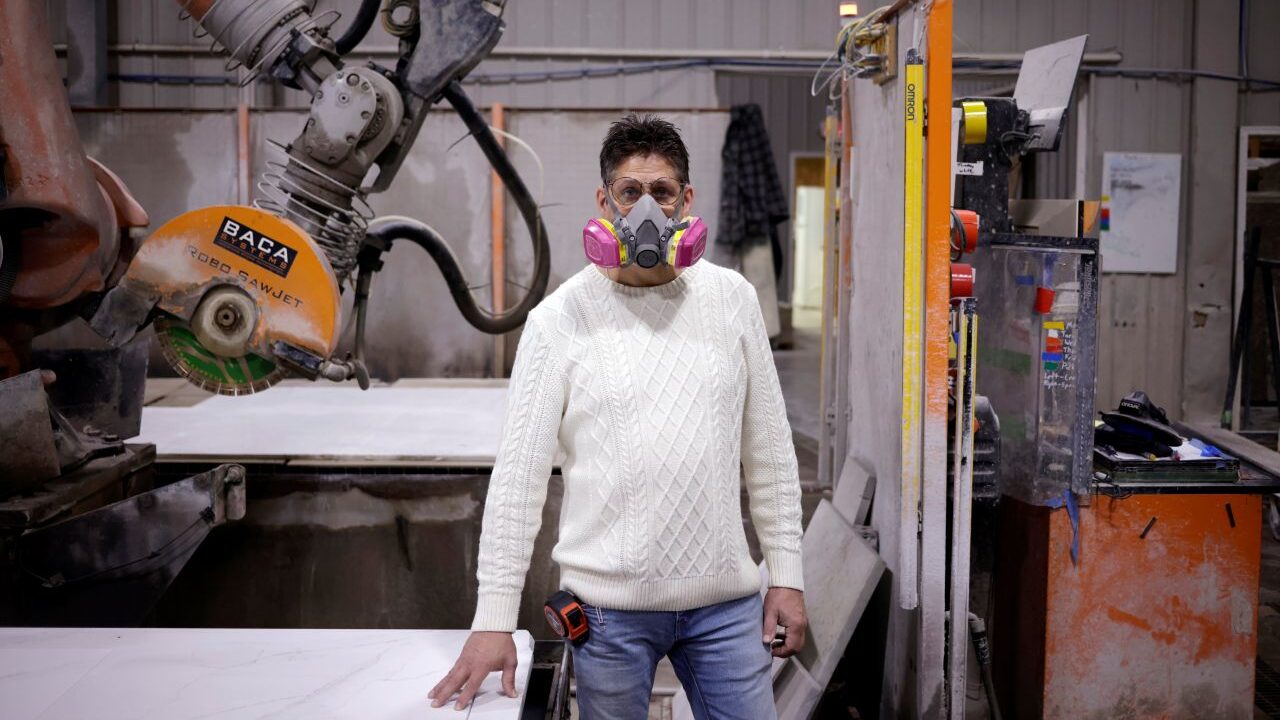
Jeff Rose, a 55-year-old grandfather in Georgetown, Kentucky, contracted a lethal lung disease doing a job he loves: carving kitchen countertops from slabs of quartz, a human-made product that has surged in popularity as an alternative to marble and granite.
Rose’s 30-year-old son, Skyler, followed his father into the stone-fabrication business and, like him, inhaled the tiny particles of silica that are released when quartz is cut. He contracted silicosis, too.
“It really hurts knowing I’m sick like this,” said Rose, who used to chop down the family Christmas tree but now loses his breath climbing a flight of stairs. “I love being creative with my hands. I’m not able to do that anymore.”

The Roses are among hundreds of stone-fabrication workers who have been diagnosed with silicosis, a disease long associated with industrial toil that is afflicting more of the workers who help build American kitchens. The industry, confronting mounting litigation, is seeking legal immunity from Congress.
Representatives for manufacturers and distributors — many of them small businesses — say fabricated quartz, also known as engineered stone, is safe and blame fabrication workshops further down the chain of production, where the slabs are cut to spec with improper equipment or precautions, for the surge in silicosis cases.
“The problem is the process, not the product,” said Rebecca Shult, chief legal officer at Cambria, the largest engineered stone manufacturer in the United States, in testimony before a House subcommittee in January. Republican lawmakers expressed concern that the litigation might gut a $30 billion industry or drive business overseas.
The hearing concerned a bill that would put quartz in the same category as vaccines and firearms, products whose manufacturers are shielded by federal law from injury lawsuits. A similar push has sought to shield companies, including Bayer, from liability over health claims related to Roundup, a weedkiller used on crops.
The workers who cut the slabs, along with their lawyers, doctors and occupational health experts, said there was no safe way to cut quartz, which they describe as extremely toxic. They said the lawsuits would pay for victims’ medical care and reform the industry.
“This is something that I’m afraid is really going to get out of control quickly,” Rose said.
Made Stone
Engineered stone is sold widely as “quartz,” a commercially appealing name that reflects its primary component: finely crushed quartz, an abundant mineral made of silicon and oxygen. Resins and pigments are added before the product is treated at high heat and formed into large rectangular slabs.
Most quartz slabs sold in the United States come from manufacturers in countries including China, Israel and Spain. They reach U.S. homes from a network of big-box stores and smaller distributors, passing through fabrication shops where they are cut for sinks, corners and faucets.
When engineered stone is cut, it lets off tiny particles of silica. The dust lodges in the lungs, where the body identifies it as foreign and mounts an aggressive immune response. Over time, scar tissue forms and spreads, slowly killing the lung.
When Wade Hanicker started cutting stone countertops in Tampa, Florida, 15 years ago, many of the local shops were family businesses in people’s backyards.
The work earned Hanicker a stable living, and he was good at it. “You’re sculpting countertops, you’re putting shapes on them, arches, curves,” said Hanicker, 39. “To me it felt more like artwork.”
He said those early shops were pretty dusty. They often “cut dry,” he said, without soaking the slab with running water to tamp down dust.
Industry leaders say wet processing is critical to mitigate airborne dust. California in 2024 made it illegal to cut quartz dry.
Workers and doctors said wet processing is insufficient because the resulting wastewater eventually dries into dust. Other protective measures, including robotic cutting, ventilation and protective gear, are too expensive for many shops, they said.
Hanicker said his first safety concerns were about the blades and the heavy slabs. He sometimes wore an N95 mask to inhale less dust. He could tell when he was cutting quartz, rather than marble or granite, because of the smell: It reminded him of burning plastic or rotten eggs.
Nobody talked about the risk of silicosis.
“Never once did I think that the dust that we were creating was going to do this type of harm to me,” he said.
Cases Mount
Dr. Jane C. Fazio, a pulmonologist at Olive View-UCLA Medical Center, saw her first case of silicosis in 2021: a man in his 60s who needed a lung transplant. Other patients soon arrived in the emergency room — middle-aged working men, mostly immigrants lacking permanent legal status. She asked about their work.
“Everyone had the same answer,” she said. “They work in countertops.”
California has confirmed 512 silicosis cases from engineered stone and 29 deaths since 2019, according to the state’s public health department.
Fazio has visited fabrication workshops in the neighborhoods around the hospital, where she has observed varying levels of protection — and sometimes none at all — on “people covered in white powder.”
It takes years of exposure to contract silicosis, and even longer before symptoms appear. This, doctors say, is why silicosis among fabricators didn’t really emerge until about five years ago, more than a decade after manufactured stone hit the market. They expect cases to rise.
“It’s extremely debilitating when it progresses,” Fazio said. “It always progresses. And there is no real treatment.”
In 2022, Fazio diagnosed a 48-year-old man from El Salvador with silicosis. After 15 years cutting slabs, he arrived at the hospital in such pain that he couldn’t work. In an interview, the man said he had always worn a mask and cut with water.
“Nobody told us that this dust would cause silicosis,” he said, requesting anonymity because of his immigration status.
In February 2025, he received a double lung transplant. But even this is a short-term fix. In a matter of years, lung transplant patients often slowly develop chronic organ rejection or other complications.
Legal Challenges
As cases mounted, lawsuits followed.
In 2024, a jury in Los Angeles awarded $52.4 million to a former stone fabricator in a lawsuit brought against manufacturers and distributors of engineered stone, including Cambria.
Cambria, a family-owned company in Minnesota, has fought the litigation. Cambria said employees at its shops had cut “over 650,000 Cambria slabs without a single reported case of silicosis.” The company said it had been targeted in lawsuits “over workplace practices entirely outside our control.”
Cambria has taken its fight to Washington, where last year it spent $250,000 on lobbyists. In September, Reps. Tom McClintock of California and Andy Biggs of Arizona, both Republicans, introduced a bill that would bar lawsuits against manufacturers or sellers of engineered stone for injuries that resulted from cutting the product in third-party facilities.
The bill places the burden for assuring safety on fabrication shops and workplace regulators.
This article originally appeared in The New York Times.
By Rebecca Davis O’Brien/Luke Sharrett
c.2026 The New York Times Company