|
Getting your Trinity Audio player ready...
|
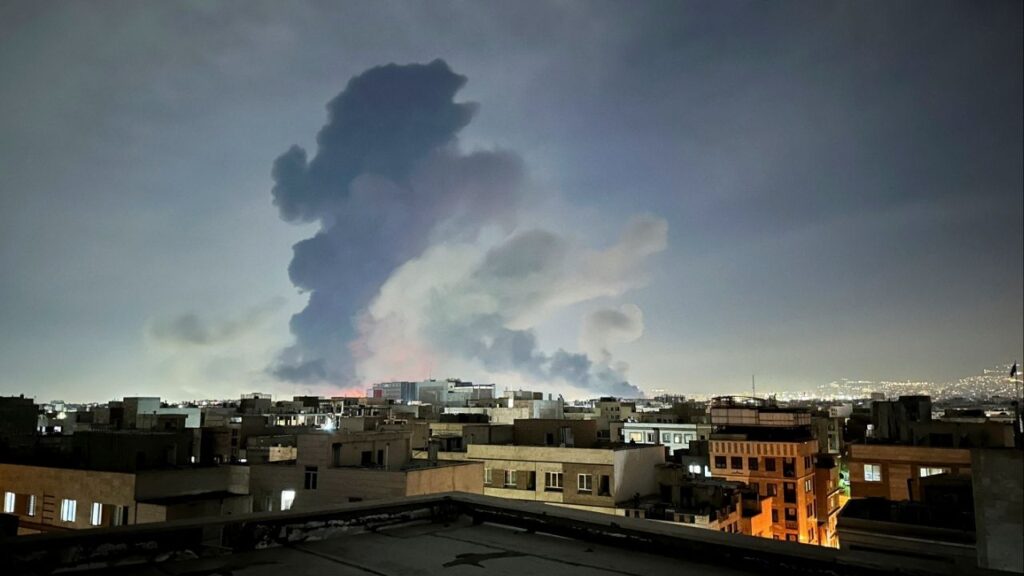
The body that advises the world’s central banks has urged policymakers not to rush reactions to the Iran crisis-driven spike in global energy prices, calling it a textbook case of when to “look through” a supply shock, if it proves temporary.
This month’s 40% surge in oil prices and near 60% leap in wholesale gas prices have evoked comparisons to 2022, when Russia’s invasion of Ukraine and the post-COVID reopening of the global economy sent inflation rates soaring.
Leading central banks including the U.S. Federal Reserve and European Central Bank raised interest rates to their highest levels in decades, but were criticized for reacting too slowly after mistakenly judging the impact would be transitory.

This time, financial markets have been quick to reprice expectations, betting central bankers won’t want to make the same mistake again, although the Bank for International Settlements (BIS) used its latest report to urge caution.
“If it’s a supply shock, and certainly if it’s a temporary one, these are the textbook examples where you should look through and not react with monetary policy,” the central bank umbrella group’s top economic advisor, Hyun Song Shin, said.
“It really depends on how long the conflict lasts and how long the rise in the oil price will be sustained.”
The comments come at the start of a crucial week for markets with the Federal Reserve, European Central Bank, Bank of England and Bank of Japan all holding their first meetings since the Middle East crisis erupted on February 28.
Shin added the rapid shift in market interest rate pricing was perhaps a “sign of the times” given the still-raw memories of 2022.
Money markets have already halved the number of Fed rate cuts they expect this year to one and are now fully pricing in an ECB hike by July, along with an 85% chance of a second increase by year-end.
“It’s a kind of a knee-jerk reaction,” said Shin, highlighting too that key inflation gauges hadn’t yet moved to the same extent, making it “a very confusing picture” overall.
Longer War, Larger Impact
A prolonged conflict, or one that spirals wider, would threaten a further rise in interest rates that could amplify the economic damage, hit “rich” asset prices and compound the worries about ballooning government debt levels.
“That is something which is going to be a very important topic for us to keep under review,” Shin said.
“The impact of a sustained rise in energy prices will have an effect on the real economy and the longer it lasts, of course, the larger that impact. And there will also be an impact on fiscal balances if the economy sees a downturn.”
The BIS’ report, which it publishes four times a year, also included a number of studies, including one on how central banks have changed the way they communicate with markets and the public following the various recent global crises.
It showed more are now using scenarios to illustrate the implications of specific risks, in addition to traditional tools such as fan charts and qualitative risk discussions.
Many have also tried to shift away from so-called forward guidance on where rates are likely to go and instead publishing their own rate projections, often in the context of alternative scenarios.
The BIS’ view of the current market risks also touched on other bouts of volatility seen this year, including some sharp selloffs in artificial intelligence-linked stocks and some troubles in the private credit market.
“We have to watch this,” Frank Smets, the deputy head of the BIS’ monetary and economic department, said. “But we don’t see any major disruptions at this point.”
—
(Reporting by Marc Jones/Editing by Keith Weir)