
|
Getting your Trinity Audio player ready...
|
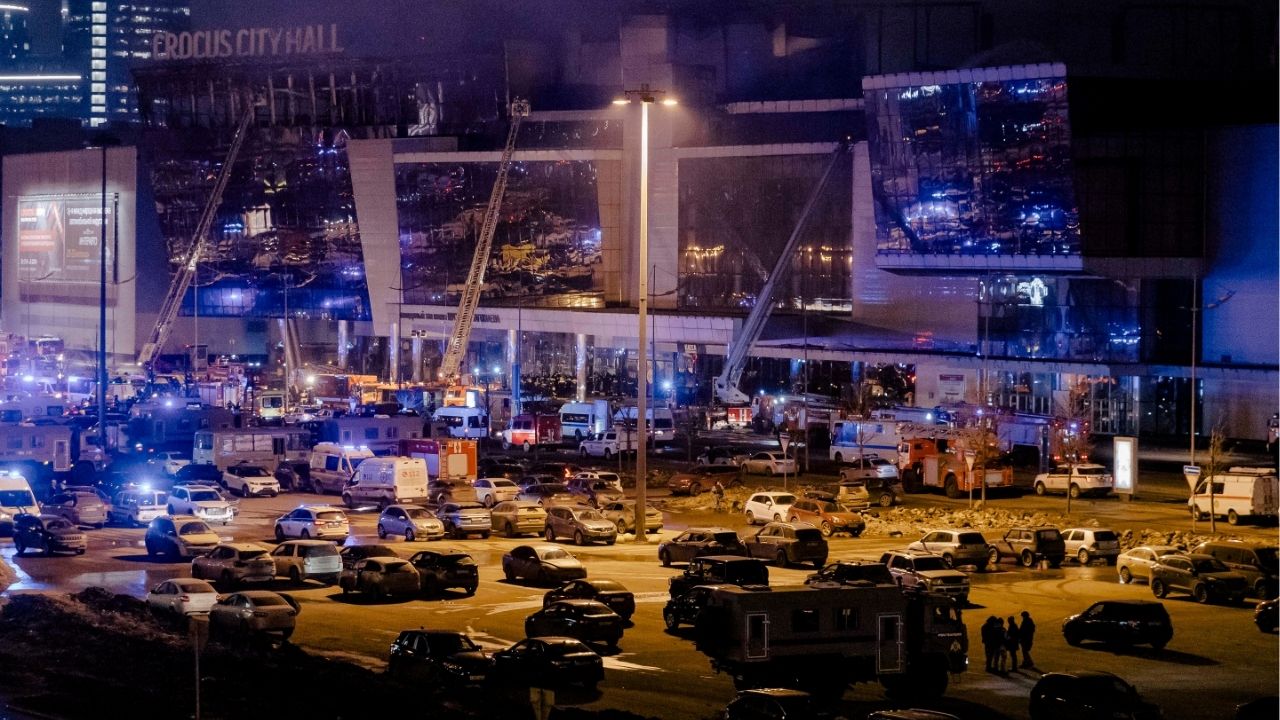
A Moscow court Thursday handed down life sentences to 15 men in connection with a 2024 massacre that killed at least 149 people at a concert hall, the deadliest terror attack in Russia in two decades.
The attack on the Crocus City Hall building, a popular entertainment venue outside Moscow, took place just before a rock concert was scheduled to start. It began as a shooting spree and ended with the four gunmen setting fire to the building with incendiary devices. The Islamic State group claimed responsibility for the attack, and U.S. officials attributed it to the Islamic State group’s Afghanistan affiliate.
The gunmen and 11 accomplices were sentenced to life in prison, the 2nd Western District Military Court said in a statement Thursday. Technically, Russia has the death penalty, but a moratorium on executions has been in place since 1996.

The hearing was closed to the public, and it was unclear what roles the accomplices had played in the attack. Some Russian news outlets reported that they had provided the attackers with guns or money.
Four other defendants, including people who sold the attackers a car and the owner of an apartment they rented, were given prison sentences ranging from 19 to 22 years, the court said.
After the attack, President Vladimir Putin and Russian investigators tried to link it to Ukraine’s leadership and its Western allies. The court echoed that in its statement, saying that the masterminds were “acting in the interests of the top political leadership of Ukraine.” Russia has offered no proof of Ukrainian involvement, and Ukraine has denied it.
The four gunmen, who were detained hundreds of miles southwest of Moscow on the day after the attack, were Tajik men, and the massacre and its aftermath fueled a surge in xenophobic sentiment. The Russian government tightened restrictions on migrants, including a ban on enrolling their children in schools unless they passed Russian language tests.
Since then, many of the hundreds of thousands of migrants from Tajikistan, a former Soviet republic, who had been working in Russia have left the country, worsening a national labor shortage.
—
This article originally appeared in The New York Times.
By Ivan Nechepurenko/Nanna Heitmann
c. 2026 The New York Times Company