


|
Getting your Trinity Audio player ready...
|
Waves of airstrikes shook Beirut and Tehran, Iran, on Wednesday and into Thursday morning, adding to the toll of the war in the Middle East, as the Pentagon told Congress that the U.S. cost of the war was more than $11.3 billion in just the first six days.
The dollar figure, disclosed in a closed-door briefing on Capitol Hill, did not include many of the expenses associated with the operation, now in its 12th day, so the ultimate cost for American taxpayers is expected to be much higher. The briefing was described by three people familiar with it, who spoke on the condition of anonymity to discuss sensitive information.
The Middle East war showed no sign of letup on multiple fronts.

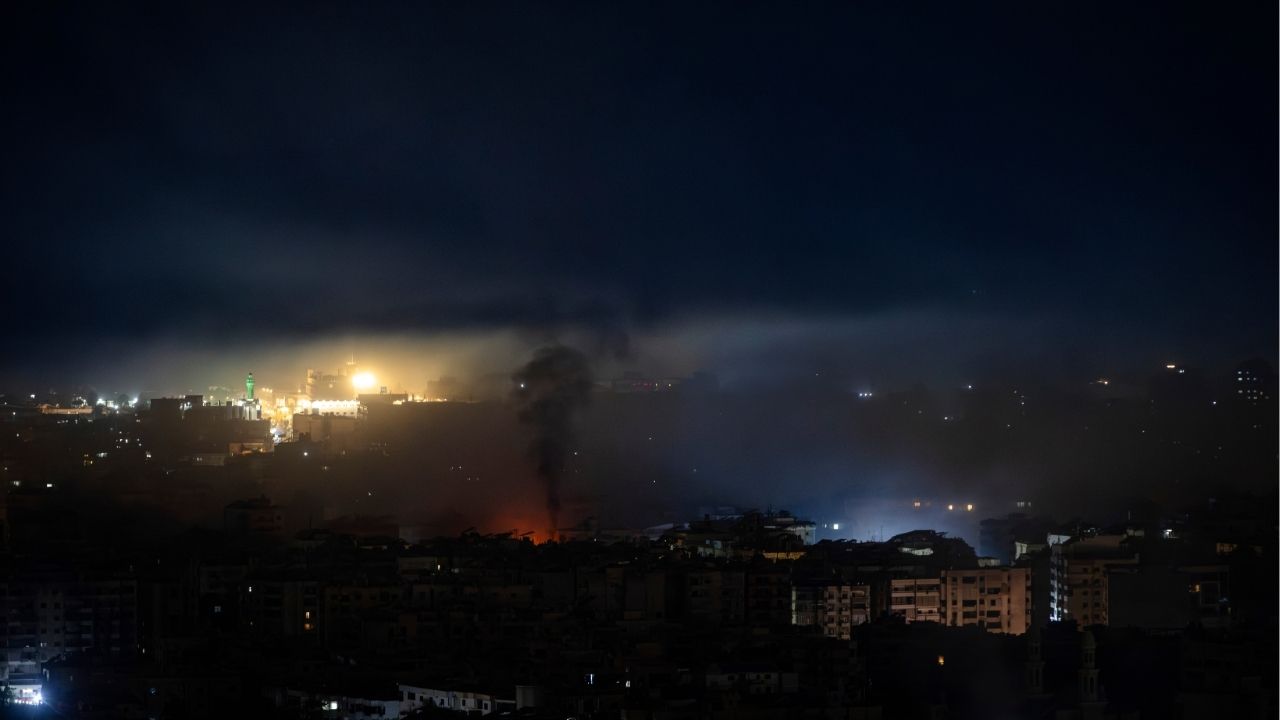
Israel struck more than two dozen sites across Lebanon late Wednesday and early Thursday, according to a military spokesperson.
Strikes Kill 7 in Beirut
Lebanese officials said the strikes killed at least seven people in Beirut and injured dozens more there and in the neighborhoods south of the city, a Hezbollah stronghold from which thousands of civilians have fled in recent days.
The Israeli bombardment in Lebanon, which started after Hezbollah fired rockets into Israel in support of Tehran — has killed more than 600 people and displaced more than 800,000 over the last several days, according to Lebanese officials.
Several Persian Gulf countries said they intercepted attacks from Iran on Wednesday.
Tehran residents and state media reported repeated drone attacks on street checkpoints manned by the Basij militia, killing several people — a relatively new development that sowed fear among residents that moving around the capital city could be lethal.
The global price of oil pushed past $100 a barrel late Wednesday night, as fears grew that the war could disrupt energy supplies. Iran has threatened to choke off the Strait of Hormuz, the waterway through which one-fifth of the world’s oil transits.
Oil prices rose despite a coordinated effort by more than 30 countries, including the United States, to calm markets by pledging to release emergency oil reserves. The U.S. Energy Department said on Wednesday evening that it plans to release 172 million barrels of oil from its strategic reserves over the course of four months, beginning next week.
Here’s What Else We Are Covering:
— War financing: Pentagon officials told lawmakers in a closed-door briefing on Capitol Hill that the estimated the cost of the war had exceeded $11.3 billion in the first six days, according to three people familiar with the briefing. The number omitted several aspects of the operation, so lawmakers expect the number to grow considerably.
— Death toll: The death toll in Iran is unclear. Iran’s representative to the United Nations, Amir Saeid Iravani, told the Security Council on Wednesday that more than 1,348 civilians had been killed. Dozens have also died in Iranian drone and missile attacks on Gulf countries and Israel.
— Vessels hit: Three cargo ships came under attack in or near the Strait of Hormuz early Wednesday. Iran, which has said that no ships would be allowed to transit the Persian Gulf without its permission, appeared to claim responsibility for one of those strikes.
— Oil reserves: The U.S. pledge to release oil is part of a coordinated effort by the International Energy Agency, whose 32 member countries have agreed to release 400 million barrels of oil from their strategic reserves. Gasoline prices in the United States have climbed for 11 straight days.
— Trump’s remarks: President Donald Trump, who has sent contradictory signals about the duration of the war, portrayed victory as just around the corner in an economic speech in Kentucky. “Over the past 11 days, our military has virtually destroyed Iran,” he said. But Trump has also said only Tehran’s “unconditional surrender” would end the war, and Iran has shown no sign of halting its attacks.
— Banks threatened: Major financial institutions including Citi and HSBC temporarily closed offices in the Persian Gulf, after Iran said it would target U.S. and Israeli banks in the region. The Revolutionary Guard made the threat after an airstrike hit a building in Tehran linked to Bank Sepah, an institution founded in 1922 as Iran’s first modern domestic bank.
— Deadly school strike: The United States was responsible for the strike on an Iranian school that killed 175 people, most of them children, based on outdated targeting information, according to the preliminary findings of a Pentagon investigation. Trump had suggested that Iran could be to blame.
— New leader: Mojtaba Khamenei, 56, who on Monday succeeded his slain father as Iran’s supreme leader, has not appeared on video or in public nor issued any written statements since his appointment was announced. Three Iranian officials said that one reason was concern that any communication could reveal his location and that a second was that he was injured on the opening day of the U.S.-Israeli strikes, they said.
—
This article originally appeared in The New York Times.
By Euan Ward, Catie Edmondson, Abdi Latif Dahir, Rebecca Elliott and Liam Stack/Diego Ibarra Sánchez
c. 2026 The New York Times Company